Scalp care and hair care are closely connected, but they do not always serve the same product purpose. Traditional hair care products are often developed around cleansing, conditioning, smoothness, shine or styling, while scalp care products focus more specifically on the condition and feel of the scalp.
For hair care brands, this distinction creates an opportunity to expand an existing product range without simply launching another shampoo or conditioner. A brand may introduce a lightweight scalp serum, a clarifying treatment or a scalp-focused shampoo to address a more specific customer need.
However, scalp care is not a completely separate category from hair care. It is a more specialized direction within the broader hair care market, and many products serve both purposes. The challenge for brands is to determine where the product's primary role lies and how it should be formulated, positioned and presented to customers.
This guide explains the differences between scalp care and traditional hair care from a product development perspective, helping brands decide which formats to develop and how to build a more coherent product range.
For a broader overview of product formats, formulation considerations and OEM development options, explore our private label scalp care guide.
What Is the Difference Between Scalp Care and Hair Care?
Hair care is a broad category that includes products for cleansing, conditioning, treating, styling and maintaining the appearance of hair. Depending on the product, the main focus may be the hair shaft, the scalp or both.
Scalp care takes a more targeted approach. Products are designed specifically around scalp-related needs, such as cleansing, hydration, comfort, oil balance or the removal of buildup. Some products are rinsed off, while others are applied directly to the scalp and left on.
The difference is therefore not simply the product name. It is the intended use, the area of application and the experience the formula is designed to deliver.
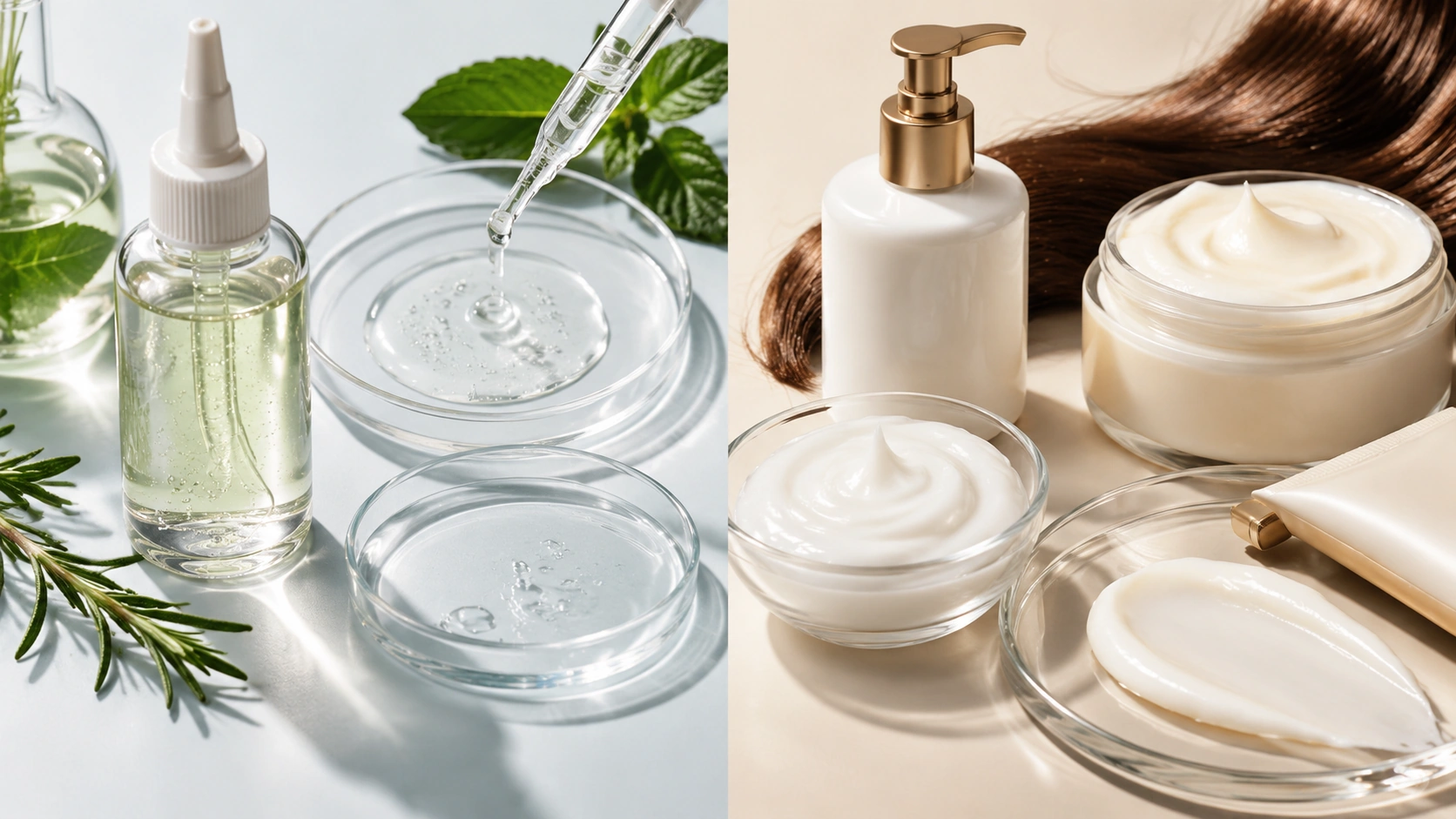
A conventional conditioner, for example, is usually developed to improve the softness and manageability of the hair lengths. A leave-on scalp serum has a different challenge: it needs to reach the scalp, spread easily and avoid leaving excessive residue around the roots.
A scalp shampoo sits between the two categories. It is still a cleansing product, but its positioning and formulation priorities may be more specifically directed toward the scalp.
For brands, understanding these distinctions is the first step toward developing products with a clear role in the overall hair care routine.
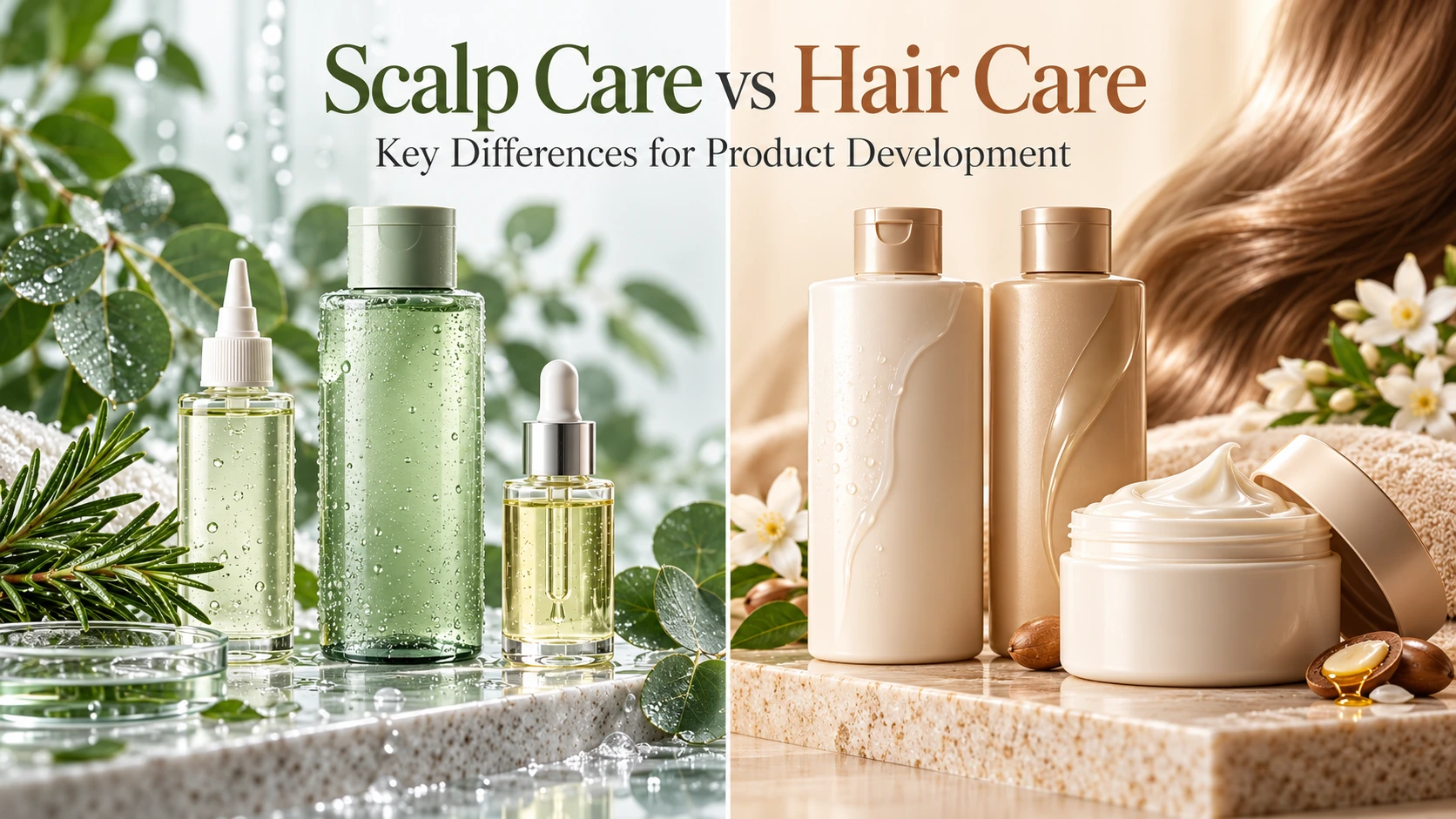
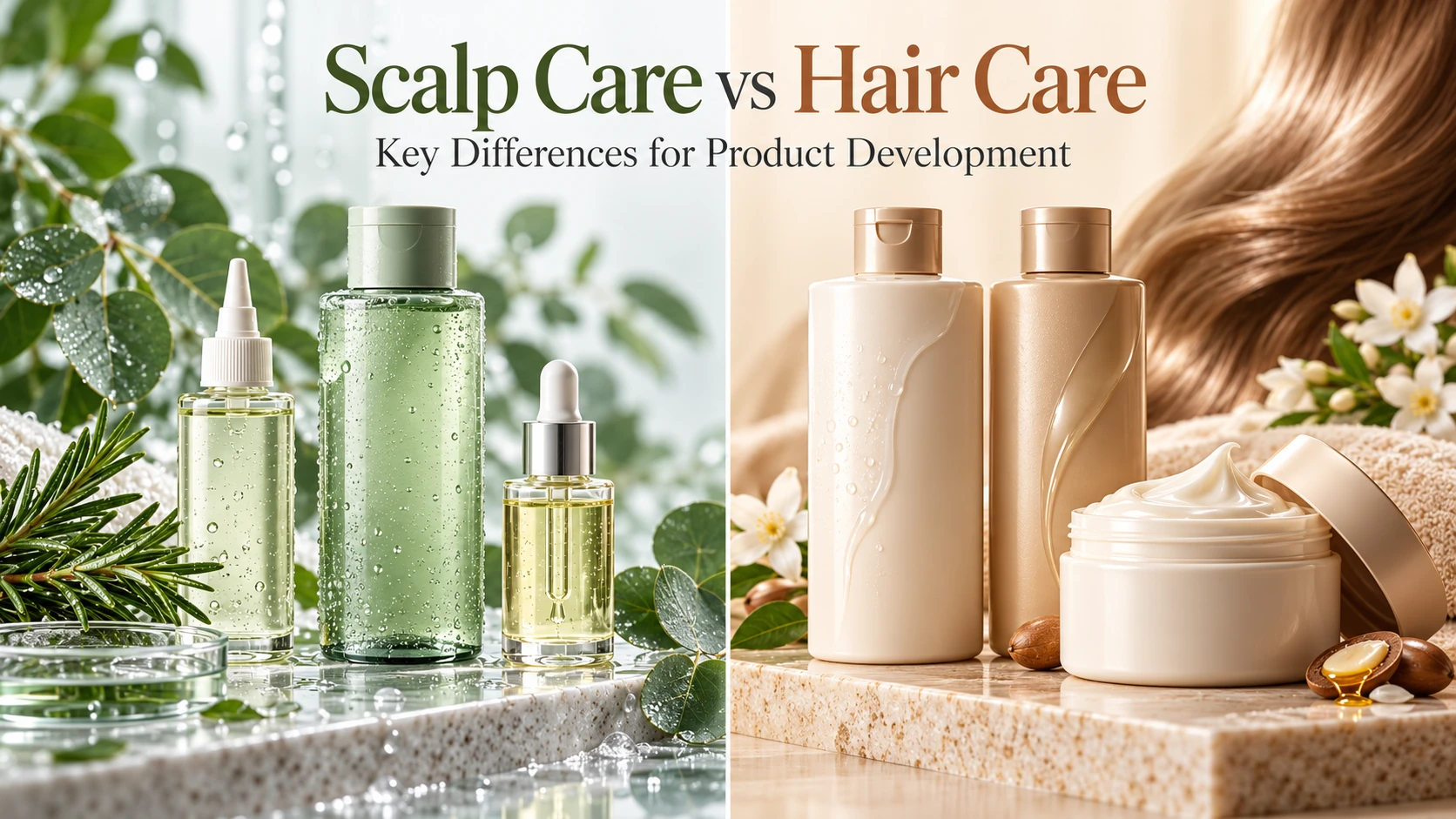
Scalp Care vs Hair Care: Key Differences for Product Development
Although the two categories overlap, their development priorities can differ considerably.
| Development Factor | Traditional Hair Care | Scalp-Focused Care |
|---|---|---|
| Primary Focus | Hair cleansing, conditioning, appearance and styling | Scalp cleansing, hydration, comfort and targeted care |
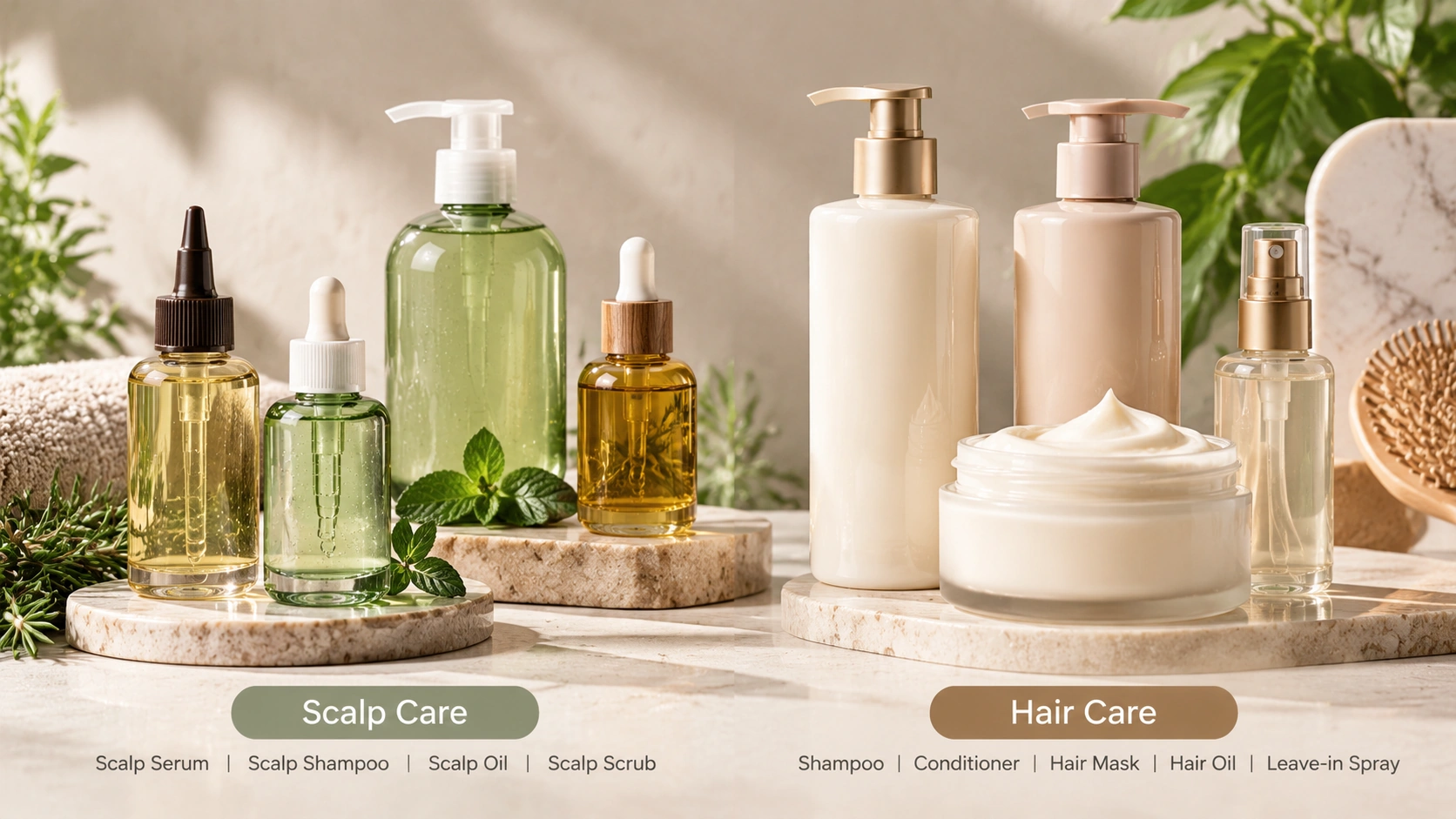
| Common Products | Shampoo, conditioner, hair mask, hair oil, styling products | Scalp serum, scalp treatment, scalp scrub, scalp oil, scalp-focused shampoo |
| Formula Priorities | Smoothness, conditioning, shine, manageability or styling performance | Scalp feel, application, residue control and format-specific performance |
| Texture Considerations | May range from lightweight sprays to rich masks and oils | Leave-on products often require particular attention to root residue and application |
| Packaging | Bottles, pumps, jars, tubes and styling applicators | Precision nozzles, droppers, pumps, spray bottles and rinse-off packaging |
| Product Positioning | Daily care, repair, styling, smoothing or nourishment | Targeted scalp routines, clarifying care, hydration or botanical treatments |
These differences are useful when planning a new product, but they should not be treated as absolute rules. A shampoo can be developed for both hair conditioning and scalp cleansing, while a hair oil may be intended for the lengths, the scalp or both.
The intended use should guide the formulation rather than forcing every product into a rigid category.
When Should a Brand Develop Scalp Care Products?
For an established hair care brand, adding scalp care can create a new product direction without requiring a complete change in brand identity.
The opportunity is particularly relevant when customers already buy shampoo, conditioner or hair treatments but want a more targeted routine. A scalp product can complement the existing range if it offers a distinct purpose rather than repeating the same benefit under a different name.
Consider a brand whose main products are shampoo and hair mask. If the shampoo already provides the cleansing experience customers expect, another general-purpose shampoo may not add much differentiation. A lightweight scalp serum or a clarifying scalp treatment could provide a more clearly defined role within the range.
A botanical hair care brand may take a different approach. It might extend an existing hair oil collection with a scalp oil designed for pre-wash use, or introduce a scalp serum that complements its botanical shampoo.
New brands should also consider whether their target customers understand the proposed product and how it fits into their routine. A highly specialized treatment may suit a premium or salon-oriented audience, while a straightforward scalp shampoo may be easier to introduce through a broader everyday hair care range.
The right decision depends on the customer, sales channel, price position and existing products-not simply whether a particular format is receiving attention in the market.
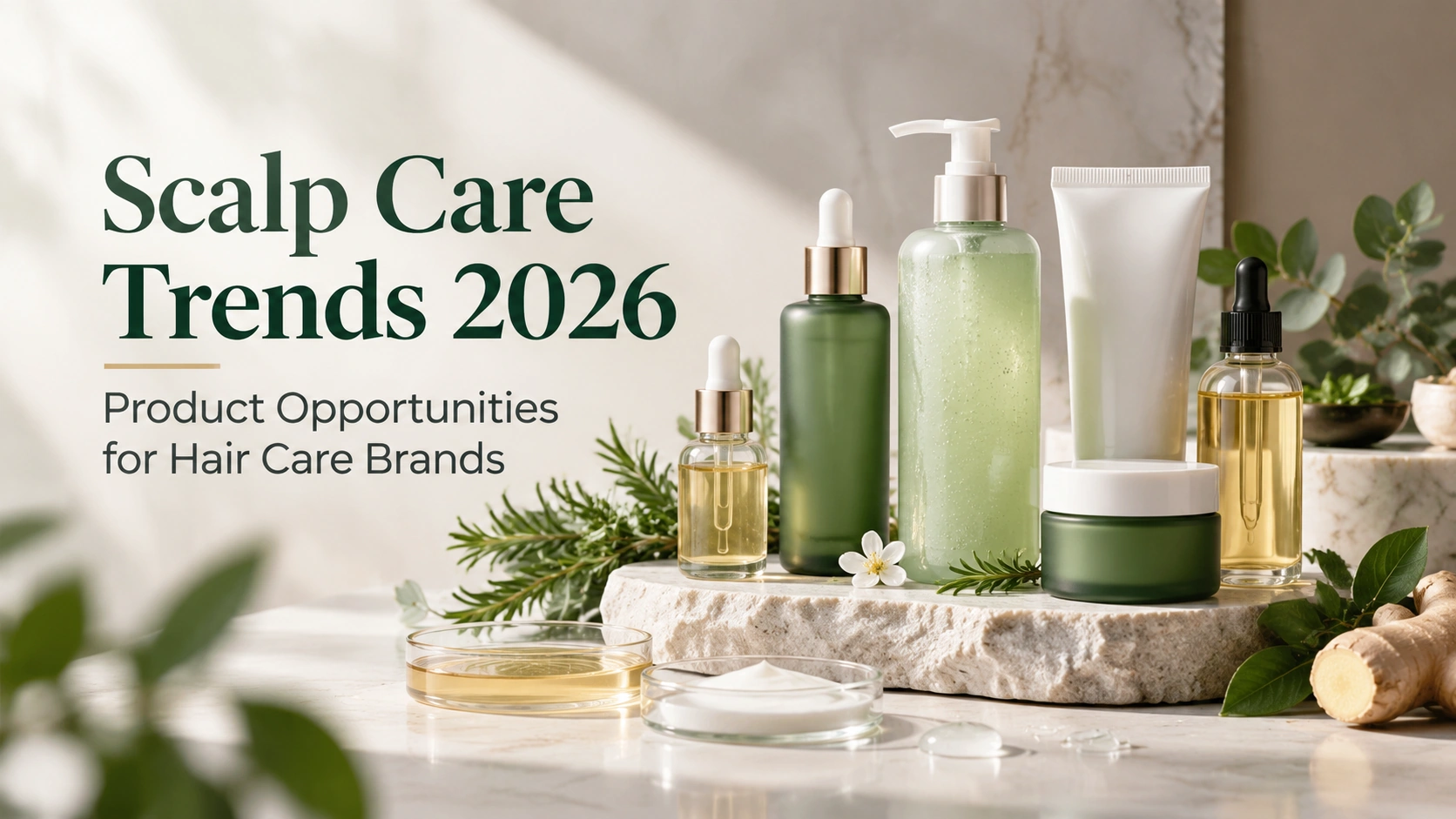
Brands evaluating this opportunity can also explore our analysis of scalp care trends in 2026 to understand emerging product directions and market signals.
Which Scalp Care Products Should Brands Consider Developing?
The best starting product depends on the primary customer need and the role the brand wants the product to play.
Scalp Shampoo: A Familiar Entry Point
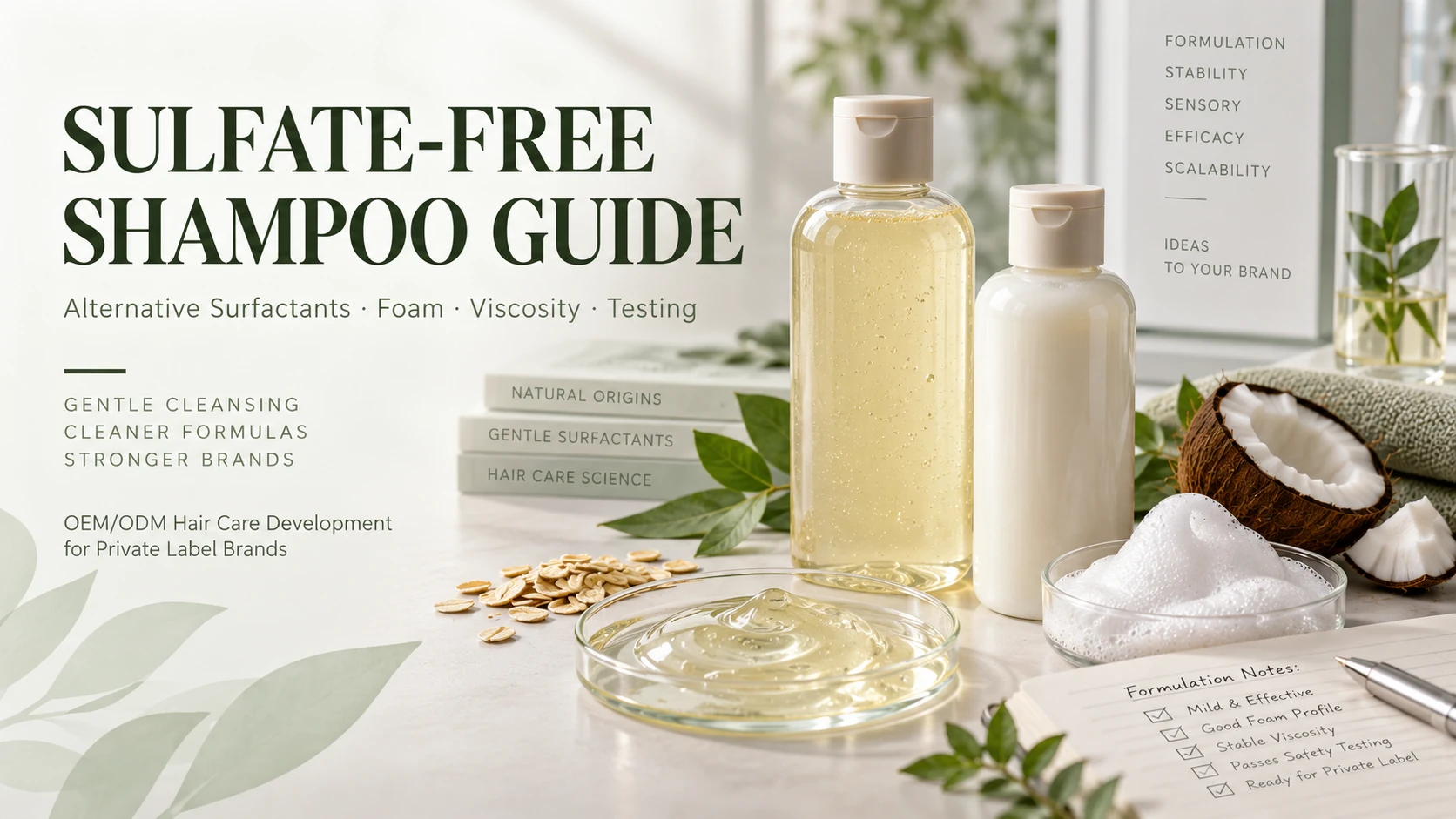
A scalp-focused shampoo can be a practical option for brands that already sell cleansing products. It fits into an established washing routine and can be positioned around gentle cleansing, a fresh scalp feel or the removal of excess buildup.
The development challenge is to balance cleansing performance with a comfortable after-feel. Surfactant selection, foam, viscosity, fragrance and rinse performance all influence how the finished product is experienced.
For brands with an existing shampoo range, a new scalp shampoo should have a clear reason to exist. A more focused formulation or a distinct target audience is generally a stronger proposition than simply adding another shampoo SKU.
Scalp Serum: A More Targeted Leave-On Format
Scalp serum offers a different type of product experience because it is applied directly to the scalp and remains there after application.
Depending on the concept, a serum may be developed around hydration, scalp comfort, a lightweight daily routine or botanical positioning. The formula should match the intended use, with particular attention to spreadability, dry-down and residue around the roots.
Packaging is equally important. A dropper or precision nozzle can help consumers apply the product along sections of the scalp, but the selected applicator must work with the formula's viscosity.
Brands considering this format can explore our private label scalp serum development guide, which covers formulation, ingredients, packaging and sample evaluation in greater detail.
Scalp Scrub and Exfoliating Treatments: A More Specialized Routine
Scalp scrubs and exfoliating treatments can complement a cleansing range by providing a different usage experience from daily shampoo.
Depending on the formula, these products may use physical exfoliating materials or other exfoliating approaches. Their suitability depends on the target consumer, the formulation and the intended instructions for use.
For brands, the main consideration is whether an exfoliating product adds a useful step to the routine. It should have a distinct role and should not be introduced simply to increase the number of products in the collection.
Scalp Oil: A Botanical or Pre-Wash Direction
Scalp oils can fit naturally into botanical, nourishing or pre-wash product concepts. Their positioning and instructions for use need to be clear because an oil intended for pre-wash application may have different sensory requirements from one intended to remain on the scalp.
The formula should also account for spreadability, fragrance, oxidation where relevant and the amount of residue expected after application.
For brands already selling hair oils, a scalp-focused version may provide an opportunity to extend the category, provided the product has a clearly differentiated use and benefit.
How Formula Development Differs Between Scalp Care and Hair Care
The formulation process begins with the same basic principle for both categories: define the intended product use before selecting ingredients.
However, the performance criteria can be different.
For hair masks and conditioners, the formula may prioritize slip, softness, detangling and the feel of the hair after rinsing. A rich texture may be desirable, depending on the target consumer.
For a leave-on scalp serum, a similarly rich or coating feel could be undesirable. The product needs to reach the scalp and remain comfortable after application, without creating excessive heaviness around the roots.
Scalp shampoos and scalp treatments introduce other considerations. Cleansing strength, rinse feel, exfoliating approach and frequency of use all influence the formulation strategy.
Ingredient selection should follow these requirements. Niacinamide, panthenol, Zinc PCA, caffeine and botanical extracts may be considered for different scalp care concepts, but their inclusion does not automatically determine the product's performance.
Compatibility, concentration, base system, stability and intended claims all need to be assessed as part of the complete formula.
This is also why brands should avoid developing products around an ingredient list alone. A formula needs to work as a complete system and deliver the sensory experience expected by the intended customer.
For a broader discussion of ingredient selection and formulation considerations, see our key ingredients in scalp care products guide.
Packaging: Why Scalp Care Products May Need Different Applicators
Packaging is another area where the development requirements can diverge.
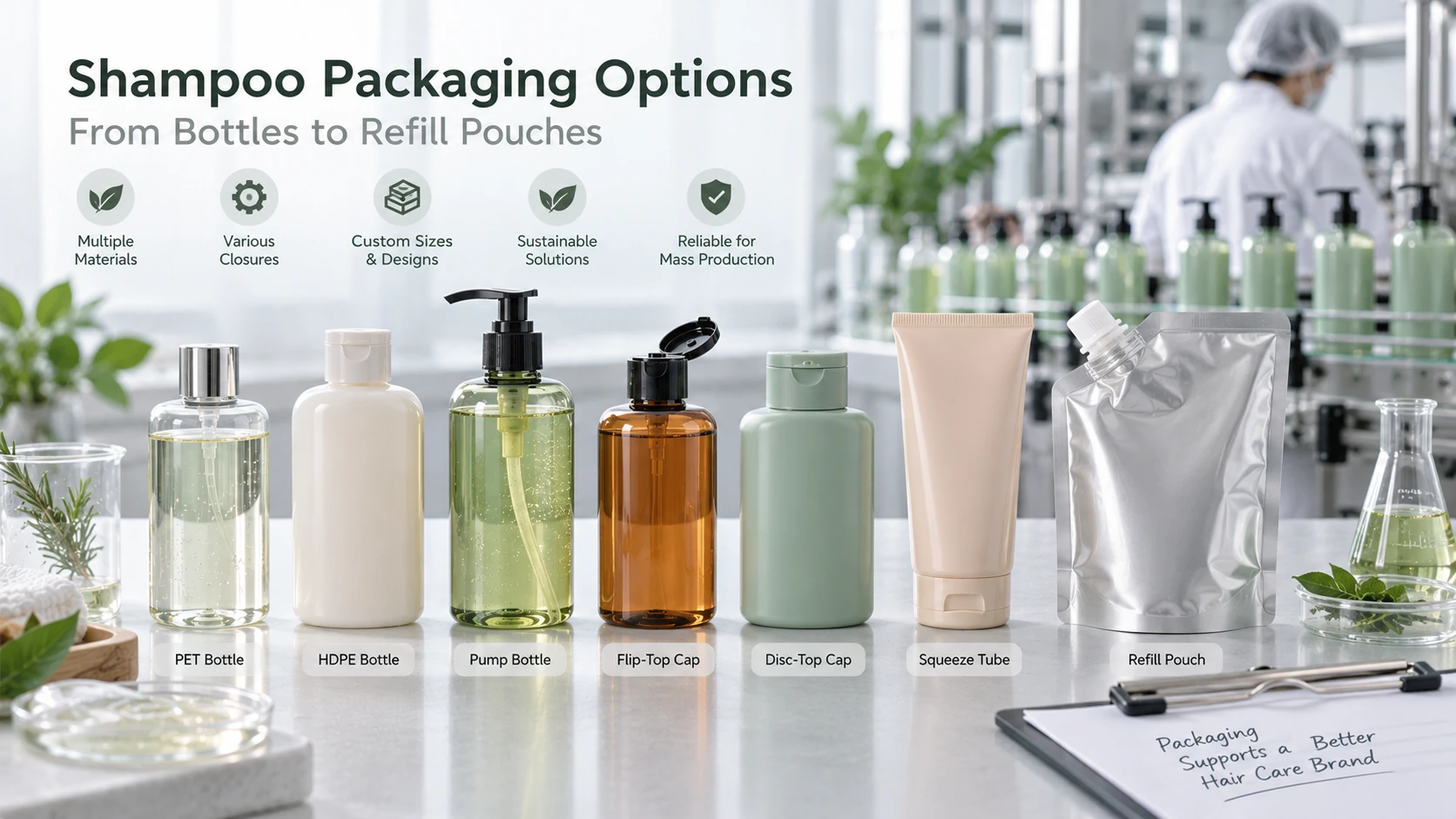
Many conventional hair care products use standard bottles, pumps, tubes or jars. These formats remain suitable for many scalp products, particularly shampoos and rinse-off treatments.
Leave-on scalp products may require more targeted application. A serum intended to be applied directly along the scalp can benefit from a precision nozzle or another suitable applicator. A spray format needs a dispensing system that works with the formula's viscosity and intended coverage.
The choice should not be made on appearance alone.
A premium-looking bottle may be unsuitable if it dispenses too much product, leaks during transportation or makes application difficult. Similarly, a thick formula may not work well with a narrow nozzle or fine-mist spray.
Brands should consider packaging during formula development, then evaluate the formula and final component together before commercial production.
Brands exploring customized scalp serum and oil formats can review Poleview's scalp serum and oil customization options.
How to Build a Product Range Without Duplicating SKUs
One of the most important decisions is determining how scalp care should fit into the wider hair care portfolio.
A brand does not necessarily need a separate scalp care range with six or more products. A smaller collection with distinct product roles can be easier to explain, launch and manage.
For example, an established shampoo brand might add one scalp serum as a targeted treatment. A premium botanical brand might introduce a scalp oil alongside its existing hair oil collection. A brand with a salon-oriented positioning could consider a scalp shampoo and a complementary treatment product.
The important question is whether each new SKU contributes something different to the customer's routine.
A product range becomes harder to manage when multiple products make nearly identical promises. It can also increase packaging commitments, inventory requirements and product education costs without creating a clear reason for customers to buy the additional items.
A more practical approach is to begin with one hero product and a limited number of complementary SKUs. The range can expand later in response to customer feedback, sales performance and the brand's longer-term plans.
What Brands Should Consider Before Starting OEM Development
Once the product direction is clear, the next step is to translate it into a development brief that the manufacturer can evaluate.
The brief should identify the target market, customer, primary product purpose, desired format, texture direction, fragrance preferences, packaging concept and target price position. Reference products can also help communicate the expected experience, although they should be used as guidance rather than assumptions that an identical formula or package can be reproduced.
The brand should also establish whether it wants to start with an existing formula, customize a suitable base or develop a more distinctive product through a custom ODM project.
Each route has different implications for development work, cost, timing and differentiation. The most suitable choice depends on the project's objectives rather than the assumption that full customization is always better.
Before mass production, the formula and packaging should be evaluated together, and the applicable testing, labeling and market requirements should be confirmed. The exact requirements depend on the product and intended sales market.
For a detailed overview of sampling, testing, packaging and commercial production, see our scalp care manufacturing process guide.
Choosing a Scalp Care OEM Manufacturer
A manufacturer should be able to understand the difference between a broad hair care concept and a more specialized scalp care product.
For brands developing new products, useful capabilities include formulation support, sample development, packaging coordination, appropriate quality evaluation and the ability to manufacture the approved product consistently at commercial scale.
It is also important to establish which services and documents are included in the agreed project scope. Regulatory responsibilities may be shared between the brand, manufacturer and qualified regulatory partners depending on the market and business arrangement.
Poleview Cosmetics supports private label hair care brands developing scalp serums, scalp shampoos, scalp oils and related scalp care products. Brands evaluating a new project can review our scalp care manufacturing services to learn more about our product development and OEM/ODM capabilities.
Frequently Asked Questions
Q: 1. Is scalp care the same as hair care?
A: No. Hair care is the broader category, covering cleansing, conditioning, treatment and styling. Scalp care is a more targeted direction focused on the scalp's cleansing, hydration, comfort and other cosmetic care needs. Some products serve both purposes.
Q: 2. Should a hair care brand develop scalp care products?
A: It may be a suitable extension if the products meet an identifiable customer need and complement the existing range. Brands should evaluate customer demand, product differentiation, sales channels and development costs before adding new SKUs.
Q: 3. What is the difference between scalp shampoo and regular shampoo?
A: Both are cleansing products, but a scalp-focused shampoo is developed and positioned around specific scalp-related needs. The formula and claims should match the intended use, while cleansing performance, scalp feel and rinse experience remain important considerations.
Q: 4. Which scalp care product is suitable for a new private label brand?
A: A scalp shampoo or scalp serum may be a practical starting point, depending on the brand's audience and positioning. A shampoo fits an established cleansing routine, while a serum offers a targeted leave-on format. There is no single best option for every brand.
Q: 5. Can a manufacturer develop both hair care and scalp care products?
A: Yes, depending on the manufacturer's product range and capabilities. Brands should confirm the available formats, formulation options, packaging support and production requirements for each proposed product.
Develop Your Next Scalp Care Product With Poleview
Scalp care and traditional hair care are closely connected, but each product should have a clear purpose within the brand's portfolio.
The strongest development decisions begin with the customer need, then connect product format, formula, packaging and commercial positioning. A new scalp product should complement the existing range and offer a meaningful reason for customers to choose it.
Poleview Cosmetics supports OEM/ODM development for brands looking to extend their hair care collections with scalp serums, scalp shampoos, scalp oils and related products.
Explore our private label scalp care manufacturing services to discuss your product concept, customization requirements and manufacturing plans.