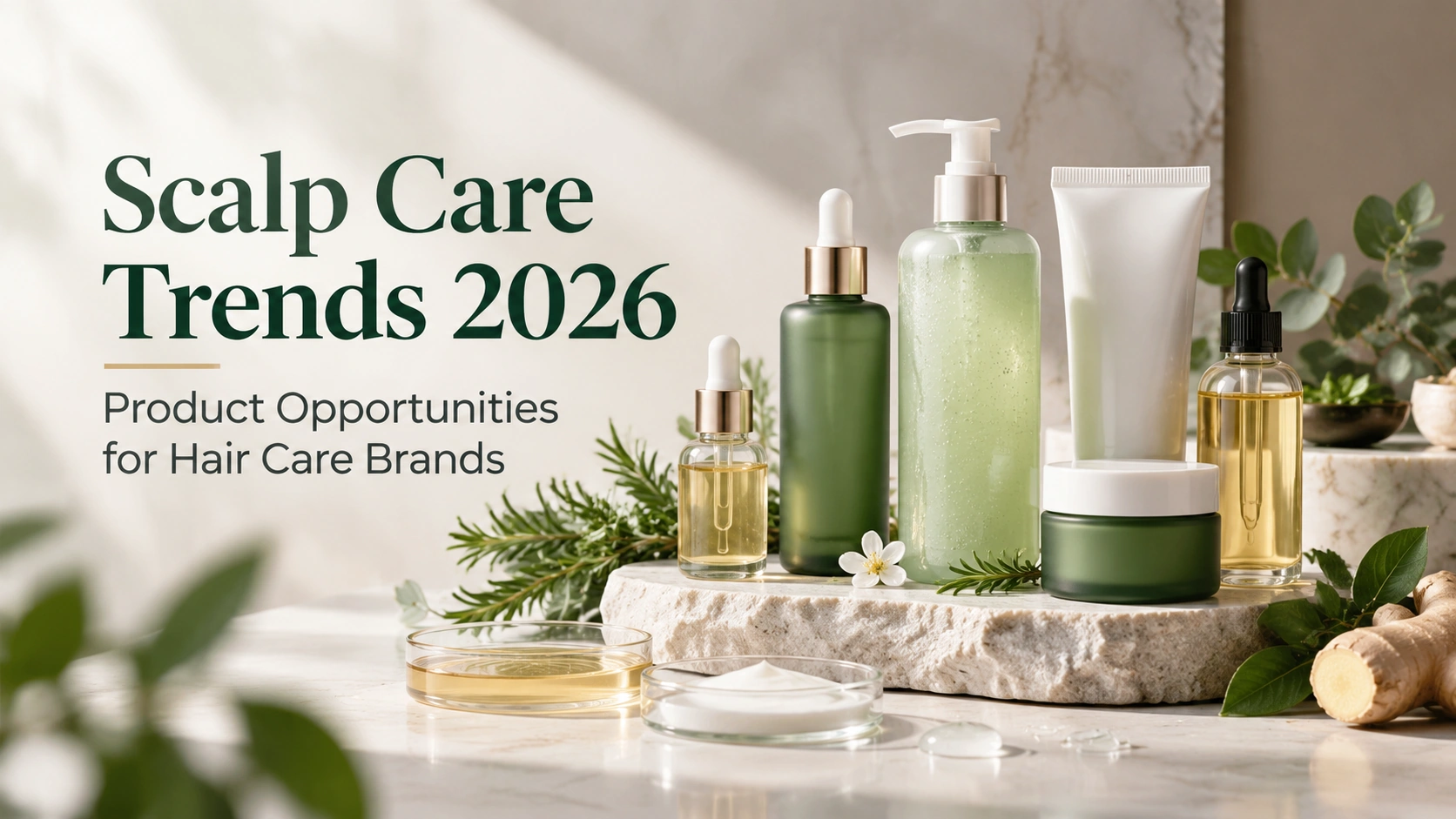
Scalp care is moving beyond traditional cleansing and anti-dandruff products. Hair care brands are increasingly exploring targeted treatments, lightweight scalp serums, exfoliating products and routines inspired by skincare and professional salon services.
For brands, the opportunity is not simply to launch another product with a popular ingredient. It is to build a scalp care offering with a clear purpose, a suitable product format and a reason for customers to choose it over existing alternatives.
Industry data provides evidence of this shift. According to Kline's analysis published in 2026, the global professional scalp care market reached approximately US$1.1 billion in 2025, growing by around 10% year over year across the 11 major markets covered by its research. This figure refers specifically to the professional scalp care market in those markets, rather than the entire global scalp care category. Kline's professional hair care analysis also highlights the growing influence of skincare-inspired ingredients, scalp-focused treatments and more integrated care routines.
For private label hair care brands, these developments create several opportunities, from introducing a targeted scalp serum to extending an established shampoo range into a more complete treatment system. The challenge is deciding which trends are commercially relevant and how to translate them into products that can be formulated, manufactured and positioned effectively.
Why Scalp Care Is Becoming More Important in Hair Care
For years, hair care product development focused heavily on the appearance and manageability of the hair itself: shine, smoothness, volume, frizz control and conditioning. Those needs remain important, but scalp care is adding another dimension to the category.
Consumers can now encounter scalp-focused products across salon treatments, specialty retail, e-commerce and everyday hair care routines. Instead of relying on a single shampoo to address every need, brands can develop products for more specific experiences, such as lightweight daily scalp care, clarifying treatments, hydration-focused formulas or botanical pre-wash oils.
This creates room for brands to differentiate themselves without abandoning their existing hair care expertise.
The professional channel offers one indication of this opportunity. Kline reported that U.S. salon scalp treatment services grew by 9% in the first three quarters of 2025 compared with the same period in 2024, while retail sales of scalp care products in salons grew by 6%. These figures apply to the U.S. salon channel, not the entire U.S. or global market. They nevertheless suggest that professional treatments and products for continued at-home use can support one another. Read Kline's scalp care market analysis.
For brand owners, the practical question is no longer simply whether scalp care is gaining attention. It is which part of the category fits their customers, distribution channels and existing product portfolio.
For a broader view of changes across the hair care category, read our guide to Hair Care Market Trends, Products & Key Ingredients 2026.
Five Scalp Care Trends Hair Care Brands Should Watch in 2026
1. Skinification Is Bringing More Targeted Formulation Concepts to Scalp Care
One of the clearest developments in modern hair care is the influence of skincare. Consumers who are familiar with facial serums, exfoliants and ingredient-led routines may also be interested in products designed specifically for the scalp.
This has encouraged brands to explore scalp serums, exfoliating treatments and formulas positioned around hydration, comfort or oil balance. Ingredients traditionally associated with skincare, including niacinamide, panthenol and selected specialty actives, are appearing in scalp care concepts as well.
The opportunity lies in adapting skincare-inspired thinking to the practical requirements of hair and scalp products. A leave-on scalp serum, for example, needs to spread through the hair, reach the scalp and dry down without leaving an uncomfortable amount of residue around the roots. A rinse-off exfoliating product has different formulation and usage requirements.
For brands, the lesson is to borrow useful ideas from skincare without simply copying a facial skincare formula or its marketing claims. Product format, application, sensory performance and intended use should determine how the concept is developed.

2. Scalp Serums Are Creating Opportunities for More Specialized Products
Scalp serums are an attractive format for brands seeking to move beyond conventional shampoo and conditioner offerings. Their leave-on application creates opportunities for targeted product positioning, ingredient-focused storytelling and more premium presentation.
However, a scalp serum should not be selected as a hero product simply because the format is receiving attention. Its commercial suitability depends on the target consumer, the intended benefit, the price position and the brand's ability to communicate how the product fits into a routine.
Texture is especially important. A formula that feels sticky, heavy or greasy at the roots can undermine the product experience, even when the ingredient story appears compelling. Packaging also matters because consumers need to apply the serum directly to the scalp rather than distribute most of it through the hair.
For brands considering this format, development should focus on the relationship between formula, application method and daily use. Our private label scalp serum development guide explores these decisions in greater detail, including ingredient selection, texture, packaging and sample evaluation.
3. Head Spa and Wellness Are Expanding the Scalp Care Experience
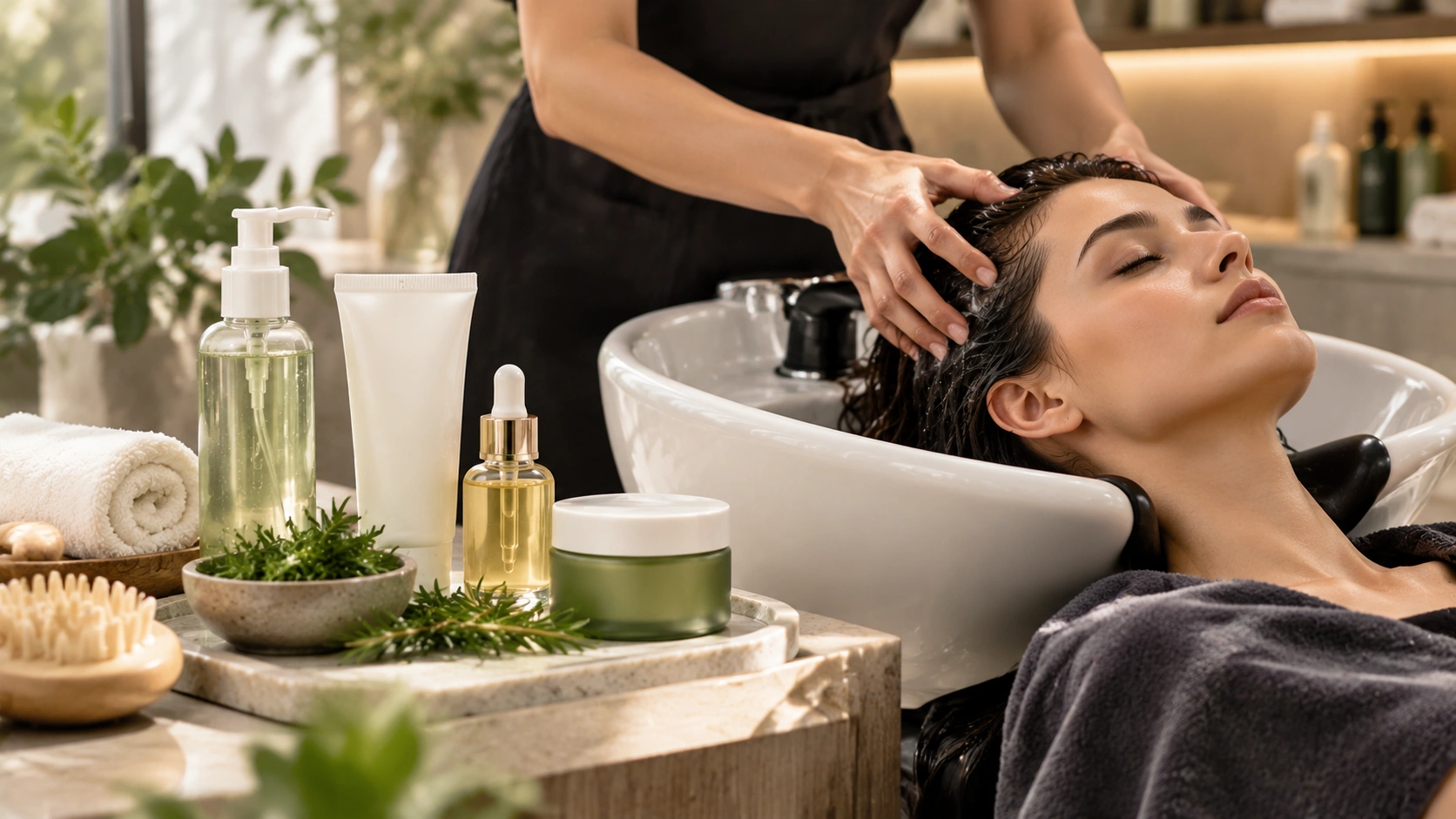
Scalp care is also becoming part of a broader self-care and wellness experience. Professional head spa services often combine scalp assessment, cleansing, exfoliation, massage and targeted treatments. Their appeal comes from the overall experience as well as the individual products used.
For brands serving salons or premium beauty channels, this creates opportunities to develop products that complement professional treatments and extend the routine into the home.
A product line might include a cleansing shampoo, a pre-wash scalp oil and a targeted treatment serum. Each product should have a distinct role rather than simply repeating the same benefits across several SKUs.
The commercial opportunity is particularly relevant when a brand already has access to salon distribution or a customer base interested in premium hair care. A wellness-inspired product range may be less suitable for a brand competing primarily on low prices and basic everyday cleansing.
Packaging, fragrance and application experience can contribute to this positioning, but they need to support the product concept rather than substitute for a well-developed formula.
4. Personalized Scalp Care Is Encouraging More Focused Product Ranges
Consumers do not all have the same scalp care preferences. Some look for a fresh, lightweight experience; others prefer hydration-focused products, gentle cleansing or more intensive treatment routines.
This creates opportunities for brands to develop product ranges around clearly defined needs instead of offering one product with an unnecessarily broad set of claims.
For example, a brand targeting oily roots might prioritize a clarifying shampoo or a lightweight scalp serum. A brand focused on dry-feeling scalp care could explore a hydration-oriented treatment. A botanical brand may choose a scalp oil or serum that fits naturally with its existing plant-inspired hair care range.
The key is to keep the product promise focused. A formula designed around one primary purpose is generally easier to position and explain than a product that attempts to address oiliness, dryness, sensitivity, buildup and hair growth simultaneously.
Personalization does not necessarily require a large catalogue. A small, clearly differentiated range can provide customers with meaningful choices while allowing the brand to manage formulation, packaging and inventory more efficiently.
5. Botanical Inspiration Is Being Combined With More Science-Led Product Development
Botanical ingredients remain relevant to natural and premium hair care positioning. Rosemary, aloe vera, green tea and other plant-derived ingredients can help brands develop recognizable ingredient stories.
At the same time, recent industry discussions have placed greater emphasis on formulation performance, ingredient compatibility, microbiome-related concepts and scalp barrier care. Kline's 2026 reporting from PCHi also highlighted the convergence of skincare-inspired actives and scalp-focused product development. These developments suggest that brands are looking beyond ingredient appeal alone and paying more attention to how ingredients fit into a complete product system.
For private label development, this means that botanical positioning and technical formulation do not need to be treated as opposing choices. A product can draw on botanical ingredients while still requiring careful evaluation of stability, fragrance, color, texture and preservation.
Brands should also distinguish between an ingredient trend and a substantiated product benefit. The presence of a particular active does not automatically prove that a finished formula delivers a specific result. Claims should be appropriate to the product, supported by relevant evidence and reviewed for the intended market.
Sustainability can also influence ingredient and packaging decisions, particularly when buyers request verifiable information about sourcing, materials or environmental performance. Where these considerations matter to the target customer, brands should establish what can actually be documented instead of relying on broad terms such as "eco-friendly" without supporting evidence.
For a deeper look at ingredient selection and formulation considerations, see our guide to key ingredients in private label scalp care products.
Which Scalp Care Opportunities Are Most Relevant to Private Label Brands?
Not every trend needs to become a new SKU. The best opportunity depends on the brand's existing range, sales channel, target price and product development capabilities.
| Trend | Potential Product Direction | Best-Fit Brand Opportunity |
|---|---|---|
| Skincare-inspired scalp care | Scalp serum or targeted treatment | Brands seeking a more specialized or premium range |
| Leave-on treatment formats | Lightweight scalp serum or tonic | Brands looking for a differentiated hero product |
| Head spa and wellness | Scalp oil, treatment or coordinated set | Salon, spa and wellness-oriented brands |
| Concern-led routines | Clarifying shampoo, hydrating treatment or serum | Brands serving clearly defined customer needs |
| Botanical and science-led positioning | Botanical serum, oil or functional shampoo | Brands balancing ingredient storytelling with formulation performance |
These are product development opportunities, not guarantees of demand. Before investing in a new format, brands should assess customer feedback, channel requirements, competitor positioning and target price.
An existing hair care brand may find that extending its current shampoo range with one complementary scalp treatment is a more practical first step than launching an entirely separate collection. A new brand may prefer a single hero product that can be tested before additional SKUs are introduced.
The right choice is the one that gives the product a clear market role while keeping development and inventory commitments manageable.
Turning a Scalp Care Trend Into a Market-Ready Product
A market trend becomes commercially useful only when it can be translated into a product that meets a real customer need.
The first decision is product positioning. Brands should establish who the product is for, what role it plays in the routine and how it differs from alternatives already available to the customer. That decision should guide the formula, texture, packaging and claims.
The next step is to evaluate technical feasibility. An attractive ingredient concept may need adjustment to achieve the desired texture, stability, fragrance profile or packaging compatibility. Likewise, a premium applicator may strengthen the product presentation but increase packaging cost or minimum order requirements.
Target-market requirements should also be considered before labels and packaging artwork are finalized. Ingredient documentation, product claims and applicable cosmetic compliance obligations can influence development decisions and should not be left until the end of the project.
Finally, the product needs to be suitable for commercial manufacturing. Sampling, appropriate testing, packaging confirmation and production planning help determine whether the concept can move from a laboratory prototype to a consistent finished product.
For a closer look at how these stages connect, see our scalp care manufacturing process guide.
Brands that need a broader overview of product formats, formulation considerations and OEM development can also consult our private label scalp care guide.
What Hair Care Brands Should Consider Before Investing in Scalp Care
Scalp care can create new opportunities, but expanding into the category should be a deliberate business decision rather than a reaction to a trend.
Brands should first consider whether scalp care fits their customers and sales channels. A salon-focused brand may have a strong reason to develop a treatment-oriented range, while an everyday hair care brand may benefit more from a straightforward scalp shampoo or lightweight serum.
The next consideration is product differentiation. If a proposed product offers the same experience and claims as several existing products, adding it to the catalogue may not create much value. A more focused concept, a better application experience or a clearer place within the A more focused concept, a better application experience or a clearer role within an existing hair care routine can provide more meaningful differentiation than simply adding another product to the catalogue.
Brands should also consider the commercial implications of their choices. Formula complexity, packaging components, minimum order quantities and testing requirements can all influence the investment needed to launch a product. Starting with a focused range and expanding in response to customer feedback may be more practical than committing to multiple SKUs before demand has been established.
For manufacturers, the goal is to help translate the brand's direction into a product that is technically feasible, commercially realistic and appropriate for the intended market.
Turning Scalp Care Trends Into Long-Term Brand Opportunities
Scalp care in 2026 offers opportunities across targeted serums, specialized cleansing, botanical treatments, wellness-inspired routines and skincare-influenced formulations. However, not every trend will suit every brand.
The most promising approach is to identify a clear customer need, choose a product format that fits the brand's positioning and develop the formula, packaging and claims around that purpose. Market signals can help identify opportunities, but product decisions should also reflect the brand's sales channels, target price and customer feedback.
For companies planning a new scalp care range, an experienced OEM/ODM partner can help assess product concepts, explore formulation options and coordinate sampling, packaging and manufacturing requirements.
Poleview Cosmetics supports private label hair care brands developing scalp serums, scalp shampoos, scalp oils and related scalp care products. Our scalp care manufacturing services provide a starting point for discussing product concepts and customization requirements.
The objective is not simply to follow the next beauty trend. It is to turn a relevant market opportunity into a scalp care product that customers understand, value and want to use.
Frequently Asked Questions
Q: 1. Why is scalp care becoming an important hair care trend in 2026?
A: Scalp care is receiving greater attention through targeted treatments, skincare-inspired formulations and professional scalp services. For brands, this creates opportunities to develop more specialized products alongside traditional shampoo and conditioner ranges.
Q: 2. Which scalp care products should a brand consider launching?
A: Scalp serums, scalp shampoos, scalp oils and targeted treatments are potential options. The best starting point depends on the target customer, sales channel, brand positioning and available development budget.
Q: 3. What is skinification of hair care?
A: Skinification refers to applying skincare-inspired concepts to hair and scalp products, including targeted treatments, ingredient-led formulations and routines designed around specific needs. Products still need to be formulated appropriately for their intended use.
Q: 4. How can a brand turn a scalp care trend into a private label product?
A: Start by defining the target consumer and product purpose. Then select a suitable format, establish the formula and packaging direction, review claims and target-market requirements, and evaluate samples before moving into commercial production.
Q: 5. How can an OEM manufacturer support scalp care product development?
A: Depending on the agreed project scope, an OEM/ODM manufacturer can support formula development, ingredient selection, sample evaluation, packaging coordination, quality checks and mass production. Brands should confirm the available services, documentation and responsibilities before starting a project.