Introduction: Building a Balanced Sulfate-Free Shampoo Formula
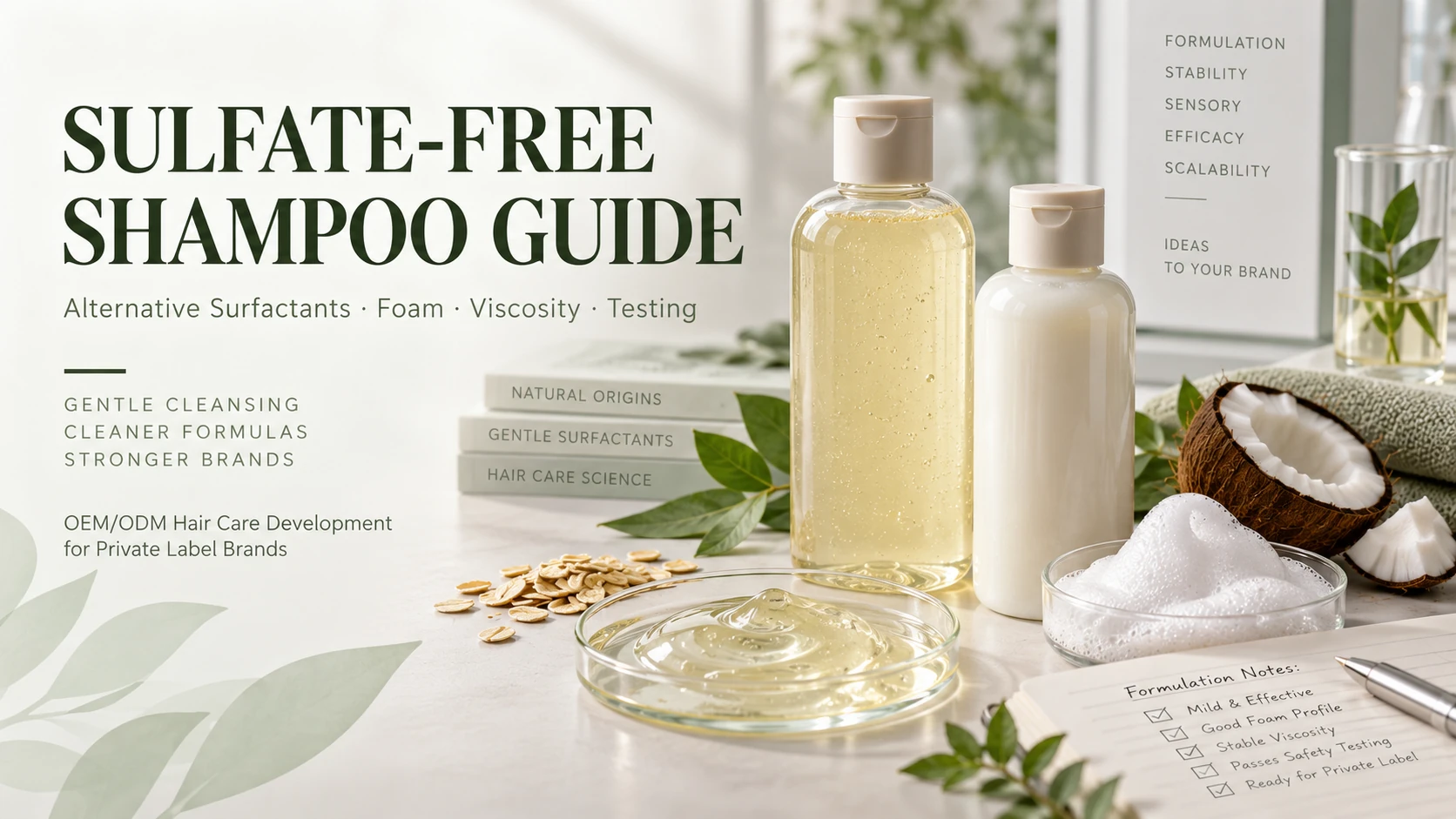
Developing a sulfate-free shampoo is not simply about removing SLS and SLES from an existing formula.
For private label hair care brands, the real challenge is rebuilding a complete cleansing system that delivers the right balance of cleansing performance, foam, viscosity, conditioning feel, and consumer experience.
Traditional sulfate surfactants have been widely used in shampoos because they provide strong cleansing and reliable foam performance. However, as consumers increasingly look for gentle cleansing, clean beauty, and ingredient-conscious products, many brands are exploring sulfate-free alternatives.
The difficulty is that removing sulfate surfactants changes the behavior of the entire formula. Surfactant selection can influence foam quality, texture, mildness, conditioning performance, and even packaging compatibility.
A successful sulfate-free shampoo is therefore not defined by what has been removed, but by how well the complete formula has been rebuilt.
This guide explains the key considerations behind sulfate-free shampoo formulation, including surfactant selection, foam performance, viscosity control, conditioning systems, testing, and commercial production.
What Does Sulfate-Free Shampoo Really Mean?
A sulfate-free shampoo is generally formulated without traditional sulfate surfactants such as Sodium Lauryl Sulfate (SLS) and Sodium Laureth Sulfate (SLES).
These ingredients are commonly used in cleansing products because they provide effective removal of oil, dirt, and product buildup while creating abundant foam. However, some consumers and brands prefer alternative cleansing systems, especially for products positioned around mild care, sensitive scalp concepts, or clean beauty.
This approach is also common in scalp-focused product development, where cleansing strength and scalp comfort need to be carefully balanced.
It is important to understand that sulfate-free does not mean surfactant-free.
A shampoo still requires surfactants to clean the hair and scalp. The difference is that formulators use different surfactant combinations to achieve the desired cleansing strength and sensory experience.
For private label brands, the important consideration is not simply whether a formula contains sulfates. The focus should be whether the cleansing system provides the right balance between cleansing ability, foam, mildness, conditioning, and product positioning.
Why Sulfate-Free Shampoo Formulation Requires More Development Work
A sulfate-free shampoo often requires more formulation adjustment than simply replacing one ingredient.
Traditional sulfate systems have certain advantages, including predictable cleansing performance and familiar foam characteristics. When developing sulfate-free alternatives, formulators need to recreate these benefits using different surfactant combinations.
A formula that is too mild may not provide enough cleansing for oily hair or styling residue. A stronger cleansing system may affect softness or after-wash comfort. Additional conditioning ingredients may improve smoothness but create a heavier feel for fine hair types.
This means sulfate-free shampoo development is a balancing process.
The final formula needs to consider cleansing performance, foam behavior, viscosity, conditioning level, stability, and the expectations of the target consumer.
For brands launching a private label shampoo, understanding this balance helps create a more accurate product brief and reduces unnecessary sample adjustments.
Choosing the Right Surfactant System for Sulfate-Free Shampoo
Surfactants are the foundation of shampoo cleansing performance.
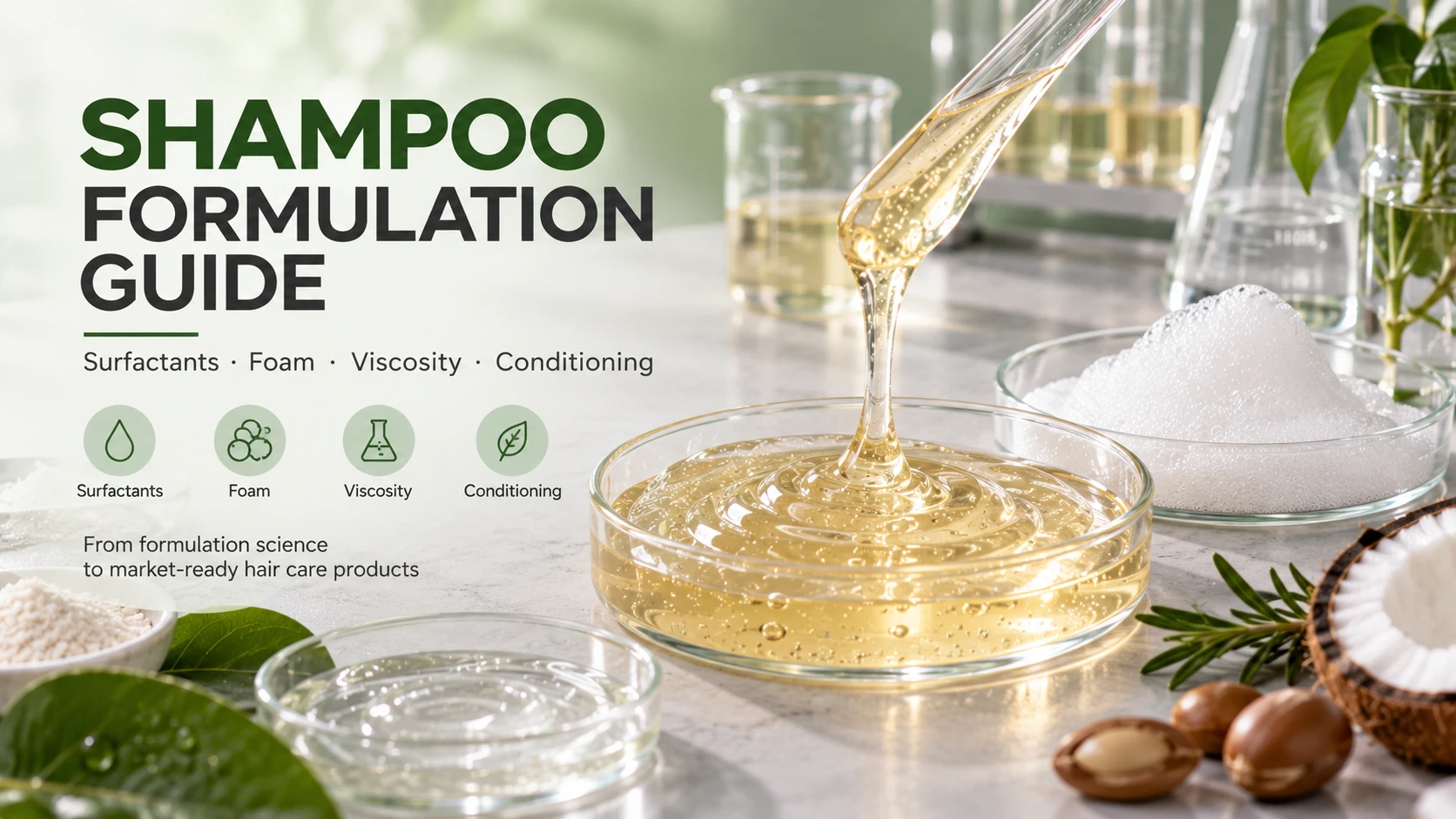
Unlike traditional sulfate-based formulas, sulfate-free shampoos usually rely on combinations of different surfactants to achieve the desired product experience. For a broader understanding of shampoo surfactant selection, foam performance, viscosity control, and conditioning balance, explore our Shampoo Formulation Guide. Each surfactant type contributes different characteristics, including cleansing ability, foam profile, mildness, and compatibility with other ingredients.
A professional formulation normally uses a surfactant blend rather than relying on a single cleansing ingredient.
| Surfactant Type | Common Examples | Role in Formula |
|---|---|---|
| Amino Acid Surfactants | Sodium Cocoyl Glutamate, Sodium Cocoyl Glycinate | Gentle cleansing and mild-care positioning |
| Glucosides | Decyl Glucoside, Coco-Glucoside | Mild cleansing and plant-derived concepts |
| Isethionates | Sodium Cocoyl Isethionate | Creamy foam and soft sensory profile |
| Taurates | Sodium Methyl Cocoyl Taurate | Balanced cleansing and foam performance |
| Amphoteric Surfactants | Cocamidopropyl Betaine, Sodium Cocoamphoacetate | Supporting foam and improving mildness |
Different surfactants work differently within a formula.
For example, amino acid surfactants are often selected for gentle cleansing concepts, while glucoside-based systems may support naturally positioned products. Some surfactants are more suitable as supporting ingredients rather than the primary cleansing component.
The final performance depends on the complete surfactant architecture, including ingredient ratios, concentration, and interaction with conditioning agents and other formula components.

How to Maintain Foam Performance in Sulfate-Free Shampoo
Foam is one of the first things consumers notice when using shampoo, but foam volume alone does not determine cleansing performance.
A sulfate-free shampoo does not necessarily need to create the largest amount of foam. Many premium formulas focus on creating a creamy, dense, and comfortable lather that matches the product positioning.
Foam performance depends on several factors, including surfactant selection, concentration, water quality, and the overall formula structure.
During development, formulators evaluate not only how much foam a shampoo produces, but also how quickly it develops, how it feels during application, and how easily it rinses away.
For example, a gentle scalp-care shampoo may prioritize a softer and smoother foam experience, while a daily cleansing shampoo may require a lighter and faster-rinsing profile.
Managing Viscosity Challenges in Sulfate-Free Shampoo
Viscosity plays an important role in both consumer perception and product usability.
A shampoo with suitable thickness feels more premium, spreads easily through the hair, and works well with the selected packaging format. However, sulfate-free systems can be more challenging to thicken because different surfactant combinations respond differently to viscosity adjustment methods.
Some traditional sulfate formulas respond well to salt adjustment, while many sulfate-free formulas require alternative approaches such as polymeric thickeners, cellulose derivatives, or rheology modifiers.
The correct viscosity system depends on the complete formula.
A thickener that works well in one surfactant system may affect clarity, foam, stability, or sensory performance in another.
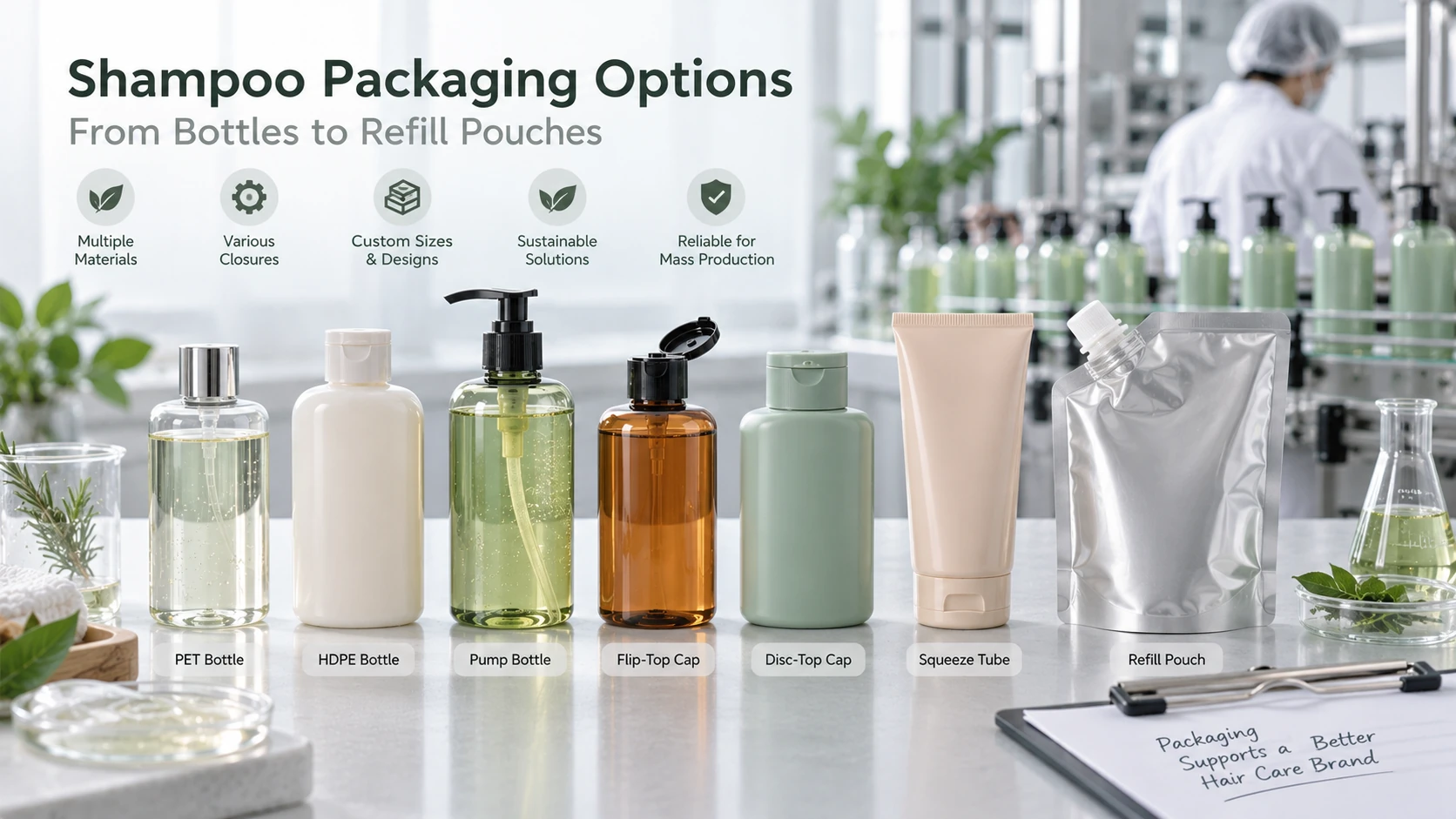
Packaging compatibility is also an important consideration. A formula designed for a pump bottle may require different flow characteristics from one packaged in a flip-top bottle or tube.
Formula and packaging decisions should be evaluated together during development. Learn more about our approach to custom ingredients and packaging solutions.
For private label brands, viscosity testing should always be performed together with the final packaging to ensure smooth dispensing, filling efficiency, and consistent consumer experience.
The goal is not maximum foam. The goal is the right foam experience for the intended consumer.
Conditioning Performance in Sulfate-Free Shampoo
A successful shampoo should not only clean hair effectively but also provide a comfortable after-wash feel.
Conditioning performance influences softness, manageability, smoothness, and wet-hair combability. In sulfate-free formulas, conditioning systems are especially important because brands often position these products around gentle cleansing and improved hair comfort.
Depending on the product concept, formulators may consider ingredients such as cationic polymers, guar derivatives, silicones, silicone alternatives, proteins, or other conditioning materials.
However, adding more conditioning ingredients does not always create a better product.
A lightweight daily shampoo may require a softer conditioning approach to avoid buildup, while a repair-focused shampoo may need stronger conditioning support for damaged hair.
The objective is to create the right balance between clean feeling and hair comfort.
The final formula should be evaluated through sensory testing and practical performance assessment rather than judged only by the ingredient list.
pH, Preservation and Stability Testing
Because shampoo is typically a water-based product, stability and preservation are essential parts of commercial development.
A sulfate-free formula should be evaluated to confirm that it maintains its intended appearance, texture, fragrance, and performance throughout storage and use.
Depending on the product requirements, testing may include:
| Testing Area | Purpose |
|---|---|
| Stability Testing | Confirm formula consistency under different storage conditions |
| Microbiological Testing | Evaluate product safety and preservation performance |
| Packaging Compatibility | Confirm interaction between formula and packaging |
| pH and Viscosity Testing | Maintain product performance and consistency |
A formula that performs well in a laboratory sample still needs to demonstrate reliability during commercial manufacturing.
For private label brands, this testing process helps ensure that the approved sample can be translated into a stable, repeatable production formula.

From Sulfate-Free Formula Development to Commercial Production
A successful sulfate-free shampoo begins with a clear product concept.
Before selecting ingredients, brands should define the target consumer, hair type, product positioning, desired claims, fragrance direction, packaging format, and target market.
Based on these requirements, the formulation team can adjust the cleansing system, foam profile, conditioning level, viscosity, and overall sensory experience.
After sample evaluation and refinement, the formula moves through testing and production preparation.
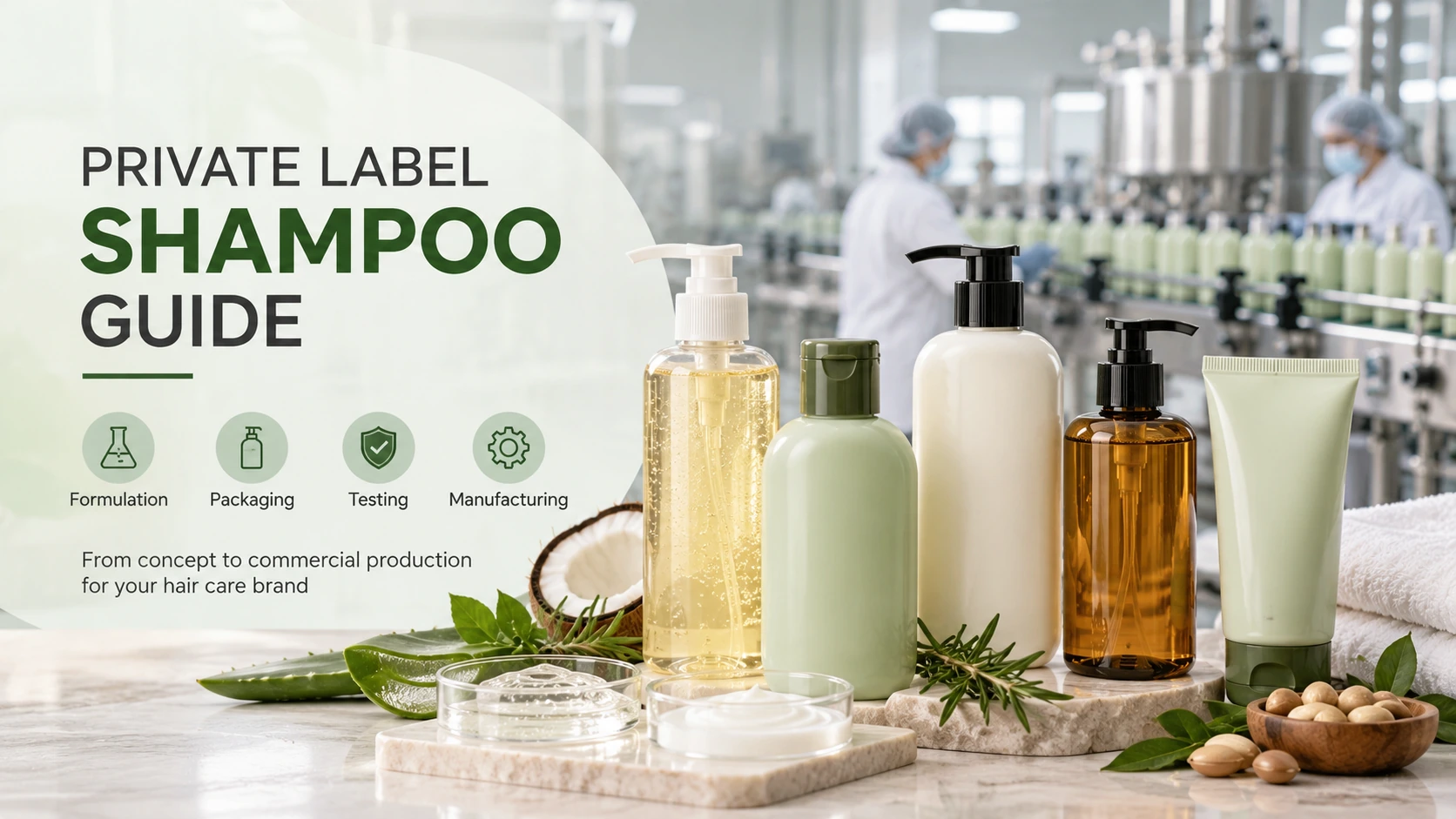
Commercial manufacturing requires more than scaling up a laboratory formula. Working with an experienced OEM/ODM partner helps brands evaluate formula scalability, production requirements, and quality consistency before launch. Mixing conditions, raw material consistency, processing parameters, filling processes, and quality specifications all influence the final product.
This is why a structured development process is important. A formula should not only perform well in a sample bottle but also remain consistent during repeat production.
Custom Sulfate-Free Shampoo Development With Poleview
Poleview Biotechnology Group Co., Ltd. supports private label hair care brands with customized sulfate-free shampoo formulation and OEM/ODM manufacturing services.
Our development process focuses on creating balanced formulas based on each brand's target market, including cleansing performance, sensory expectations, ingredient preferences, packaging requirements, and production needs.
From surfactant selection and formula adjustment to sample evaluation, testing, and commercial manufacturing, Poleview helps brands transform sulfate-free shampoo concepts into market-ready products.
Whether developing a gentle daily shampoo, clean beauty concept, or specialized hair care product, the goal is to create a formula that performs consistently from development through production.
Explore our custom shampoo manufacturing services to learn more about private label hair care development.
Sulfate-Free Shampoo FAQ
Q: 1. Is sulfate-free shampoo better for all hair types?
A: Not necessarily. Sulfate-free shampoo can be suitable for consumers looking for gentler cleansing, but the final performance depends on the complete formula, hair type, scalp condition, and product positioning.
Q: 2. What surfactants are used in sulfate-free shampoo?
A: Common sulfate-free surfactant options include amino acid surfactants, glucosides, isethionates, taurates, and amphoteric surfactants. Professional formulas usually combine several surfactants to achieve balanced performance.
Q: 3. Can sulfate-free shampoo still produce rich foam?
A: Yes. Sulfate-free shampoos can be designed with satisfying foam performance. Foam quality depends on the complete surfactant system rather than one individual ingredient.
Q: 4. Why is sulfate-free shampoo harder to thicken?
A: Different sulfate-free surfactant systems respond differently to viscosity adjustment. Manufacturers may need alternative thickening approaches to achieve the desired texture and stability.
Q: 5. Can I develop a custom sulfate-free shampoo with an OEM manufacturer?
A: Yes. OEM/ODM manufacturers can develop sulfate-free shampoos according to target hair type, ingredient preferences, fragrance direction, packaging format, and market requirements.
Conclusion
A successful sulfate-free shampoo is not created by simply removing sulfate surfactants.
The real challenge is building a balanced cleansing system that delivers the right combination of cleansing performance, foam, viscosity, conditioning, stability, and consumer experience.
For private label brands, working with an experienced OEM/ODM manufacturer helps turn a sulfate-free shampoo concept into a formula suitable for testing, production, and long-term commercial success.