Scalp care is no longer treated as a small extension of shampoo. For many hair care brands, it is becoming a category of its own, with products such as scalp serums, oils, exfoliating treatments, masks and targeted shampoos creating new opportunities beyond traditional cleansing and conditioning.
Developing a successful scalp care product, however, involves more than selecting a popular ingredient and placing it in an attractive bottle. The product format, target scalp concern, base formula, sensory profile, packaging system, stability requirements and intended market all affect how the final product should be developed.
For brands working with a private label scalp care manufacturer, the most productive projects usually start with a clear product concept rather than a long ingredient wish list.

This guide looks at scalp care from a product development perspective: which formats brands can consider, how formulas are planned, what ingredients are commonly used, how packaging affects formulation, and what should happen before a product moves into mass production.
Why Scalp Care Is Becoming a Strategic Category for Hair Care Brands
Traditional hair care routines were relatively simple: shampoo, conditioner, perhaps a mask, followed by an oil or styling product. That model is expanding.
Consumers are paying more attention to the condition of the scalp itself, while brands are building routines that start before the hair shaft is treated. Pre-shampoo oils, scalp exfoliators, targeted serums and leave-on treatments are increasingly being positioned alongside traditional shampoo and conditioner.
This shift is also part of the broader changes shaping hair care market trends in 2026, where scalp-focused products, targeted treatments and skincare-inspired formulas are becoming more important to product development.
For a hair care brand, this creates more than a trend opportunity. It creates room to build a broader product system.
A shampoo may be used for cleansing, while a serum can provide a more targeted daily treatment experience. A scrub can sit in a weekly routine, while a scalp oil may fit naturally into botanical or premium hair care collections. Instead of selling one isolated product, the brand can build a sequence of complementary products around the same customer concern.
This matters commercially because scalp care can support higher-value positioning without forcing a brand to move outside its existing hair care identity.
A company already selling shampoo, hair masks or hair oils does not necessarily need to create an entirely new category from scratch. Scalp care can be introduced as an extension of the existing line, provided that the new products have a clear role and do not simply duplicate what the current range already does.
The real question, therefore, is not whether a brand should add "a scalp product." It is which scalp care format makes sense for its customer, price point and existing assortment.
Which Scalp Care Product Should Your Brand Develop?
There is no single scalp care format that works for every brand.
A premium treatment brand may find more value in a lightweight leave-on serum. A natural hair care line may prefer a botanical scalp oil. A mass-market range may gain more commercial value from a scalp-focused shampoo that fits naturally into a daily routine.
Choosing the right format early makes the rest of the development process much easier.
| Product Type | Best Suited For | Typical Texture Direction | Common Packaging | Typical Brand Positioning |
|---|---|---|---|---|
| Scalp Serum | Daily targeted treatment | Lightweight, fast-absorbing | Precision nozzle, dropper | Functional, premium |
| Scalp Oil | Pre-wash or nourishing care | Lightweight oil | Dropper, narrow nozzle | Botanical, natural |
| Scalp Shampoo | Regular cleansing | Liquid or gel | Bottle, pump | Daily care, broad market |
| Scalp Scrub | Buildup and exfoliation concepts | Gel, cream or paste | Tube, jar | Detox, premium treatment |
| Scalp Mask | Intensive scalp treatment | Cream or gel | Jar, tube | Salon, treatment-focused |
A scalp serum, for example, is usually expected to feel light enough for frequent use. If the formula leaves a heavy or sticky residue around the roots, the customer may dislike the product even if the ingredient story is strong.
A scalp cleansing oil faces a different challenge when the concept is positioned around pre-wash cleansing or botanical care.
Scalp shampoos, scrubs and masks are rinse-off products, so they have different performance priorities. Cleansing efficiency, ease of rinsing, foam profile, particle distribution and after-feel can matter more than long-term leave-on sensorial properties.
This is why the product format should be decided before detailed formulation begins.
For brands especially interested in a leave-on treatment format, our private label scalp serum development guide explains formula structure, active selection, texture, applicator, sampling and OEM manufacturing in greater detail.
Start With the Scalp Concern, Not the Ingredient
One of the most common mistakes during early product planning is starting with a fashionable ingredient.
A brand may approach a manufacturer and say, "We want a rosemary scalp serum," or "We need caffeine and niacinamide in the formula." Those ingredients may fit the concept, but they should not be the starting point.
The better starting question is:
What problem or user need is this product designed around?
An oily scalp requires a very different formulation direction from a dry or sensitive scalp. A buildup-focused product may be better suited to a rinse-off format, while a lightweight serum may make more sense for a daily leave-on routine.
| Target Concept | Suitable Product Formats | Main Formulation Priority |
| Oily Scalp | Shampoo, serum, scrub | Lightweight feel, cleansing, low residue |
| Dry Scalp | Serum, mask | Hydration, comfort, scalp feel |
| Sensitive Scalp | Mild shampoo, serum | Gentle system, fragrance control |
| Buildup | Scrub, clarifying shampoo | Effective cleansing and easy rinsing |
| Nourishing Care | Oil, serum | Absorption and sensory balance |
The distinction sounds simple, but it has a large impact on product quality.
Take an oily scalp concept. Adding several botanical oils because they are popular in marketing may work against the intended user experience. Likewise, a formula aimed at a sensitive scalp may need tighter control over fragrance and essential oils than a botanical product designed primarily around a natural sensory story.
A good development brief should therefore define the target consumer, expected usage frequency, desired product format and sensory expectations before the ingredient system is finalized.
Once those elements are clear, ingredient selection becomes much more purposeful.
How Scalp Care Formulas Are Developed
Scalp care formulation usually starts with a product brief rather than a laboratory formula.
The brief should explain what the product is, who it is for, how it will be used, how it should feel and where it will be sold. From there, the manufacturer can begin building the technical structure of the formula.
Product Format Comes First
The first major decision is whether the formula will be leave-on or rinse-off.
A leave-on scalp serum remains on the scalp for an extended period, so residue, stickiness and absorption become especially important. A rinse-off shampoo or scrub has a shorter contact time and is judged more heavily on cleansing, rinsing, foam and after-feel.
A formula that works well in one category cannot simply be transferred into another.
The Base System Shapes the Product Experience
Different scalp care products may use water-based systems, oil-based systems, emulsions or surfactant-based cleansing systems.
A water-based scalp serum can create a fresh, lightweight feel, while an oil-based treatment may support botanical or nourishing positioning. An emulsion can provide a richer treatment experience, and cleansing systems are more appropriate for shampoos and certain exfoliating products.
The base is not only a technical decision. It also affects how the customer understands and uses the product.
Active Ingredients Need a Clear Role
Adding more ingredients does not automatically create a better formula.
Each active should have a reason to be present, and the complete system must remain practical in terms of stability, appearance, texture and positioning.
A brand may want rosemary, niacinamide, caffeine, peptides and several botanical extracts in one product. That can create an impressive ingredient list, but it may also make formulation more complicated without improving the customer experience.
A more disciplined formula often performs better commercially because the product has a clearer story and more controlled sensory profile.
Texture and Sensory Performance Matter
Scalp products are used close to the roots, where heavy residue is particularly noticeable.
For this reason, absorption, stickiness, oiliness, cooling sensation, fragrance intensity and after-feel should all be considered during sampling.
A formulation can be technically stable and still fail as a product if the customer does not enjoy using it.
This is especially important for leave-on serums and oils, where a formula may stay on the scalp for hours.
Stability Must Be Designed Into the Formula
Ingredient compatibility, pH, viscosity, appearance and odor can all change during storage.
The goal is not simply to create a good first sample. The formula should remain consistent after production, filling, transportation and normal storage.
This is one of the main differences between making a laboratory prototype and preparing a formula for commercial manufacturing.

Key Ingredients Used in Scalp Care Formulations
Scalp care ingredients are most useful when considered as part of a formulation strategy rather than as a list of popular actives.
A brand should first decide what type of product it wants to create, then select ingredients that support that positioning.
Clarifying and Oil-Balance Concepts
Ingredients such as salicylic acid, tea tree-derived ingredients and niacinamide are often considered for scalp care concepts associated with cleansing, buildup or oil balance.
The exact formulation approach will depend on product type. A rinse-off shampoo has different formulation possibilities from a daily leave-on serum, even if both products are positioned around an oily scalp.
Hydrating and Soothing Concepts
Panthenol, aloe-based ingredients and selected botanical extracts may be used when a brand wants to develop a gentler, comfort-focused scalp product.
In these concepts, the complete formula is often more important than the headline ingredient. A soothing marketing story will be undermined if the base itself feels harsh, heavily fragranced or uncomfortable after application.
Botanical Scalp Care Concepts
Rosemary, plant oils and essential oils are frequently used in natural or botanical product positioning.
However, "natural" does not remove the need for technical formulation decisions. Essential oil levels, odor, oxidation, stability and skin feel still need to be considered.
Botanical products can work particularly well when the brand identity already emphasizes plant-based hair care, but ingredient choice should support the intended product experience rather than simply increase the length of the label.
Functional Scalp Care Concepts
Caffeine, niacinamide, peptides and other modern cosmetic actives are often associated with more technical or premium positioning.
These ingredients may help a brand create a stronger functional story, particularly in scalp serums and treatment products.
But a popular ingredient is not automatically a good formula.
Compatibility, concentration, texture, stability, target-market requirements and the claims used in marketing all need to be considered together.
For a deeper review of botanical extracts, humectants, cleansing systems, functional actives and compatibility considerations, see our scalp care ingredients and formulation guide.
Leave-On vs Rinse-Off Scalp Care Products
The difference between leave-on and rinse-off products affects almost every stage of development.
| Factor | Leave-On Scalp Care | Rinse-Off Scalp Care |
| Typical Products | Serum, oil, tonic | Shampoo, scrub, mask |
| Main Sensory Challenge | Residue, stickiness, absorption | Cleansing and rinse feel |
| Typical Packaging | Nozzle, dropper, spray | Bottle, tube, jar |
| Formula Priority | Lightweight and comfortable | Performance balanced with mildness |
| Common Positioning | Functional, premium | Daily care or treatment |
Leave-on formulas usually require greater attention to long-term sensory feel. A scalp serum may feel elegant during application but become sticky after drying. A scalp oil may initially spread well but leave the roots looking heavy several hours later.
Rinse-off formulas bring different challenges. A scrub should distribute evenly and rinse away without leaving unwanted particles or waxy residue. A scalp shampoo should clean effectively without creating an overly stripped feel that conflicts with the brand's positioning.
This distinction is particularly useful when planning a complete product line. A brand may combine one rinse-off product with one leave-on product to create a simple routine without developing too many SKUs at once.
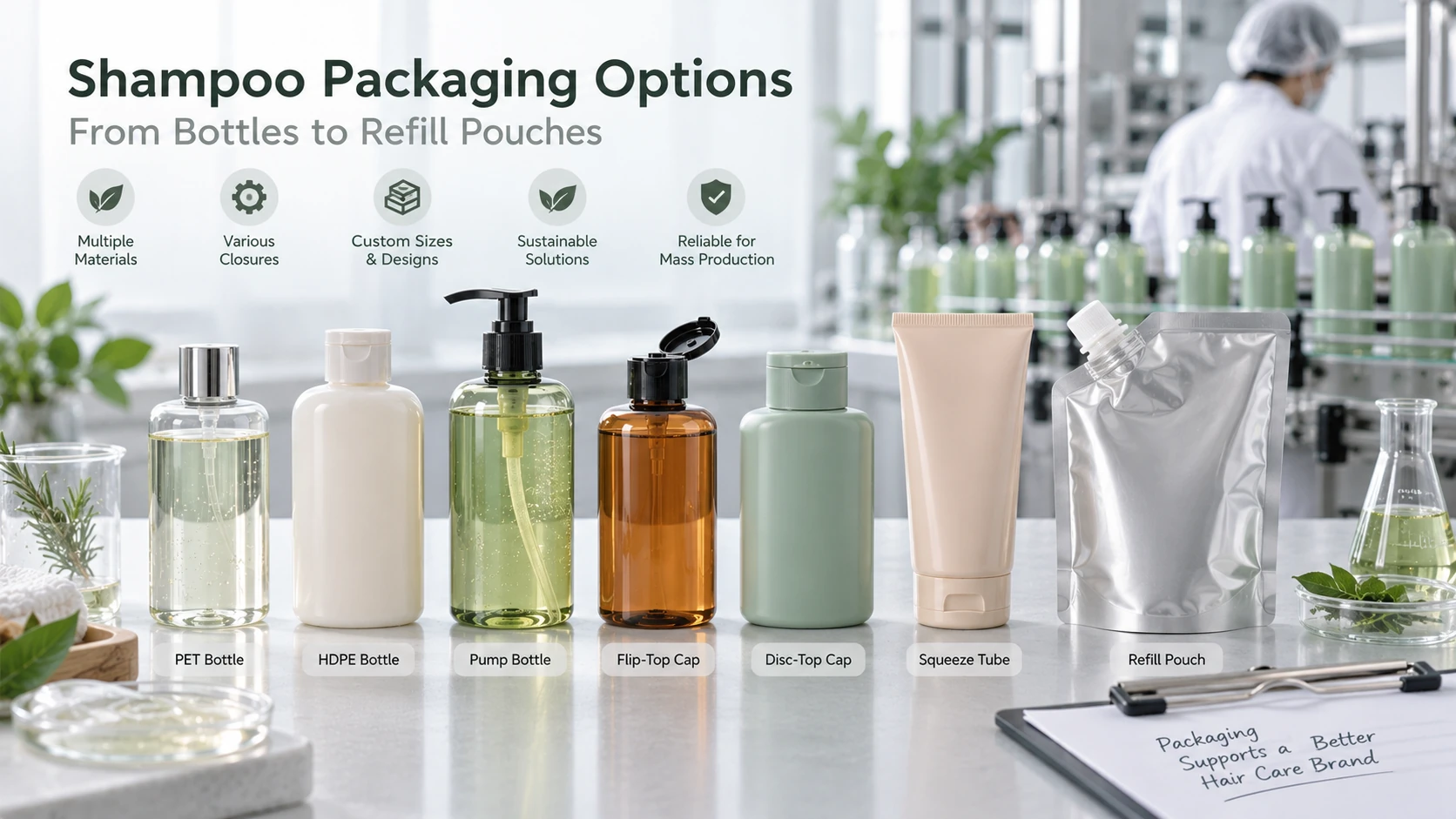
Packaging Is Part of Scalp Care Product Development
Packaging should not be treated as a decision made after the formula is finished.
The formula and the applicator need to work together.
A low-viscosity scalp serum may be suitable for a precision nozzle or dropper. A sprayable tonic needs a pump that produces the intended application pattern. A scalp scrub may require a tube or jar depending on its viscosity and particle structure.
The same principle applies to oils, shampoos and masks.
A visually attractive package is not useful if the applicator struggles with the formula.
For scalp care in particular, precision of application matters. Customers often want to apply the product directly between sections of hair rather than distributing it over the hair itself.
During development, manufacturers and brands should therefore consider viscosity, dispensing performance, leakage risk, formula-packaging compatibility and actual user handling.
This is also why packaging samples are useful before final production. A formula that performs well in a generic laboratory container may behave differently once it is paired with the intended commercial component.
Testing Scalp Care Formulas Before Mass Production
A successful laboratory sample is an important milestone, but it is not the end of product development.
Before mass production, the formula should be evaluated for consistency and compatibility.
Depending on the product, this may include stability observations, pH monitoring, viscosity checks, appearance, odor, microbiological control and packaging compatibility.
The exact test plan can vary according to the formula, packaging and market requirements.
One practical point is especially important:
A formula that performs well as a small laboratory sample must also remain consistent during filling, storage and commercial-scale production.
Changes in batch size, processing conditions and filling equipment can expose issues that are not obvious during early sampling.
For example, a viscosity that feels ideal during manual application may be less suitable for high-speed filling. A pump that works with one sample may struggle if the final production viscosity changes slightly. Botanical ingredients can also affect color or odor over time.
Testing is therefore not separate from product development. It is part of confirming that the concept can be manufactured reliably.
For brands, this stage is also an opportunity to finalize texture, fragrance, packaging and visual appearance before larger production commitments are made.
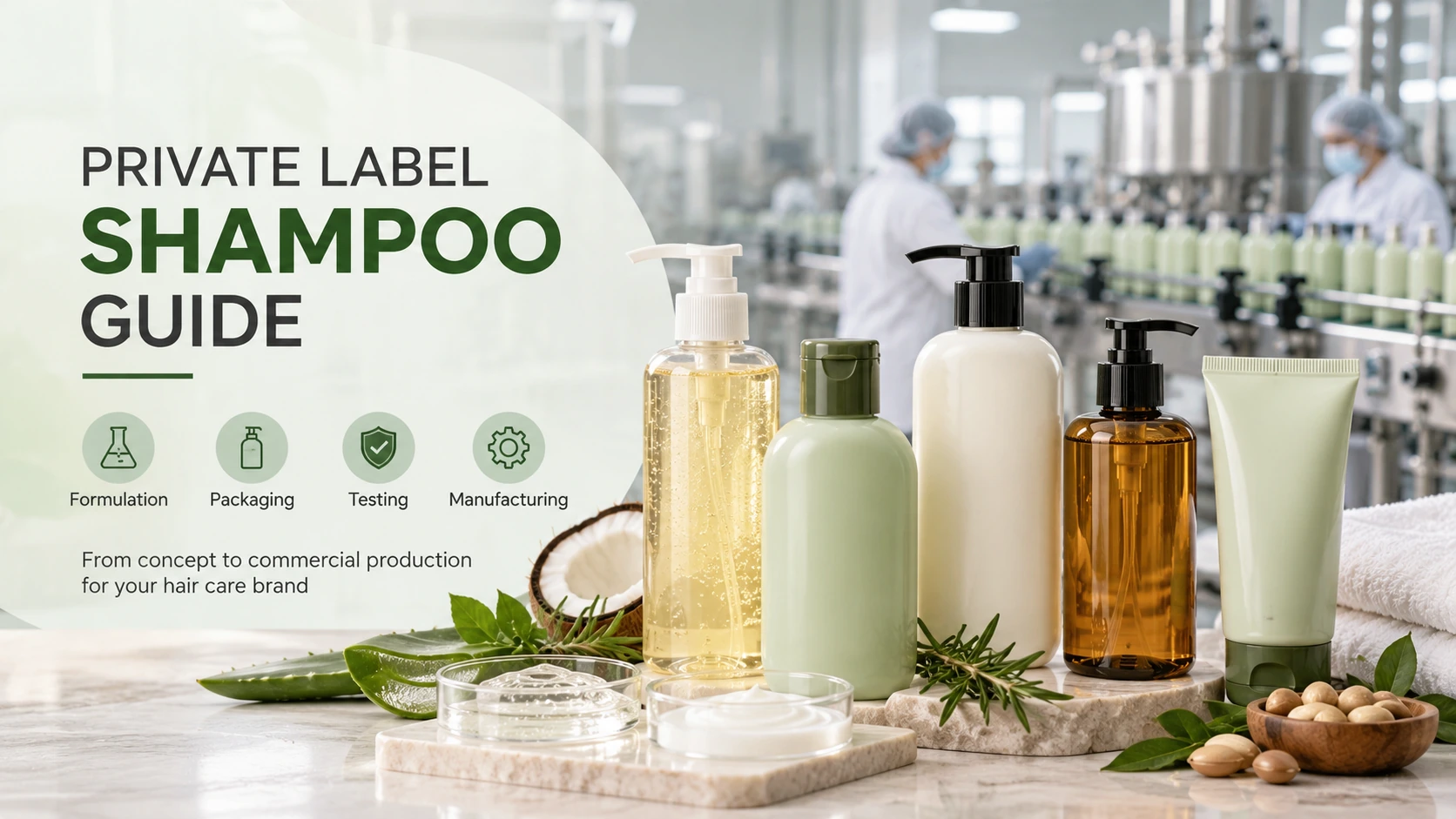
From Product Concept to OEM Manufacturing
Once the product direction is clear, a typical scalp care project moves through several connected stages.
The process generally begins with a product concept and development brief. The manufacturer then works on formulation and sampling, followed by adjustments based on feedback. Testing and packaging confirmation come next, after which the project can move toward production, filling, quality control and delivery.
In practice, these stages often overlap.
Packaging may affect viscosity decisions. Formula changes can influence filling. Ingredient selection may need to be reviewed if the brand changes its target market or product claim.
That is why efficient OEM projects depend heavily on communication during the early development stage.
Brands preparing a new line should ideally provide clear information about the target market, reference products, desired texture, ingredient preferences, packaging direction, expected price level and initial order volume.
Our scalp care manufacturing process guide explains product briefing, formula development, sampling, stability evaluation, scale-up, filling and quality control in greater detail.
Brands that are already ready to discuss production requirements can also work directly with an experienced scalp care OEM manufacturer to evaluate suitable product formats and customization options.
How to Build a Complete Scalp Care Product Line
Not every brand needs five or six scalp care products at launch.
In many cases, a smaller range with clear product roles is easier to explain, market and manage.
A brand entering scalp care for the first time might begin with a scalp shampoo and scalp serum. The shampoo fits naturally into an existing routine, while the serum adds a targeted leave-on treatment that can support more premium positioning.
A treatment-focused brand may build a three-step concept using a scalp scrub, serum and mask. This creates a more deliberate weekly or salon-inspired routine and gives each product a distinct function.
For a botanical brand, a scalp oil, botanical shampoo and lightweight serum may create a stronger fit with the existing brand identity.
The important point is that the products should work as a system.
Adding several SKUs that all make similar promises can make the range confusing. A stronger line usually gives each product a clear place in the routine.
When planning the range, brands should also consider price architecture. A daily shampoo may serve as the accessible entry product, while a serum or intensive treatment can occupy a higher price position.
This approach creates room for both customer acquisition and premium upselling without requiring every SKU to carry the same commercial role. Brands planning their first launch can also use our guide to starting a private label scalp care brand to define the hero product, supporting SKUs, development route, packaging, MOQ and launch plan.

Common Mistakes When Developing Scalp Care Products
Scalp care projects often become more complicated than they need to be.
One frequent mistake is choosing ingredients before defining the product position. A long list of actives may sound impressive during concept development, but it can create a formula that is difficult to explain and unnecessarily complex to manufacture.
Another issue is chasing too many trends at once. A single product does not need to be botanical, microbiome-inspired, peptide-focused, cooling, exfoliating and nourishing at the same time.
A clear concept is usually stronger than a crowded one.
Sensory performance is also sometimes underestimated. Customers may accept a richer texture in a hair mask, but the same level of heaviness can be a problem when a product is applied directly to the scalp and roots.
Packaging decisions made too late can create additional reformulation work. If the formula is already finalized before the applicator is selected, the brand may discover that the chosen bottle or pump does not dispense the product correctly.
Finally, product claims need to be considered early. Cosmetic wording and regulatory expectations differ by market, particularly when a concept moves toward dandruff, hair growth or other treatment-related language.
The product should be developed around claims that the brand can use appropriately in its intended market, rather than creating the formula first and trying to build the claim strategy afterward.
How to Choose a Scalp Care OEM Manufacturer
A scalp care supplier should be evaluated on more than unit price.
For brands developing customized products, formulation capability matters because scalp care sits between traditional hair care and more targeted treatment concepts. The manufacturer should understand not only basic production, but also how texture, ingredient systems, packaging and user experience interact.
Hair care manufacturing experience is particularly relevant. A technically stable formula still needs to behave well around the roots, distribute properly through hair sections and fit the expected usage routine.
Sampling capability is another important factor. Brands rarely achieve the final texture, fragrance and application experience in the first version, so an efficient sampling and adjustment process can significantly affect the overall development timeline.
Packaging support is also valuable because scalp products often use more specialized applicators than standard shampoo bottles.
Beyond formulation and packaging, buyers should consider documentation support, quality control, export experience, MOQ requirements and communication efficiency. For brands planning several hair or body care SKUs, Poleview also provides broader private label OEM/ODM manufacturing services across multiple personal care formats.
The best OEM relationship is usually not the one that simply says yes to every request. A useful manufacturing partner should also be able to explain when an ingredient combination, packaging choice or product concept may create unnecessary technical or commercial problems.
Poleview supports private label scalp care development across product planning, formula customization, sampling, packaging coordination and manufacturing for brands developing scalp serums, oils, shampoos, scrubs, masks and related hair care products.
Brands planning a new scalp care project can review our scalp care OEM manufacturer capabilities or contact our team to discuss the intended product format, ingredients, packaging and order requirements.
Frequently Asked Questions About Private Label Scalp Care
Q: 1. What scalp care products can be private labeled?
A: Common private label scalp care formats include scalp serums, scalp oils, scalp shampoos, scrubs, masks, tonics and other targeted treatments. The best format depends on the brand's target customer, product positioning and intended usage routine.
Q: 2. What is the best scalp care product for a new hair care brand?
A: For many brands, a scalp serum or scalp-focused shampoo is a practical starting point. A shampoo fits easily into an existing hair care routine, while a serum can create stronger treatment and premium positioning. The right choice depends on the current product range and target market.
Q: 3. How is a scalp care formula developed?
A: Development normally begins with a product brief covering the target scalp concern, product format, desired texture, ingredient direction, packaging and target market. The manufacturer then creates samples, adjusts the formula based on feedback and confirms stability, packaging compatibility and production suitability before mass manufacturing.
Q: 4. What ingredients are commonly used in scalp care products?
A: Common ingredients include niacinamide, panthenol, salicylic acid, rosemary-derived ingredients, tea tree-derived ingredients, caffeine, peptides, plant oils and botanical extracts. Ingredient selection should depend on the product format and formulation goal rather than trends alone.
Q: 5. What packaging is suitable for scalp serums and oils?
A: Scalp serums often use precision nozzles, droppers or targeted applicators that allow the formula to be applied between sections of hair. Scalp oils commonly use droppers or narrow nozzles. Viscosity and packaging compatibility should be tested before the final component is confirmed.
Q: 6. How long does private label scalp care product development take?
A: Development time varies depending on formula complexity, number of sample revisions, packaging customization, testing requirements and order specifications. A customized formula generally requires more development time than selecting an existing private label base. Confirming the product brief and packaging direction early can help make the process more efficient.
Develop Your Scalp Care Product with Poleview
Scalp care offers hair care brands more room to create targeted routines, premium treatments and differentiated product lines, but the strongest products usually begin with a clear development strategy.
Product format should come before ingredient trends. Formula and packaging should be developed together. Sensory experience should be considered alongside technical performance, and testing should happen before a product moves into commercial production.
Whether the concept is a lightweight scalp serum, botanical scalp oil, cleansing shampoo, exfoliating scrub or a complete scalp care line, the goal is the same: create a product that makes sense technically, commercially and within the brand's existing range.
Poleview provides OEM and private label support for hair care brands developing customized scalp care products for international markets.
Planning a new scalp care line? Explore our Private Label Scalp Care Manufacturing Services or contact us to discuss your formula, packaging and production requirements.