Developing a shampoo that cleans well, feels comfortable and performs consistently requires more than selecting a popular surfactant or adding conditioning ingredients.
A change in the cleansing system can affect foam, viscosity and after-wash feel. Fragrance may alter thickness, while conditioning ingredients can influence clarity and lather. These interactions explain why two shampoos with similar ingredient lists can deliver very different experiences.
For private label hair care brands, understanding these relationships makes it easier to evaluate samples, communicate with formulators and avoid unnecessary changes before production.
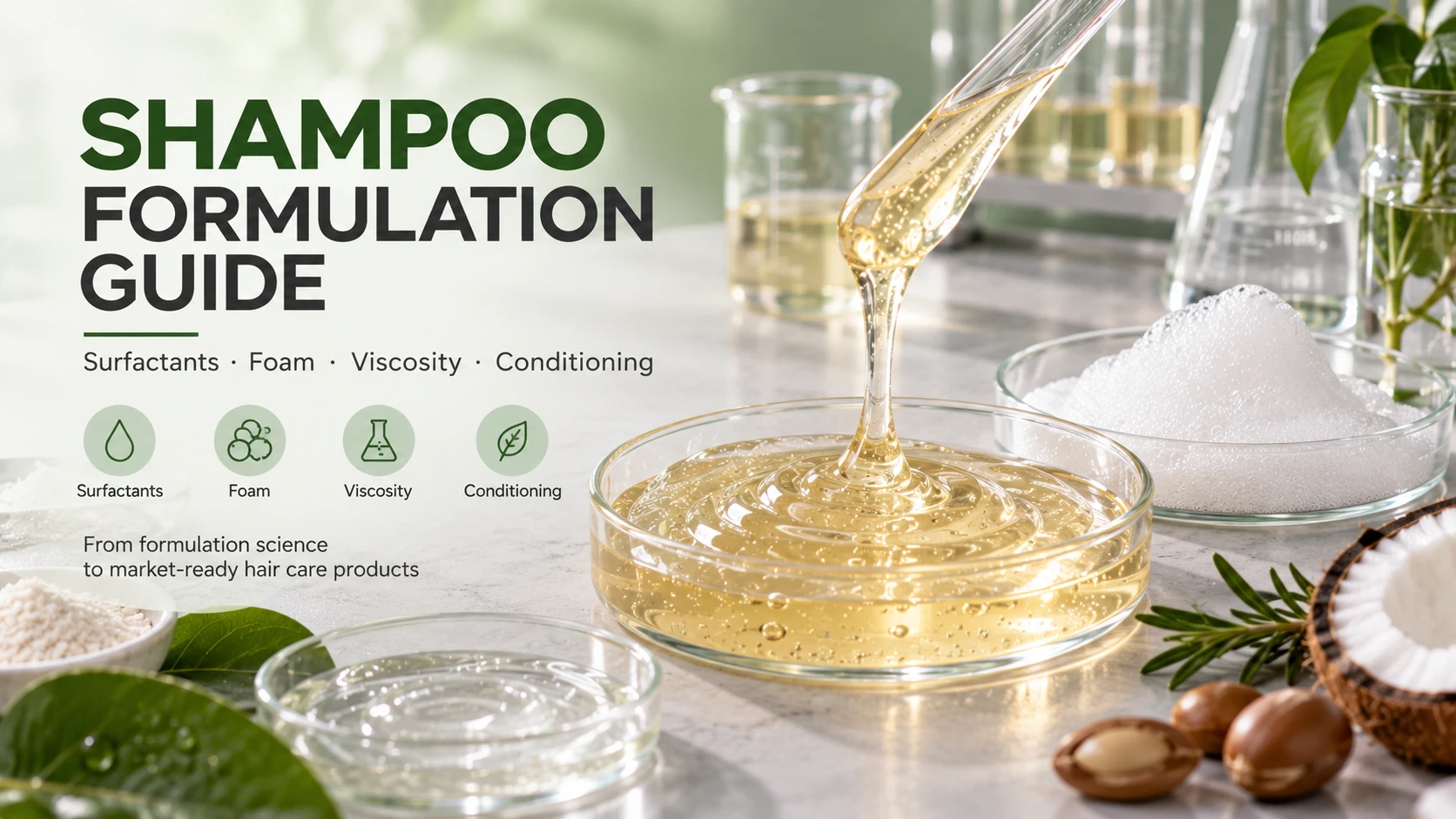
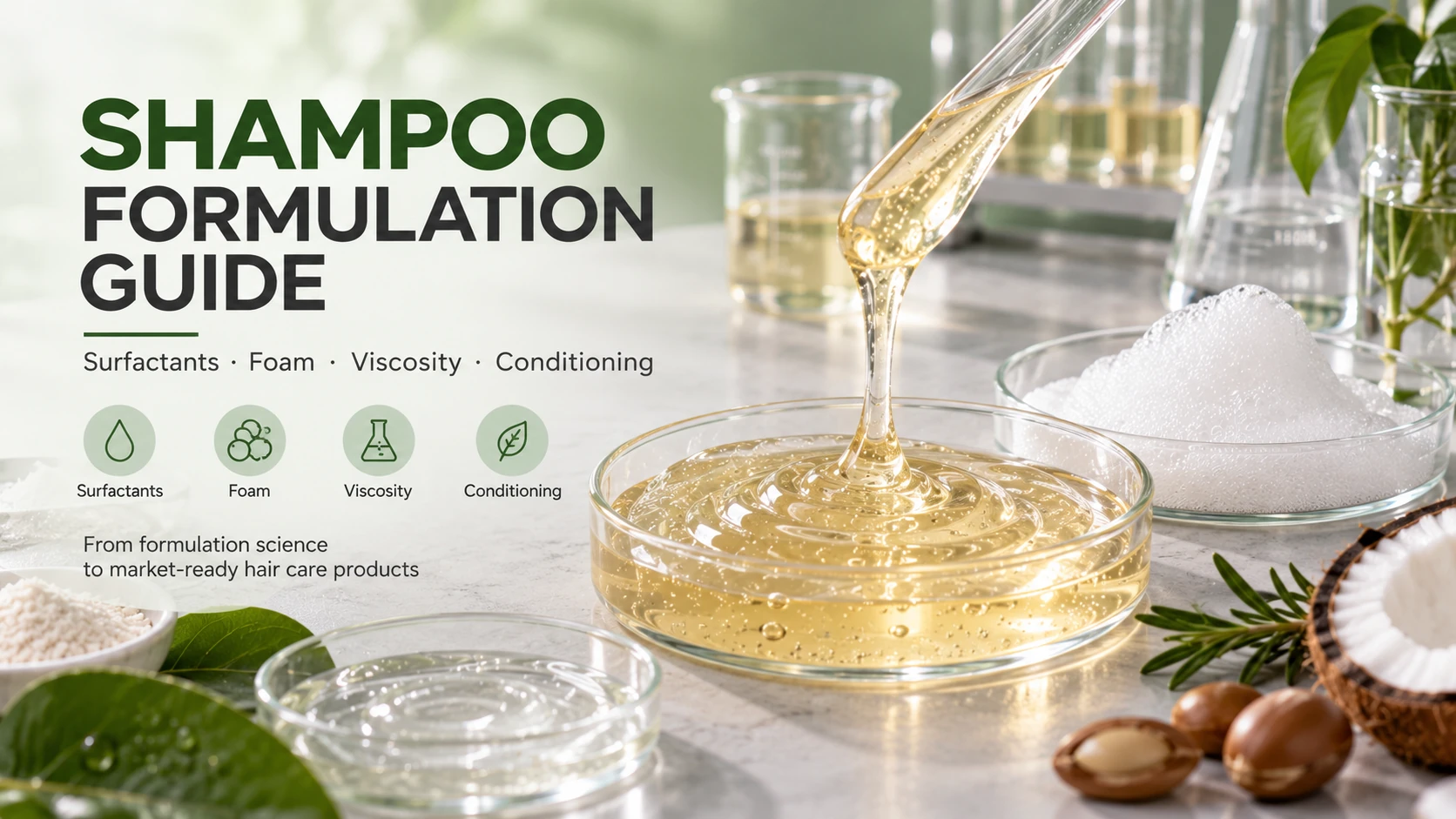
This guide explains the four essential elements of shampoo formulation and how they work together in commercial product development.
For a broader overview of product development, packaging, testing and production, explore our Private Label Shampoo Guide.
Start With the Shampoo's Performance Goals
Before choosing individual ingredients, the formulation team needs to understand what the finished shampoo should deliver.
A volumizing shampoo for fine hair may require effective cleansing with a lightweight finish. A moisturizing shampoo for dry hair may prioritize gentle cleansing and easier wet combing. A clarifying shampoo, meanwhile, may focus on removing oil and styling residue.
These differences affect the surfactant blend, conditioning level, viscosity and foam characteristics.
Brands should also consider the desired appearance, fragrance, packaging and target cost. Establishing these requirements early helps formulators develop a balanced system rather than making repeated adjustments to individual ingredients.
1. Shampoo Surfactants: Building the Cleansing System
Surfactants are responsible for much of a shampoo's cleansing performance. They help loosen and remove sebum, dirt and product residue from the hair and scalp.
Most shampoos use a blend of surfactants rather than relying on a single cleansing ingredient. Different surfactants contribute to cleansing, foam quality, mildness and formula stability.
Common Surfactant Types in Shampoo
| Surfactant Type | Common Examples | Main Formulation Role |
|---|---|---|
| Anionic | Sodium Laureth Sulfate (SLES), Sodium Cocoyl Glutamate | Cleansing and foam generation |
| Amphoteric | Cocamidopropyl Betaine (CAPB), Sodium Cocoamphoacetate | Supporting foam, mildness and system performance |
| Nonionic | Decyl Glucoside, Coco-Glucoside | Supporting cleansing, solubilization and mild-formula concepts |
Each category includes ingredients with different properties. The performance of the finished shampoo depends on the selected blend, its concentration and the complete formulation.
Balancing Cleansing and Mildness
A strong cleansing system is not automatically the best option for every shampoo.
For daily-use or scalp-focused products, formulators may choose a system that balances effective cleansing with a comfortable washing experience.
Sulfate-free shampoos often use alternative anionic, amphoteric or nonionic surfactants. However, removing sulfate surfactants does not automatically guarantee mildness. The complete formula still needs to be evaluated.
The main objective is to select a cleansing system that matches the product's intended performance rather than choosing ingredients based only on their marketing appeal.
2. Shampoo Foam: More Than Lather Volume
Foam strongly influences how consumers perceive shampoo performance, but more foam does not necessarily mean better cleansing.
A shampoo can remove oil effectively without producing large amounts of lather. What matters commercially is whether its foam character matches the intended product experience.
What Influences Foam Performance?
Foam behavior depends on the surfactant combination, concentration and other ingredients in the formula. Sebum, water hardness and the way the shampoo is applied can also affect lather formation.
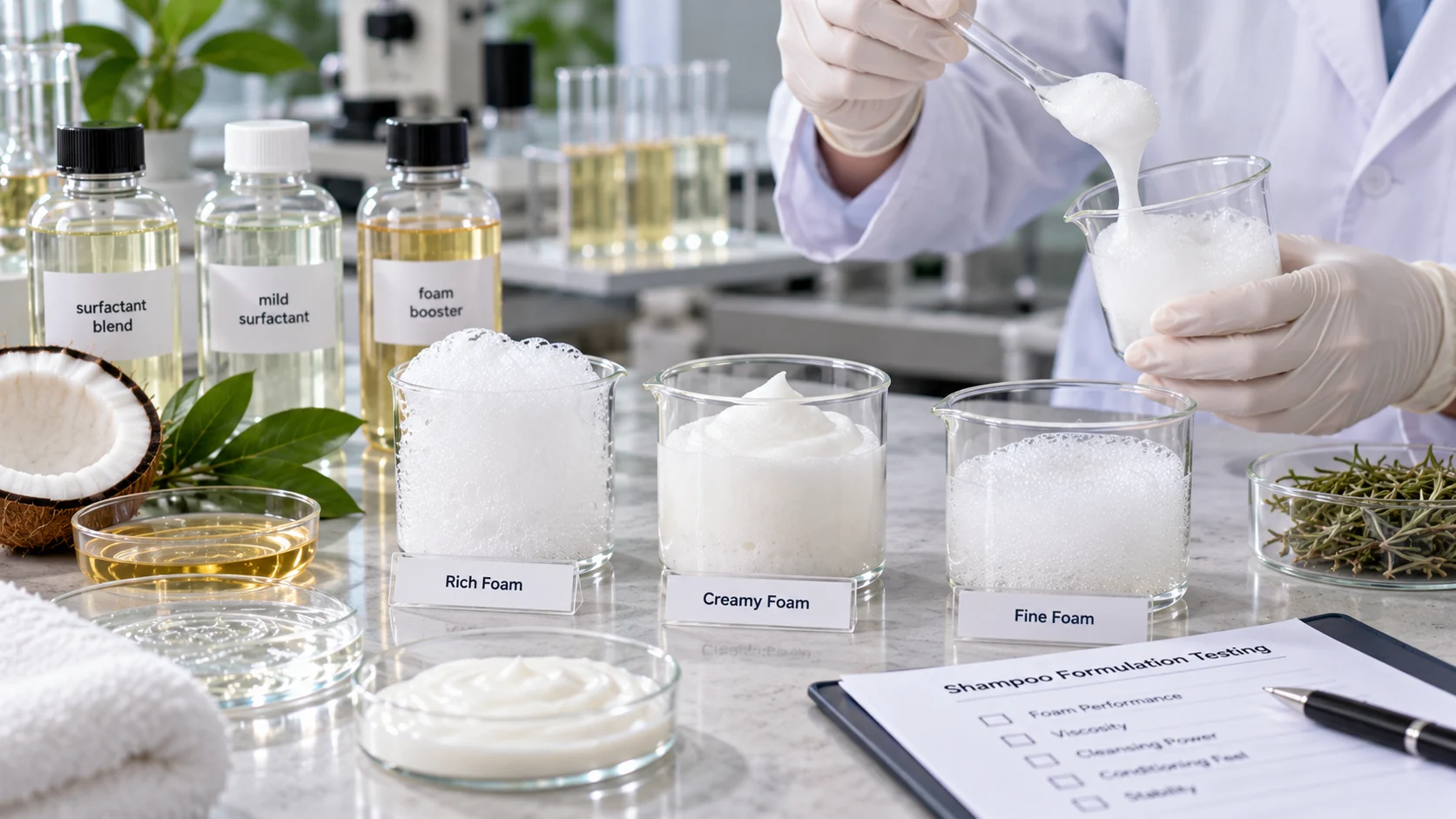
Some formulas produce abundant, airy foam, while others create a denser, creamier lather.
Neither profile is universally better.
For example, a premium moisturizing shampoo may be designed for a cushioning foam experience, while a lightweight daily shampoo may focus on easy spreading and clean rinsing.
During sample evaluation, brands should consider how quickly foam develops, how it feels during washing and how easily it rinses away.
A shampoo that performs well in laboratory conditions should also be evaluated under relevant consumer-use conditions, especially when the product will be sold across different markets.
3. Shampoo Viscosity: Balancing Texture and Practical Use
Viscosity describes a shampoo's resistance to flow. It affects how the product pours, spreads, dispenses and behaves during filling.
A richer gel texture may support premium positioning, but excessive thickness can make a product difficult to pump or rinse from its packaging.
A thinner shampoo may be suitable for certain formats, provided that dispensing and consumer expectations are considered.
How Shampoo Viscosity Is Controlled
Viscosity depends on the surfactant system and the ingredients used to build the formula's structure.
In some surfactant systems, sodium chloride can increase viscosity by changing micellar behavior. However, this response is not linear. Adding too much salt can eventually reduce thickness.
Other formulations use polymeric or associative thickeners to achieve the desired consistency. These may be especially useful when the surfactant blend does not respond well to electrolyte thickening.
There is no universal thickening solution for every shampoo. Even fragrance or conditioning adjustments may change the final viscosity.
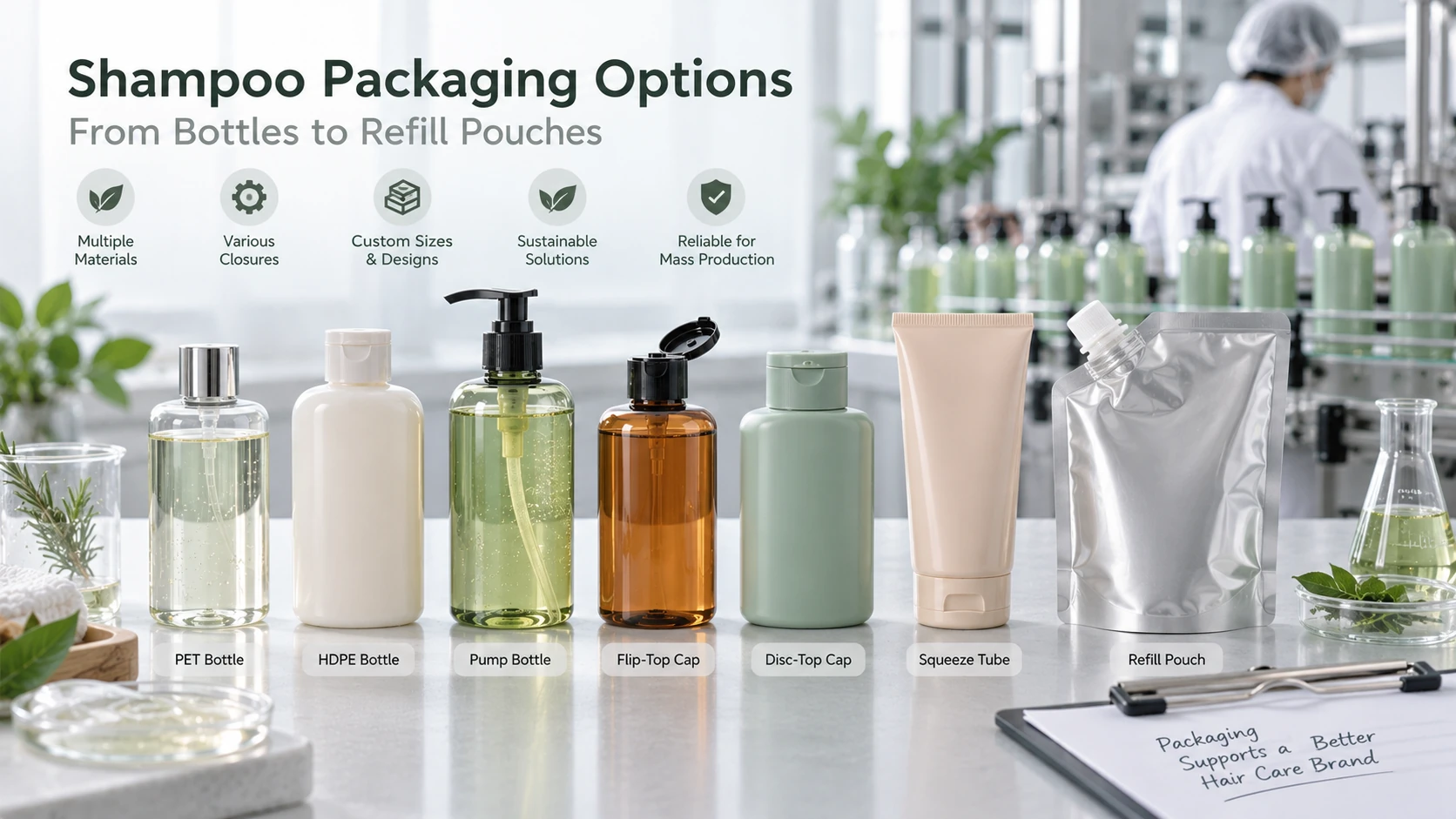
Why Packaging Compatibility Matters
Viscosity should be evaluated together with the selected bottle, pump or closure.
A formula that dispenses smoothly from a flip-top bottle may behave differently in a pump system. Temperature changes during storage and transportation can also affect the product's flow.
For OEM shampoo projects, the approved formula should therefore be tested in the actual packaging format before commercial production.
4. Conditioning Performance: Improving Hair Feel After Washing
Consumers increasingly expect shampoo to provide a pleasant after-wash experience, not simply remove dirt and oil.
Conditioning ingredients can help reduce friction, improve combability and make hair feel smoother after rinsing.
Common options include cationic conditioning polymers, silicones and selected oils or other compatible conditioning materials.
Choosing the Right Conditioning System
Cationic polymers such as Polyquaternium-10 and cationic guar derivatives are commonly used to improve conditioning performance in shampoo.
Some systems work by depositing conditioning materials onto the hair during washing and rinsing. Their effectiveness depends on how they interact with the surfactant blend.
Silicones can provide additional slip and smoothing benefits, while silicone-free formulations require alternative approaches to achieve the intended hair feel.
Plant oils may contribute to certain product concepts, but they do not necessarily provide the same performance as silicones or cationic polymers.
Finding the Right Conditioning Balance
Too little conditioning may leave hair difficult to detangle. Too much, or an unsuitable conditioning system, can create a heavy feel, affect foam or change formula clarity.
A shampoo for fine hair may need a lightweight conditioning profile, while one intended for dry or damaged hair may benefit from greater slip and improved wet combing.
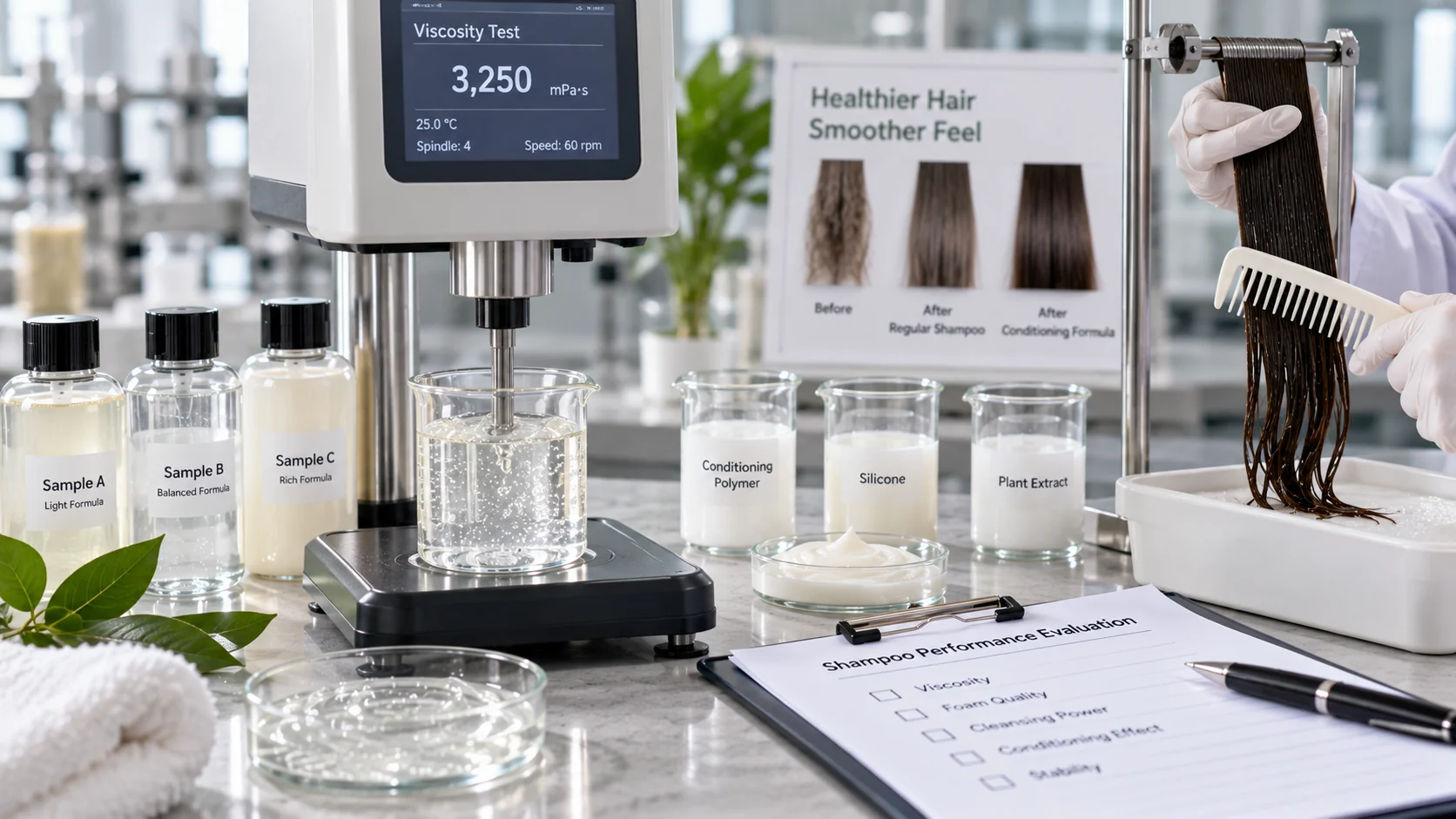
The finished formula should be evaluated through practical hair-tress testing, sensory assessment and, where appropriate, combing-force measurements.
For private label brands, the most useful question is not how many conditioning ingredients a shampoo contains, but whether it delivers the intended result.
How Surfactants, Foam, Viscosity and Conditioning Work Together
These four formulation elements are closely connected.
Consider a brand developing a sulfate-free shampoo with rich foam and a premium gel texture.
Replacing the original surfactant blend may change foam formation and viscosity. Adjusting the thickener can influence the product's flow and appearance. Adding conditioning polymers may then affect clarity or lather.
A fragrance change near the end of development can introduce another viscosity or stability issue.
This is why shampoo formulation should be approached as a complete system.
The goal is not to maximize cleansing, foam, thickness and conditioning independently. It is to find a combination that performs consistently and supports the brand's intended positioning.
For brands reviewing different samples, these relationships also explain why a seemingly small ingredient adjustment may require another round of evaluation.
What Should Brands Check Before Approving a Shampoo Formula?
Sample approval should go beyond fragrance, color and first impressions.
A structured evaluation helps confirm that the formula delivers the expected experience and remains suitable for packaging and production.
| Evaluation Area | What to Check |
|---|---|
| Cleansing & Rinse Feel | Oil removal, residue, washing comfort and after-feel |
| Foam Performance | Lather formation, texture, stability and rinsing |
| Viscosity | Flow behavior, temperature response and dispensing |
| Conditioning | Wet combability, softness, slip and potential buildup |
| Formula Stability | Appearance, pH, viscosity changes, microbial quality and packaging compatibility |
Testing requirements depend on the formula and target market. Where appropriate, development should also include preservative efficacy assessment, supporting evidence for product claims and other relevant safety evaluations.
The approved shampoo should have defined quality specifications that can be used during manufacturing.
This is particularly valuable for brands planning repeat orders, where consistent performance matters as much as the original sample.
From Laboratory Formula to Commercial Production
A shampoo that works in a small laboratory batch still needs to perform reliably during larger-scale manufacturing.
Mixing conditions, raw material variations and processing temperatures may influence the final product. Viscosity and appearance are particularly important when transferring a formula to production equipment.
Before bulk manufacturing, the formula, packaging and relevant quality specifications should be confirmed together.
If the brand changes fragrance, surfactants or conditioning ingredients after approval, additional evaluation may be necessary.
A clear development process helps reduce these risks and supports greater consistency between the approved sample and the finished product.
Custom Shampoo Formulation With Poleview
Poleview Biotechnology Group Co., Ltd. supports private label and OEM/ODM shampoo development for international hair care brands, salons, distributors and retailers.
Our formulation services cover customized cleansing systems, foam performance, viscosity adjustment, conditioning feel and ingredient selection.
We work with brands to translate product requirements into practical formula directions, then coordinate sampling, evaluation, packaging and commercial manufacturing.
Whether you are developing a lightweight daily shampoo, a richer moisturizing formula or a customized sulfate-free product, the objective is to achieve the right balance of performance, stability and production suitability.
Explore our custom shampoo manufacturing services to learn more about our OEM/ODM capabilities.
Shampoo Formulation FAQ
Q: 1. What are the most common surfactants used in shampoo?
A: Common options include SLES, CAPB, amino acid-based surfactants and alkyl glucosides. They are selected and combined according to the required cleansing, foam, mildness and formulation characteristics.
Q: 2. Does more foam mean a shampoo cleans better?
A: No. Foam influences the washing experience, but cleansing performance is not determined by foam volume alone. Both should be evaluated against the shampoo's intended use.
Q: 3. How do formulators make shampoo thicker?
A: Viscosity can be adjusted through the surfactant system, electrolytes and selected thickening polymers. The appropriate method depends on formula compatibility, stability and packaging requirements.
Q: 4. Can a sulfate-free shampoo still produce rich foam?
A: Yes. Sulfate-free surfactant systems can be developed to provide satisfying lather. The result depends on the complete blend and the desired product characteristics.
Q: 5. Can a shampoo provide conditioning without silicone?
A: Yes. Suitable conditioning polymers and other compatible ingredients can support silicone-free shampoo development. Their performance should be evaluated in the finished formula rather than assumed from the ingredient list.
Conclusion
Effective shampoo formulation comes from balancing cleansing, foam, viscosity and conditioning-not optimizing each feature separately.
Understanding these interactions helps brands make better development decisions, evaluate samples more effectively and create shampoos suitable for consistent commercial manufacturing.
With the right formulation strategy and OEM/ODM support, a shampoo concept can become a product that performs reliably and fits its intended market.