Finding a body butter manufacturer is relatively easy. Finding one that fits your formula, order size, packaging requirements, target market and growth plan is much harder.
A startup launching 100–500 units does not need the same manufacturing partner as an established retailer ordering tens of thousands of jars. Likewise, a brand looking for a ready-to-label whipped body butter has very different requirements from one developing a proprietary formula for distribution across the US and EU.
That is why this guide does not simply rank manufacturers by company size.
Instead, we reviewed 10 body butter manufacturers across China, the United States, Canada, Europe, Australia and South Africa and compared them by the factors that matter most to private label and OEM buyers: formulation model, minimum order requirements, manufacturing scale, body care specialization, packaging support and suitability for different types of brands.
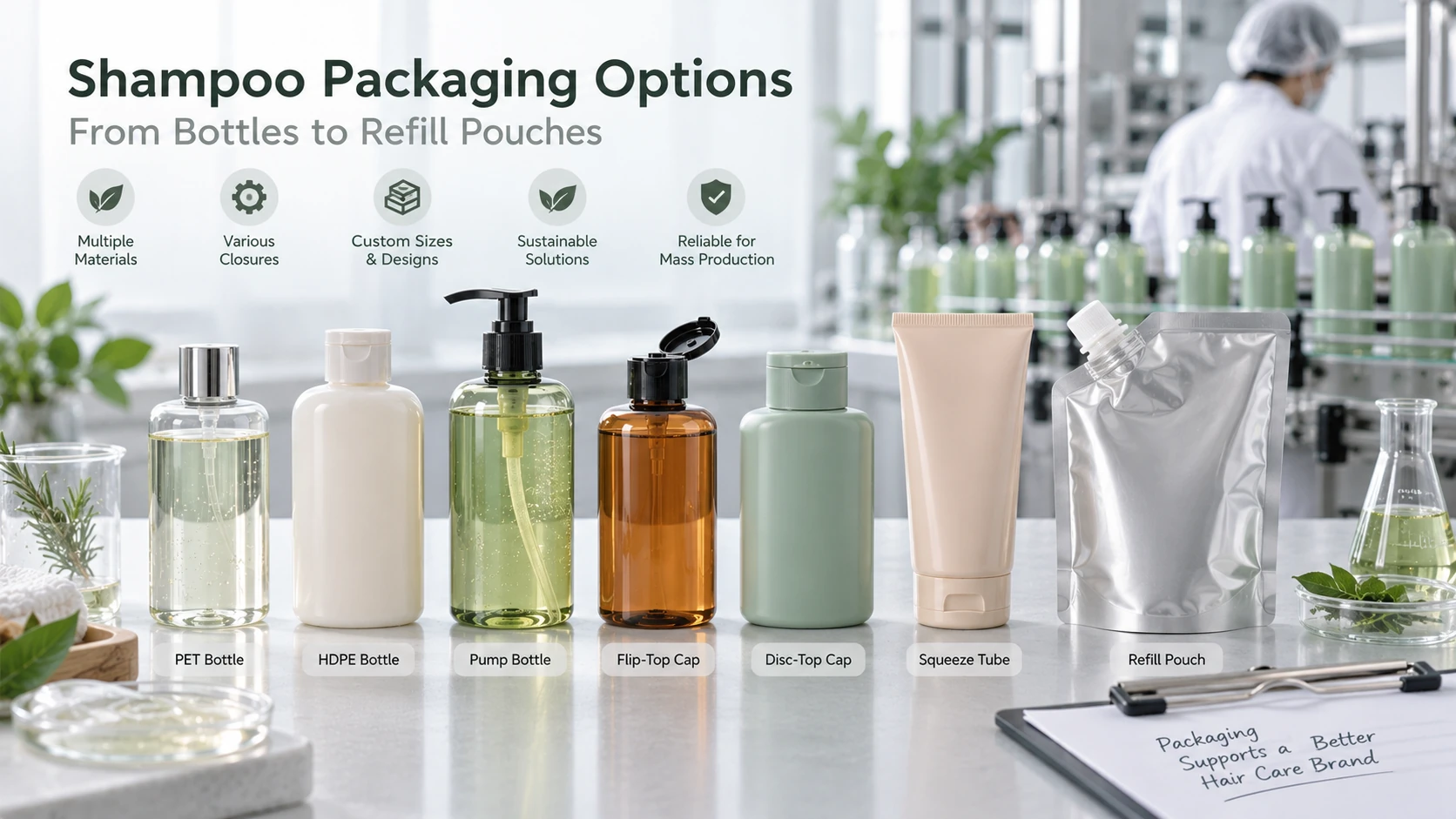
If you are still defining the technical requirements for your product before choosing a supplier, our body butter formulation and manufacturing guide explains formula types, scale-up, cooling, stability, packaging and commercial production in more detail.
How We Selected These Body Butter Manufacturers
For this 2026 comparison, we prioritized manufacturers whose current public information shows direct body butter or relevant body care manufacturing capability rather than relying only on general skincare manufacturing claims.
The main evaluation criteria were:
| Criterion | What We Looked At |
|---|---|
| Body Butter Capability | Whether body butter is directly included in the manufacturer's current portfolio |
| Service Model | White label, private label, OEM, ODM or fully custom formulation |
| Formula Flexibility | Texture, butter base, fragrance, actives and custom development |
| MOQ & Scalability | Suitability for test launches and ability to support larger repeat orders |
| Manufacturing & Quality | Production systems, GMP/ISO information and testing capabilities where publicly available |
| Packaging Support | Filling, packaging sourcing, labeling or compatibility support |
| Buyer Fit | Whether the supplier is better suited to startups, premium brands, retailers or large-volume projects |
Research note: Poleview publishes this guide and is itself a body care manufacturer. We have therefore applied the same publicly stated comparison criteria to Poleview and the other manufacturers included here. This is a sourcing guide, not an independent factory audit. MOQs, certifications, lead times, formulas and commercial terms can change, so buyers should verify current information directly with shortlisted manufacturers before placing an order.
Quick Comparison: 10 Body Butter Manufacturers in 2026
| Manufacturer | Location | Best For | Custom Development | Public MOQ / Scale Information |
|---|---|---|---|---|
| Poleview Cosmetics | China | Flexible full-service OEM/ODM | Yes | Project-dependent |
| RainShadow Labs | USA | Natural body care and flexible bulk development | Yes | 10 gal stock / 25 gal custom |
| Pravada Private Label | USA | Low-MOQ ready-to-market launches | Yes | 50 pcs ready / 250+ semi-custom / 2,500+ custom |
| KHK GmbH | Germany | Waterless and hot-fill body butter | Yes | Batch vessels from 25–900 kg |
| Hera Beauty | UK | UK natural private label | Yes | 1,000 units/SKU for private label |
| Cosmewax | Spain | High-volume European private label | Yes | 10,000 units/SKU for skincare |
| My Skincare Manufacturer | Australia | Natural Australian-made custom skincare | Yes | Low MOQ; project-specific |
| Gardenia Naturals Laboratories | Canada | Very small North American test launches | Yes | 50 ready-to-label / 100 private label |
| Alchem Labs | South Africa | Small-batch natural and Halal-friendly body care | Yes | Most products from 5 kg |
| Xiran Skincare | China | Flexible China OEM/ODM body care | Yes | From 1,000 units/SKU |
The table is intended as a first-pass shortlist. A low published MOQ does not automatically mean a lower total project cost, and a manufacturer with a higher entry quantity may be more suitable once a brand reaches retail-scale production.

1. Poleview Cosmetics - China
Best for: Flexible full-service body care OEM/ODM and brands building multiple SKUs
Poleview Cosmetics is a China-based personal care manufacturer offering private label, OEM and ODM development for body butter and wider body care collections. Brands looking for formula, texture, fragrance and packaging options can explore our Private Label Body Butter Manufacturer capabilities in more detail.
Its current body butter platform supports different butter bases including shea, cocoa, mango, kokum and cupuaçu, along with customizable oils, textures, fragrances, active ingredients, filling sizes and packaging formats. Brands can develop standard creamy body butter, whipped textures, vegan or natural concepts, sensitive-skin directions and other market-specific products.
Where Poleview differs from a simple ready-to-label supplier is the broader manufacturing model. A project can begin with an existing formula direction, modifications to a base or a more customized ODM brief. Formula, fragrance, texture and packaging can then be coordinated before bulk manufacturing.
Poleview's current OEM/ODM information states that the company has operated in personal care manufacturing since 1995, with a 40,000 m² manufacturing facility, more than 20 automated production lines and capacity of up to 1 million units per month across its personal care operations.
That makes it particularly relevant for brands that want to launch a body butter first and later extend into body lotion, scrub, wash, oil or coordinated body care sets through the same manufacturing partner.
What to confirm: Poleview describes its MOQ as flexible and dependent on formula and packaging, so the exact quantity should be confirmed for the specific body butter project rather than assumed from another SKU.
Best suited for: DTC brands, startups moving into custom development, retailers, distributors, spas and established brands looking for a China-based full-service OEM/ODM partner.
2. RainShadow Labs - United States
Best for: Natural body care brands that want flexible bulk and custom development
RainShadow Labs is an Oregon-based personal care manufacturer that has been operating since 1983. Its body care program includes body butters alongside lotions, scrubs and other bath and personal care formulations.
One of its biggest advantages for buyers is unusually clear public information about minimum volumes. Current private label stock formulations start at 10 gallons, while custom formulations start at 25 gallons. RainShadow also offers a Buy Direct route with no minimum for selected stock products.
Brands can choose between stock formulas, semi-custom development and fully custom formulations. The company also states that its facility is FDA registered and ISO certified and that body care products undergo stability and microbial testing.
There is an important sourcing difference to understand, however. Packaging is not simply selected from an integrated manufacturer's catalog. Brands can source their own bottles, jars, tubes and labels or work through RainShadow's preferred vendor network, after which packaging is assessed for filling compatibility.
This can provide more control for brands that already have their packaging supply chain, but it may require more buyer-side coordination than a factory that sources formula and packaging together.
Best suited for: US natural skincare brands, spas, salons, independent beauty businesses and companies that prefer domestic manufacturing with relatively flexible bulk quantities.
3. Pravada Private Label - United States
Best for: Small US launches that need transparent unit-based MOQs
Pravada is one of the more straightforward options in this comparison for a brand that wants to test body butter without immediately committing to a large custom manufacturing run.
Its current body butter range includes ready-to-market formulas such as Whipped Body Butter with Shea & Cocoa and Oat & Honey Body Butter. More importantly for sourcing decisions, Pravada publishes three clearly separated development routes.
Ready-for-market body butters begin at 50 pieces per SKU. Semi-custom projects begin at 250+ pieces, while completely custom formulations begin at 2,500+ pieces.
That structure makes it easier for a brand to understand the trade-off between speed, differentiation and investment.
A founder can test the category using an existing formula, move into botanical or fragrance customization as demand develops, and later consider proprietary formulation when the expected volume justifies it.
The limitation is equally clear: a 50-piece order is a private label route, not a fully proprietary ODM project. Brands seeking exclusivity should compare the higher custom-development tier rather than evaluating the supplier only on its lowest advertised MOQ.
Best suited for: US startups, spas, boutiques, e-commerce brands and established companies testing a new body care SKU before committing to larger custom production.
4. KHK GmbH - Germany
Best for: Waterless body butter and technically demanding hot-fill products
KHK GmbH stands out because it is more specialized than many general skincare manufacturers.
The German company focuses heavily on water-free cosmetics, including lip care, beard products, deodorant creams and body butter. Its manufacturing model therefore has particular relevance to anhydrous body butter, balm-like textures and products where melting, crystallization and hot filling need to be tightly controlled.
Its 2026 manufacturing information describes production vessels covering batch sizes from 25 to 900 kg, filling systems for hot-fill products, stability testing in selected packaging and production according to Cosmetics GMP ISO 22716, ISO 9001:2015 and ISO 14001:2015. KHK also states that it can support new formula development or modification of existing formulas.
For a body butter buyer, this is a meaningful specialization. Anhydrous butter products can behave very differently from conventional emulsified lotions, particularly when melting points, cooling behavior and final package filling are involved.
KHK may therefore deserve consideration even if a brand is not looking for the broadest possible skincare catalog.
What to confirm: KHK publishes its production batch range rather than a simple per-SKU consumer-unit MOQ, so buyers should request project-specific minimums.
Best suited for: European brands developing waterless, balm-style or technically structured body butter products.
5. Hera Beauty - United Kingdom
Best for: UK brands wanting natural private label with a defined regulatory framework
Hera Beauty is a UK contract manufacturer focused on natural personal care products. Its current product portfolio includes body butter, while its manufacturing services extend across private label and bespoke formulation.
For private label projects, Hera currently publishes a minimum order quantity of 1,000 units per SKU.
Its private label model uses pre-developed and tested formulas rather than developing every product from scratch. Approved extracts and fragrances can be incorporated within the available customization framework, which can offer a faster route to market than full bespoke formulation.
Hera also states that its private label formulations come with completed Cosmetic Product Safety Reports and documentation for UK and EU cosmetic requirements. Its production infrastructure includes vessels ranging from 5 L to 1,000 L and filling lines capable of more than 20,000 units per day.
The main decision for a buyer is whether the private label customization model provides enough differentiation. Brands requiring a completely proprietary formula should discuss Hera's bespoke development service rather than judging the company only by the faster private label route.
Best suited for: UK and European brands seeking natural positioning, structured private label development and a manufacturer familiar with UK/EU market requirements.
6. Cosmewax - Spain
Best for: Established brands requiring higher-volume European private label production
Cosmewax is a Spanish private label and contract cosmetics manufacturer with a dedicated body care portfolio that explicitly includes body butter.
Its current body care offering also covers lotions, gels, serums, oils, scrubs, balms and more trend-led textures such as soufflé, cloud, velvet and yogurt-style concepts. It supports both new formula creation and reformulation of existing product lines.
This makes Cosmewax interesting for brands that want body butter to sit inside a broader sensory body care collection rather than operate as a standalone SKU.
The most important factor for smaller brands is scale.
Cosmewax currently publishes an MOQ of 10,000 units per SKU for skincare products.
That immediately makes it less suitable for a founder who wants to test 100 or 500 units, but potentially much more relevant to established retailers, distributors and brands that already have predictable demand.
This is exactly why comparing manufacturers only on capabilities can be misleading. Two suppliers may both offer custom body butter, yet serve completely different stages of brand growth.
Best suited for: Established European and international brands, retailers and higher-volume private label programs.
7. My Skincare Manufacturer - Australia
Best for: Australian-made natural body butter and bespoke formulation
My Skincare Manufacturer is an Australian contract manufacturer based in New South Wales. Its body care capabilities directly include Body Butter & Body Custard, alongside lotions, oils, scrubs, washes and other products.
The company offers white label, private label and custom formulation, with in-house blending, filling and packing.
Its current manufacturing information states that production operates under cosmetic GMP systems aligned with ISO 22716. It also promotes flexible MOQs for startups while supporting larger production as clients grow. The manufacturer operates from a 3,600 m² facility and says it has developed more than 800 formulations.
Natural formulation is a major part of its positioning. For body butter specifically, the manufacturer highlights natural and organic ingredient directions and custom formula development.
Unlike suppliers that publish fixed unit MOQs online, its current website directs buyers to discuss exact minimums and lead times based on the project.
That means it is worth requesting a detailed quotation rather than assuming that "low MOQ" has the same meaning across different manufacturers.
Best suited for: Australian beauty brands, natural skincare companies and international buyers specifically seeking Australian-made production.
8. Gardenia Naturals Laboratories - Canada
Best for: Very small North American test launches
Gardenia Naturals Laboratories is particularly interesting because its current body butter offering is paired with unusually low published entry quantities.
Its Nourishing Body Butter is available through several production models. Current information shows Ready-to-Label from 50 units and Private Label from 100 units, while fully custom formulation is handled through a separate R&D route.
The company also publishes custom-development options covering texture, actives, color, performance and scent, along with prototypes and stability considerations.
This makes Gardenia very different from a manufacturer that starts at 5,000 or 10,000 units.
A 50–100-unit project is useful for testing packaging, photography, influencer sampling, salon sales or a controlled e-commerce launch before a brand has validated demand. Gardenia itself positions its low-MOQ model around market testing before scaling.
The obvious trade-off is economics. Very small production runs usually need to be evaluated on a higher per-unit-cost basis, and brands planning rapid growth should also discuss what pricing and production look like at several thousand units.
Best suited for: Canadian and North American startups, professional beauty businesses and brands validating a body butter concept before scaling.
9. Alchem Labs - South Africa
Best for: Natural, small-batch and Halal-oriented body care development
Alchem Labs provides a useful option for brands sourcing from Africa rather than the more frequently compared US, European and Asian manufacturing hubs.
The South African manufacturer develops skin and body care products and offers white label, custom formulation and contract manufacturing. Its current white label body range explicitly includes a Vitamin E & Shea Whipped Body Butter.
Alchem is especially notable for smaller production requirements.
The company currently states that MOQs for most white label products can begin at 5 kg, while its contract manufacturing equipment supports bulk production from approximately 5 kg to 250 kg per product.
Its positioning also emphasizes natural and naturally derived ingredients, cruelty-free development and a Halal-certified facility.
There is one operational consideration buyers should know in advance: Alchem states that it does not source or supply packaging. Customers provide packaging, although the manufacturer can refer clients to packaging suppliers and then carry out filling and labeling.
That can work well for a brand with packaging already under control, but it requires more coordination than a fully integrated packaging-sourcing model.
Best suited for: South African brands, spas, smaller beauty companies and businesses looking for natural or Halal-oriented body care development.
10. Xiran Skincare - China
Best for: China-based OEM/ODM with a relatively clear 1,000-unit starting point
Xiran Skincare is another Chinese manufacturer with a dedicated body butter manufacturing program rather than only a general skincare portfolio.
Its current body butter information includes custom formulations, texture adjustment, fragrance, packaging, sampling and OEM/ODM manufacturing. The body care range also covers lotions, creams, scrubs, washes and oils, which can be useful for brands planning multi-SKU development.
Unlike many factories that simply advertise "low MOQ" without context, Xiran's current body care page states a starting MOQ of 1,000 units per SKU for its flexible body care program.
Its body butter information also describes ingredient and formula customization and packaging support, while current product pages indicate sampling before bulk production.
For international buyers comparing Chinese factories, the key questions should go beyond unit price. Clarify whether the quoted MOQ refers to the formula, finished packaging or both; whether custom packaging has a separate minimum; and which testing and market-specific documentation are included in the quotation.
Best suited for: Startups that can support approximately 1,000 units per SKU, e-commerce brands, distributors and businesses seeking another full-service China OEM/ODM option.
Which Body Butter Manufacturer Is Best for Your Brand?
There is no manufacturer on this list that is automatically the best choice for every company.
A better way to shortlist suppliers is to begin with your current business stage.
| Your Situation | What to Prioritize | Manufacturers Worth Comparing |
|---|---|---|
| Testing a first SKU | Very low MOQ, ready formula, fast sampling | Gardenia, Pravada |
| Natural US body care brand | Natural formulations, domestic manufacturing | RainShadow, Pravada |
| Custom China OEM/ODM | Formula + packaging + multiple body care SKUs | Poleview, Xiran |
| Waterless premium butter | Hot-fill and anhydrous formulation expertise | KHK |
| UK private label | UK/EU documentation and local production | Hera Beauty |
| Large European retail program | Scale and full private label development | Cosmewax |
| Australian-made positioning | Natural Australian manufacturing | My Skincare Manufacturer |
| African / Halal-oriented sourcing | Small batch, natural body care | Alchem Labs |
The important point is that brand fit matters more than the length of a manufacturer's client list.
A manufacturer with a 50-unit entry quantity may be ideal for market testing but inefficient for a 100,000-unit retail program. Likewise, a factory designed for 10,000-unit production may offer excellent economics at scale but make little sense for an untested startup.
Private Label vs. OEM vs. ODM Body Butter
Manufacturers use these terms somewhat differently, so buyers should confirm the actual scope rather than relying on the label alone.
| Model | Typical Approach | Best When |
|---|---|---|
| White / Private Label | Existing formula branded for your company | Speed and lower development risk matter most |
| Semi-Custom | Existing base modified with fragrance, extracts or selected ingredients | You want some differentiation without full R&D |
| OEM | Manufacturer produces according to defined requirements or an existing specification | Your product direction is already well defined |
| ODM / Custom Development | Manufacturer helps develop the formula and product system | You need a more distinctive or proprietary concept |
This distinction can also explain why two MOQ quotations are dramatically different.
If you want to see how these development models work in practice, review Poleview's OEM/ODM personal care manufacturing process, from established formulas and semi-custom development to full custom ODM.
A supplier offering 50 units may be quoting an existing private label formula, while another manufacturer quoting 2,000 units may be pricing a custom formula, custom fragrance and dedicated packaging program.
Those are not equivalent offers.
What Should You Compare Before Requesting a Quote?
A good sourcing comparison should go beyond asking:
"What is your price for 1,000 jars?"
The first question should be what is actually included in that price?
A useful quotation comparison should separate the formula, filling, primary packaging, decoration, label or printing, outer box, testing, development charges and freight.
Formula MOQ and packaging MOQ should also be checked separately. It is possible for a manufacturer to make 1,000 units of body butter while the custom jar supplier requires 5,000 pieces. That packaging requirement may become the real project MOQ.
For body butter specifically, buyers should also discuss how the manufacturer evaluates texture and temperature stability.
A whipped butter designed for an air-conditioned retail environment may behave differently during summer parcel shipping. A dense anhydrous formula may require different filling equipment from an emulsified butter. Packaging should therefore be confirmed with the finished formula rather than selected only by appearance.

How to Compare Body Butter Manufacturing Quotes
The lowest EXW price is not necessarily the lowest-cost project.
Consider a simplified example.
Manufacturer A may quote a lower jar price but require expensive custom packaging, a higher packaging MOQ and separate testing fees.
Manufacturer B may quote slightly more per finished unit but include packaging coordination, labeling, testing support and lower minimums.
The second quotation may actually require less launch capital.
For international projects, buyers should therefore compare total landed and development cost, including:
Formula development + samples + finished product + packaging + decoration + testing + freight + duties + potential rework.
Repeat orders matter as well.
Ask whether the same fragrance, butter base and packaging can be sourced consistently six or twelve months later. A product that is cheap for the first order but difficult to reproduce is rarely a good long-term supply strategy.
Questions to Ask a Body Butter Manufacturer Before You Choose
Rather than sending a generic RFQ, use the first conversation to understand how the manufacturer actually works.
Eight questions usually reveal most of what you need to know:
- Is the quoted product a stock formula, semi-custom formula or fully custom development?
- What is the MOQ for the formula, and is the packaging MOQ different?
- Can we evaluate samples before committing to production?
- What stability, microbiological or packaging-compatibility evaluations apply to this formula?
- Can texture, fragrance, butter system and after-feel be modified?
- Which quality and regulatory documents are available for our destination market?
- What changes when our order grows from the first run to 5,000, 10,000 or more units?
- What is included-and excluded-from the quotation?
The answers are often more useful than a generic factory presentation.
A good partner should be able to explain not only what it can manufacture, but how your specific product will move from sample to repeatable commercial production.
Common Mistakes When Choosing a Body Butter Manufacturer
One of the most common mistakes is selecting a supplier almost entirely on price.
Body butter is particularly sensitive to formula structure, sensory feel and temperature behavior. A low-cost sample that becomes grainy, overly soft or inconsistent after transportation can quickly cost more through complaints, returns and reformulation.
Another mistake is assuming that a low formula MOQ means the whole project has the same MOQ. Custom jars, colored caps, printed cartons and other packaging components frequently operate on different minimum quantities.
Brands also sometimes choose packaging before the formula has been finalized. A beautiful pump is of little value if the finished butter is too viscous to dispense reliably.
Finally, do not treat certificates as logos to collect on a supplier page. Confirm which certifications actually apply to the manufacturing site responsible for your products and which documents will be available for your finished SKU.
Where Poleview Fits in This Comparison
Poleview is not the lowest-MOQ option in every market, nor would one manufacturing model make sense for every buyer.
Its strongest fit is different.
Poleview is most relevant to brands that want to coordinate formula development, body care manufacturing, packaging and multi-SKU expansion through one China-based OEM/ODM partner.
For example, A customer may begin with a whipped body butter and later add a matching body scrub, lotion, oil and wash. Brands still deciding how these formats should work together can use our Body Care Guide to compare their roles, textures and product-line positioning.
For a brand that only needs 50 ready-labeled jars, a low-volume North American private label supplier may be a better fit.
For a retailer requiring 10,000+ European-made units, a high-volume European manufacturer may deserve stronger consideration.
But for brands looking for flexible OEM/ODM development, custom formula and packaging coordination, sampling and the ability to scale a broader body care line, Poleview belongs on the shortlist.
That is the more useful way to compare manufacturers: not "Who is universally best?" but "Who is best matched to this project?"
Frequently Asked Questions
Q: 1. What is the best private label body butter manufacturer?
A: There is no universal best manufacturer. The right supplier depends on your order volume, desired level of formula customization, production location, packaging strategy and target market.
A startup testing 100 units should evaluate a different group of suppliers from a retailer planning 50,000 units.
Q: 2. What is a typical MOQ for private label body butter?
A: There is no standard global MOQ.
In the manufacturers reviewed here, published entry points range from very small ready-to-label orders of around 50 units to European skincare programs beginning around 10,000 units per SKU.
Fully customized formulations normally require a greater commitment than existing private label formulas.
Q: 3. Can a manufacturer create a custom whipped body butter formula?
A: Yes. Several manufacturers in this comparison provide custom or ODM formulation.
However, whipped body butter should be evaluated not only for its initial texture but also for density, temperature exposure, filling conditions and transportation performance.
Q: 4. Should I choose a manufacturer in China, the USA or Europe?
A: Location should be one factor rather than the only factor.
Domestic manufacturing can simplify communication and logistics for some brands, while China can provide strong formula and packaging supply-chain integration. European production can be attractive for brands prioritizing regional sourcing or local regulatory experience.
Brands specifically comparing Chinese suppliers can also review our guide to body butter manufacturers in China for a more focused regional shortlist.
Compare total project economics, lead time, development capability and supply reliability rather than country alone.
Q: 5. Should I request samples before placing an OEM order?
A: Yes.
A specification sheet cannot fully communicate scoopability, spreadability, fragrance strength, absorption or after-feel. Evaluating the actual formula before commercial production is particularly important for a sensory product such as body butter.
Final Thoughts
The best body butter manufacturer in 2026 is not necessarily the largest factory, the lowest-cost supplier or the company offering the smallest MOQ.
It is the manufacturer whose production model matches your business.
For an early-stage brand, that may mean a proven formula and a very small first run. For an established body care company, custom formulation, reliable repeat production and scale may matter far more. For a premium brand, sensory development and packaging integration may be the deciding factors.
Start by defining the product you actually want to build. Then compare manufacturers using the same criteria: formula model, MOQ, packaging, testing, production capacity, documentation, lead time and total project cost.
Shortlist two or three suppliers, request relevant samples and compare the complete quotation before making a production decision.
If you are developing a private label body butter and want to compare an existing formula, a modified formula or a fully customized OEM/ODM route, Poleview can review your target market, desired texture, ingredients, packaging, quantity and launch plan before recommending a suitable development approach.