Developing a private label shampoo involves more than selecting ingredients and putting a brand name on a bottle. Cleansing performance, foam, conditioning feel, fragrance, viscosity and packaging all influence the finished product. A change in one area can affect another, making early product planning especially important.
For beauty brands, salons and retailers, the challenge is to create a shampoo that meets consumer expectations while remaining practical to manufacture, package and reproduce consistently.
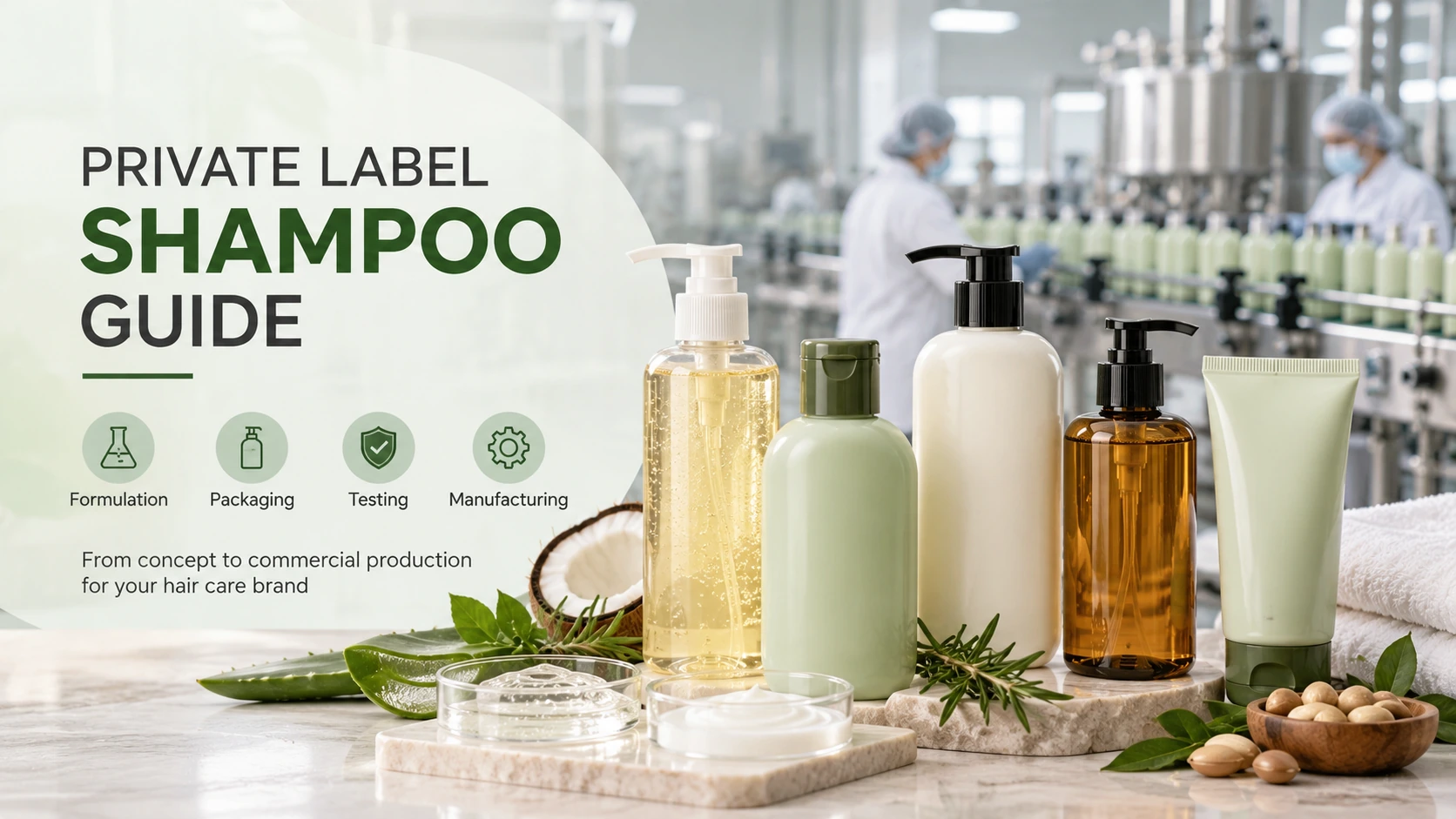
This guide covers the key decisions involved in private label shampoo development, from formulation and packaging to testing, quality control and commercial production.
Start With a Clear Shampoo Product Concept
Before discussing ingredients with a manufacturer, define who will use the shampoo and what experience it should deliver.
A daily shampoo for fine hair requires a different approach from a moisturizing shampoo for dry, damaged hair. Similarly, a salon brand may prioritize professional performance and larger packaging formats, while an e-commerce brand may focus on fragrance, product differentiation and shipping-friendly bottles.
A useful development brief should establish the target hair type, main product benefit, fragrance direction, price positioning, packaging preference and intended sales market.
The goal is not to include as many ingredients or claims as possible. It is to give the formulation team a clear performance target.
Brands can also choose how much customization they need. Existing formulas may provide a faster starting point, while semi-custom or fully customized development offers greater flexibility. Explore our ready-to-market formula options if you are comparing these approaches.
Understanding Private Label Shampoo Formulation
A successful shampoo formula balances effective cleansing with a pleasant washing experience and suitable after-feel.
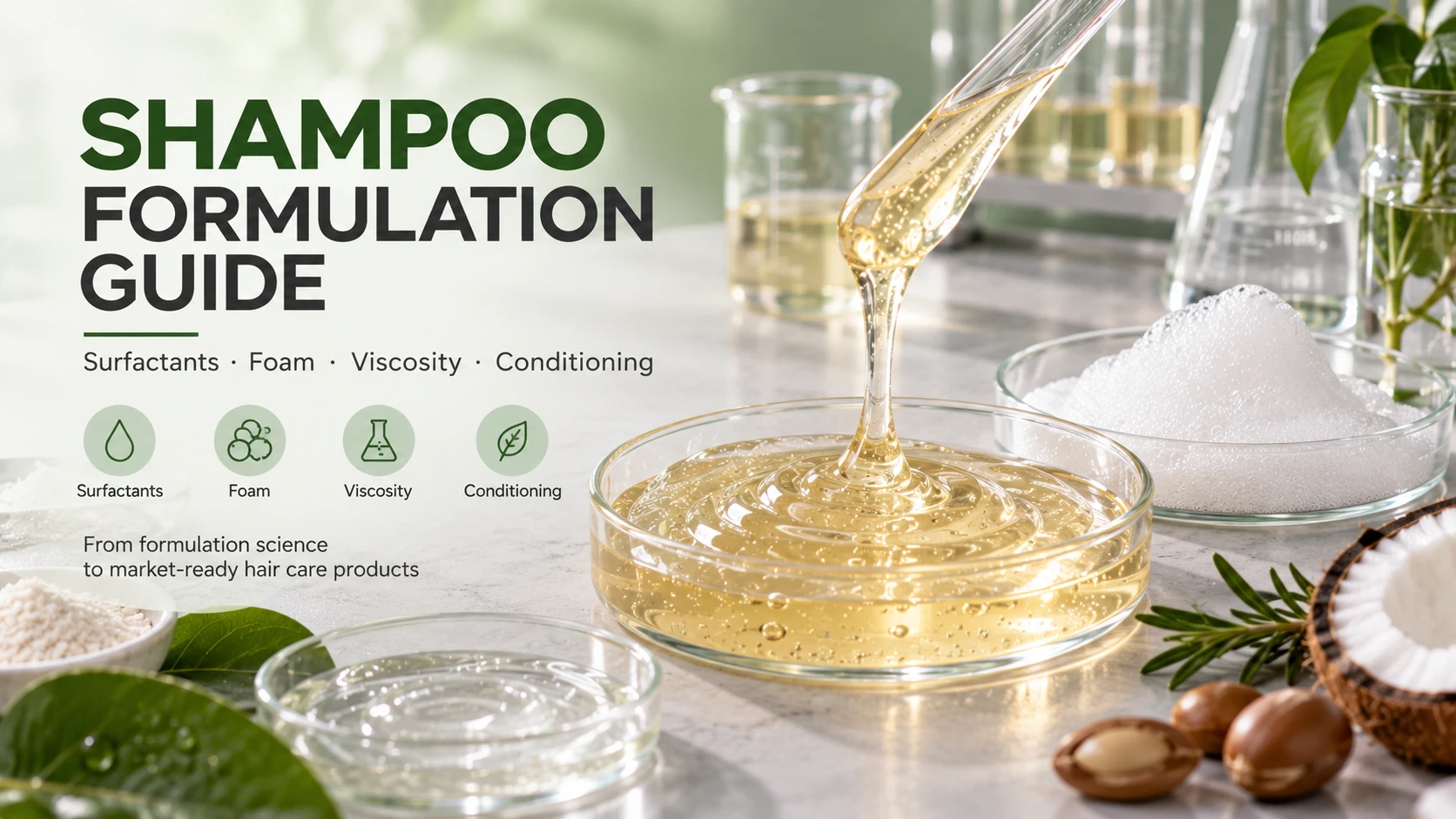
The cleansing system is typically built around surfactants, while conditioning polymers, functional ingredients and other components help shape the product's sensory profile. Fragrance, pH and viscosity must also be considered as part of the complete formula.
Match the Formula to the Product Positioning
Different shampoo concepts require different formulation priorities.
| Shampoo Type | Main Formulation Priorities | Development Considerations |
|---|---|---|
| Daily Gentle Shampoo | Balanced cleansing and comfortable after-feel | Suitable for frequent-use positioning |
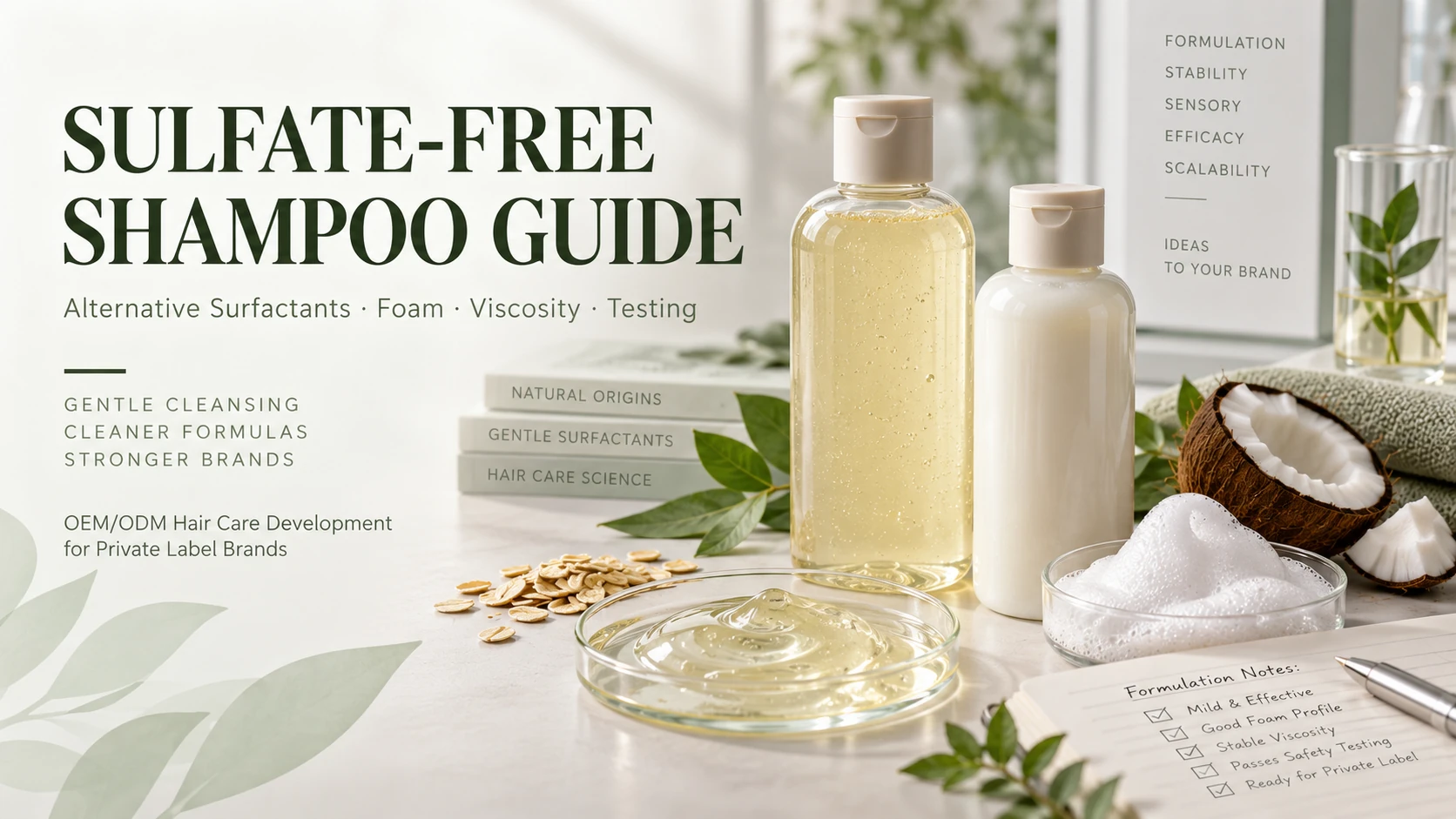
| Sulfate-Free Shampoo | Alternative surfactant blends and foam performance | Evaluate mildness and cleansing in the finished formula |
| Clarifying Shampoo | More effective removal of oil and product buildup | Avoid an excessively stripping feel |
| Color-Safe Shampoo | Balanced cleansing and conditioning | Assess performance and support color-related claims |
| Scalp Care Shampoo | Appropriate cleansing and scalp-focused ingredients | Review ingredient suitability and intended claims |
These categories are useful starting points, but they are not fixed formulas.
For example, a brand comparing clarifying shampoo vs regular shampoo should first decide how much cleansing performance its target consumer actually needs. A color-safe shampoo formulation may place greater emphasis on balanced cleansing, conditioning and product testing.
Balance Foam, Viscosity and Conditioning
Consumers often associate rich foam with effective cleansing, but foam volume alone does not determine shampoo performance.
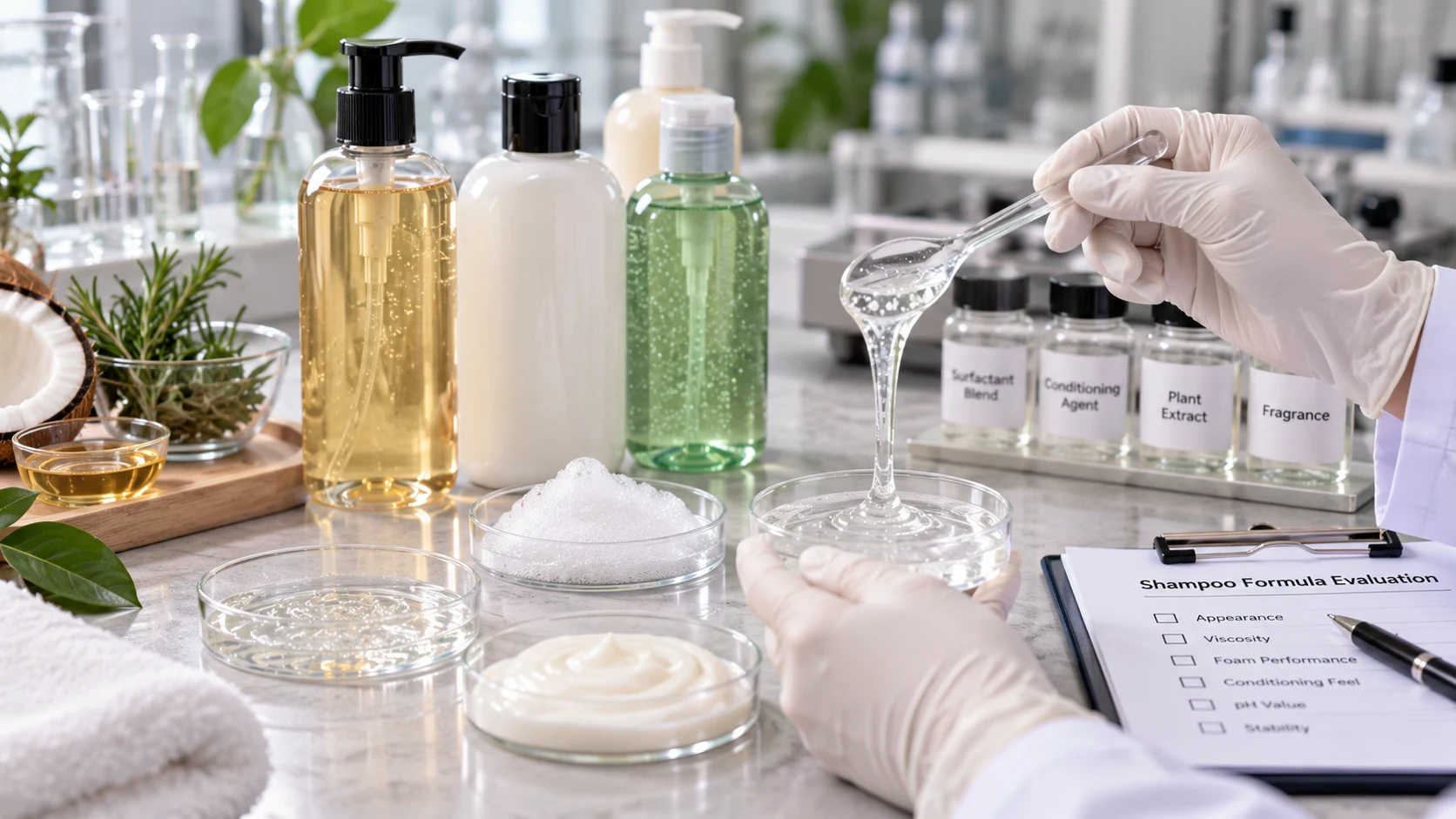
The relationship between surfactants, foam, viscosity and conditioning performance needs to be evaluated during development. A formula with strong cleansing may leave hair feeling dry, while too much conditioning can make fine hair feel heavy.
Fragrance and ingredient adjustments can also change shampoo thickness or foam behavior. This is particularly important for sulfate-free shampoo formulation, where the overall surfactant system must deliver the desired experience without relying on a particular ingredient label.
A professional formulation process evaluates these characteristics together rather than treating each one separately.
Choose Shampoo Packaging That Works With the Formula
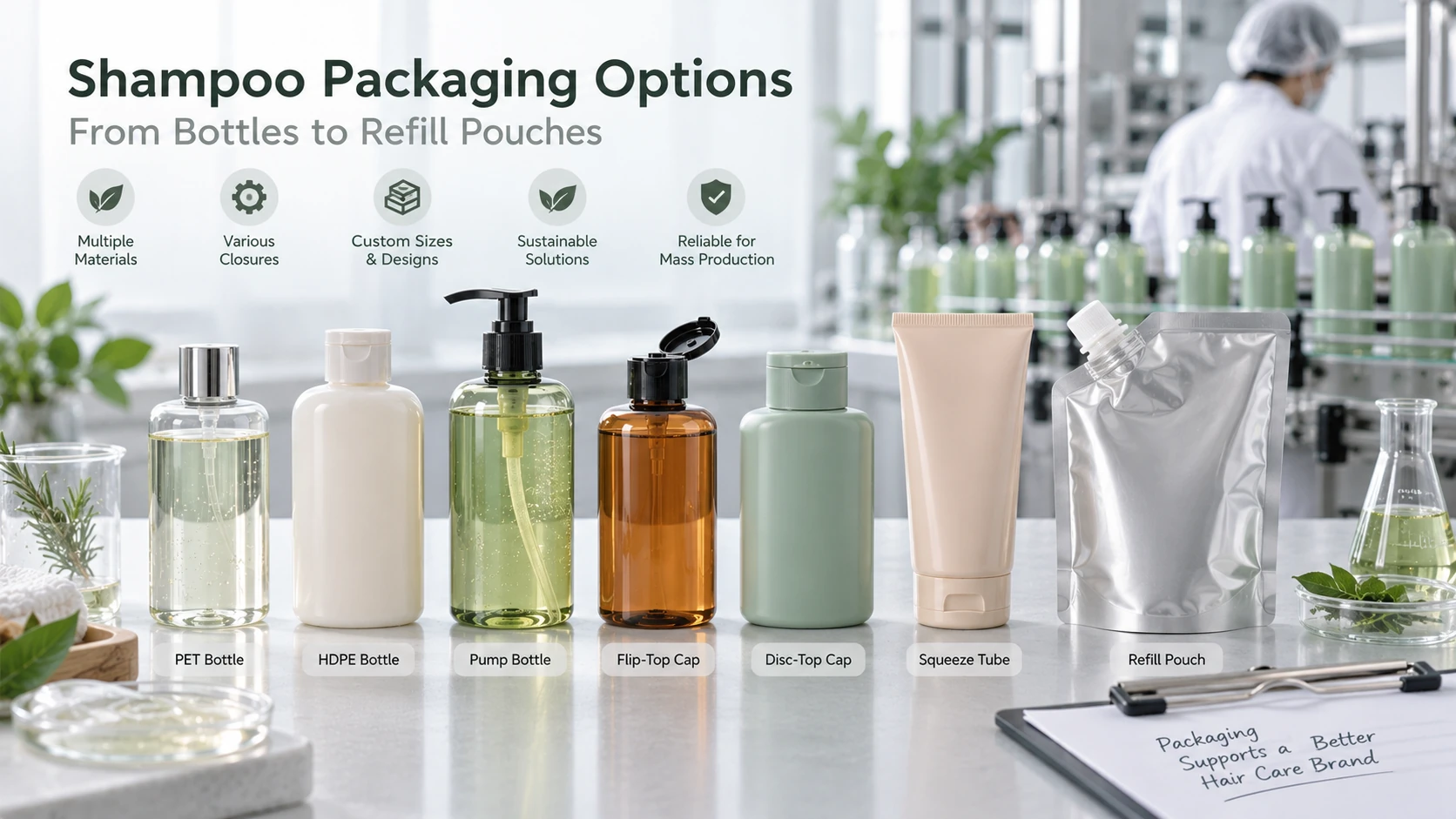
Packaging affects more than appearance. It influences dispensing, product protection, manufacturing efficiency and the consumer's daily experience.
Pump bottles are popular for salon and family-size shampoos, while flip-top bottles offer a practical option for everyday retail products. Tubes can work well for travel or specialized formats, and refill pouches may suit brands developing refill-oriented product lines.
However, packaging should never be selected on appearance alone.
A thicker shampoo may not dispense smoothly through every pump. Certain fragrances or formula components can interact with packaging materials, while poorly matched caps and closures may create leakage problems during shipping.
For brands considering recycled plastic or refillable packaging, material specifications, filling compatibility and transport performance should be reviewed before approval.
The formula and packaging should be developed as one product system. Confirming their compatibility early helps reduce unnecessary changes before commercial production.
Shampoo Testing and Quality Assurance
Testing helps confirm that an approved shampoo formula can maintain its intended quality throughout storage, distribution and consumer use.
The testing plan should reflect the product's formula, packaging, claims and destination market.
Stability and Formula Performance
Stability testing evaluates how the shampoo behaves under selected storage conditions. Changes in viscosity, color, fragrance, appearance or pH can indicate that further formulation work is needed.
Testing conditions and acceptance criteria should be agreed upon for the project rather than relying only on how an initial laboratory sample looks.
Microbiological Safety and Packaging Compatibility
Shampoos are generally water-based products, so microbiological quality and the effectiveness of the preservation system require appropriate evaluation.
Packaging compatibility testing helps identify potential issues such as leakage, discoloration, material interaction or poor dispensing performance.
These checks are especially important when a brand introduces new fragrance systems, bottle materials or dispensing components.
Claims and Market Compliance
Product claims must be supported by suitable evidence and reviewed for the intended market.
For the United States, cosmetic shampoo products are subject to applicable FDA requirements, including provisions of the Modernization of Cosmetics Regulation Act (MoCRA). Claims to treat conditions such as dandruff can change a product's regulatory classification.
For the European Union, cosmetic products must meet the requirements of Regulation (EC) No 1223/2009, including applicable safety assessment, product information and notification obligations.
Manufacturers can support ingredient documentation, specifications and testing information, but regulatory responsibilities should be agreed upon with the brand or designated responsible person before launch.
From Shampoo Development to Bulk Manufacturing
Moving from an approved sample to commercial production requires more than increasing the batch size.
Mixing conditions, ingredient addition order, temperature control and production equipment can influence the final shampoo's viscosity, appearance and consistency.
A structured manufacturing process helps brands identify these issues before regular production begins.
| Development Stage | Main Activities |
|---|---|
| 1. Product Brief | Confirm positioning, formula requirements, packaging and target market |
| 2. Formula Development | Prepare samples and refine cleansing, foam, fragrance and after-feel |
| 3. Testing & Approval | Evaluate stability, safety, packaging compatibility and approved specifications |
| 4. Production Scale-Up | Transfer the formula to manufacturing equipment and verify process consistency |
| 5. Bulk Manufacturing & QC | Produce the batch and check relevant quality parameters |
| 6. Filling & Packaging | Fill, seal, label, inspect and prepare finished goods for shipment |

During production, quality checks may include raw material verification, appearance, pH, viscosity, filling accuracy and finished packaging inspection.
For brands planning repeat orders, consistency is particularly important. The manufacturer should be able to reproduce the approved product within agreed specifications rather than relying on a successful first sample.
How to Choose a Private Label Shampoo Manufacturer
A suitable manufacturing partner should understand both the technical requirements of shampoo formulation and the commercial realities of launching a product line.
When evaluating an OEM/ODM shampoo manufacturer, look beyond the initial quotation.
An experienced formulation team should be able to explain how cleansing systems, conditioning ingredients, fragrance and packaging influence one another. It should also provide a clear development process, including sample approval, testing expectations and production specifications.
Manufacturing capability is equally important. Ask how the factory manages raw material control, production consistency, quality inspections and repeat orders.
For international buyers, communication about MOQ, packaging sourcing, documentation, development schedules and formula ownership should be established before committing to production.
A reliable manufacturer does more than supply shampoo. It helps identify practical development risks before they become costly production problems.
Develop Your Private Label Shampoo With Poleview
Poleview Biotechnology Group Co., Ltd. is a China-based OEM/ODM personal care manufacturer supporting private label hair care brands, salons, distributors and retailers.
We help brands develop customized shampoo products, including moisturizing, sulfate-free, clarifying, color-safe and scalp-focused formulations.
Our services cover formula development, sample evaluation, fragrance and packaging customization, quality control and commercial manufacturing.
Whether your project starts with an established formula or requires full custom development, our team works to align the formula, packaging and production requirements with your brand positioning.
You can explore our custom hair shampoo manufacturing services or discuss your development requirements directly with our team.
Discuss Your Shampoo Project With Poleview
Private Label Shampoo FAQ
Q: 1. How much does it cost to develop a private label shampoo?
A: The cost depends on formula complexity, ingredient selection, packaging, testing requirements and order quantity. Projects using an established formula base may require less development work than fully customized formulations.
Q: 2. What is the MOQ for private label shampoo?
A: Minimum order quantities depend on the formula, bottle type, packaging customization and production requirements. Standard packaging may offer more flexibility than exclusive molds or highly customized components.
Q: 3. How long does shampoo development take?
A: The timeline varies with the degree of customization, sample revisions, testing requirements and packaging availability. Full custom formulas generally require more development and validation than existing formula bases.
Q: 4. Can I create a sulfate-free or silicone-free shampoo?
A: Yes. These are common private label formulation directions. The cleansing system, conditioning performance, viscosity and overall product experience should still be evaluated against the intended consumer needs.
Q: 5. Can I customize the fragrance and packaging?
A: Yes. Fragrance, appearance, selected ingredients, packaging format, labels and outer cartons can be customized according to the project. Final choices must be compatible with the approved formula.
Q: 6. What documents are needed to sell shampoo in the US or EU?
A: Requirements depend on the target market and product claims. They may include ingredient information, safety substantiation, product specifications, applicable testing records, compliant labels and market-specific notifications. Responsibilities should be confirmed with the relevant regulatory parties before sale.
Conclusion
Developing a successful private label shampoo requires coordination between formulation, packaging, testing and manufacturing.
By making these decisions early and working with an experienced OEM/ODM partner, brands can reduce development uncertainty and build shampoo products designed for consistent quality and long-term commercial supply.