Developing a body butter for a private label brand is very different from making a small batch at home.
A commercial product has to do more than feel good when it is first mixed. It needs to maintain the right texture during filling, storage and transportation, work with the chosen packaging, perform consistently from batch to batch, and meet the requirements of the market where it will eventually be sold.
For brands, the real question is therefore not simply how to make body butter, but how to turn an initial product idea into a stable, scalable and market-ready formula.
This guide walks through the process from a manufacturer's perspective, covering formula design, ingredient selection, commercial production, stability, packaging and the steps involved in moving from a laboratory sample to full-scale manufacturing.

What Makes a Commercial Body Butter Different From a DIY Formula?
A homemade body butter is usually produced in a small quantity for immediate or personal use. A private label product has a much longer and more demanding journey.
The formula may need to be produced in hundreds of kilograms rather than a kitchen-sized batch. It could spend weeks in storage, travel through different climates, sit in a warehouse and eventually reach consumers months after it was manufactured.
That changes the way the product should be developed.
| Development Area | DIY Body Butter | Commercial Private Label Body Butter |
|---|---|---|
| Batch Size | Small | Pilot to commercial-scale production |
| Formula Goal | Personal preference | Defined consumer and market positioning |
| Texture | Immediate use | Must remain consistent over time |
| Stability | Usually limited | Requires structured evaluation |
| Climate | Mostly local | May travel through different temperature zones |
| Packaging | Simple container | Must suit the formula and filling process |
| Quality Control | Limited | Raw material, process and finished-product controls |
| Regulatory Requirements | Minimal | Depends on the destination market |
| Scale-Up | Not required | Formula must transfer to production equipment |
This is why a successful commercial body butter cannot simply be based on a DIY recipe with larger quantities.
If you are still deciding whether body butter is the right format for your range, our guide to body butter vs. lotion explains how the two differ in texture, formula structure and consumer use.
The formula has to be designed with manufacturing and distribution in mind from the beginning.
Start With the Product Brief, Not the Ingredient List
One of the most common mistakes during private label development is starting with ingredients before the product itself has been clearly defined.
A brand may come to us asking for "a shea butter body butter with vitamin E," but that still leaves many important questions unanswered.
Should the texture be dense and rich or soft and whipped? Should it absorb quickly or leave a more protective finish? Will the product be sold mainly in Northern Europe, California or the Middle East? Is it intended for an affordable everyday range, a natural beauty collection or a premium spa line?
These choices directly affect the formula.
A rich winter body butter developed for cooler climates may behave very differently during summer transportation in warmer regions. A product designed for e-commerce also needs to tolerate parcel shipping better than one that moves directly from a local warehouse to a retail shelf.
Before formulation begins, we normally want to understand the target market, consumer, desired texture, fragrance direction, packaging concept, price level and expected order quantity.
A good product brief saves much more time than trying to correct the formula after several rounds of sampling.
Choosing the Right Type of Body Butter
Although consumers may simply see them all as "body butter," commercially there are several different ways to build the product.
| Formula Type | Typical Texture | Suitable Positioning | Main Development Challenge |
| Anhydrous Body Butter | Rich and concentrated | Natural and intensive care | Melting and crystallization |
| Whipped Body Butter | Light and airy | Premium sensory products | Aeration and volume stability |
| Emulsified Body Butter | Rich but creamier | Modern, faster-absorbing body care | Emulsion and preservation |
| Balm-Style Butter | Firm and protective | Intensive dry-skin care | Hardness and spreadability |
Anhydrous Body Butter
An anhydrous body butter contains little or no intentionally added water. The structure is usually built from natural butters, plant oils, emollients, antioxidants, fragrance and other oil-compatible ingredients.
These formulas are popular with brands that want a rich or naturally positioned product, but a waterless formula is not automatically easy to manufacture.
The balance between solid fats and liquid oils determines much of the product's firmness, melting behavior and skin feel. Too much liquid oil may create a softer, greasier product, while too much structure can make the butter difficult to scoop and spread.
Whipped Body Butter
Whipped body butter uses controlled aeration to create a lighter, more voluminous texture.
The main challenge is not creating the whipped appearance-it is keeping that texture reasonably consistent after filling, storage and transportation.
Cooling temperature, mixing speed, whipping time, density and filling conditions can all affect the final result. A beautiful laboratory sample may still need adjustment before it is suitable for commercial production.
Emulsified Body Butter
Some brands want the richness associated with body butter but prefer a lighter, creamier and faster-absorbing finish.
An emulsified system combines an oil phase and a water phase, allowing more flexibility in sensory design. Because water is present, microbiological control, preservation and emulsion stability become more important parts of development.
Balm-Style Body Butter
A balm-style formula is normally firmer and more structured. It can work well for intensive body care or products positioned for particularly dry areas.
The challenge is finding enough structure without making the product feel excessively waxy or difficult to spread.
How a Body Butter Formula Is Built
A body butter formula is a system rather than a collection of fashionable ingredients.
Natural butters create much of the richness and body. Plant oils influence softness and spreadability. Emollients can help improve slip and reduce an overly greasy finish, while structuring ingredients may be used to adjust firmness or temperature resistance.
Antioxidants can help protect oxidation-sensitive oils, while fragrance and functional ingredients contribute to the final positioning of the product.
| Ingredient Category | Examples | Main Role |
| Natural Butters | Shea, cocoa, mango, kokum, cupuaçu | Structure, richness and skin feel |
| Plant Oils | Jojoba, coconut, almond, avocado, argan | Emollience and spreadability |
| Emollients | Natural or synthetic emollients | Slip, absorption and sensory adjustment |
| Structuring Ingredients | Waxes and texture modifiers | Firmness and heat resistance |
| Antioxidants | Tocopherol and suitable antioxidant systems | Oxidation support |
| Functional Ingredients | Compatible skincare ingredients | Product differentiation |
| Fragrance | Fragrance oils or compatible essential oils | Sensory identity |
| Water Phase | Used in emulsified formulas | Supports cream-type structures |
| Preservation System | Used where applicable | Microbiological protection |

Butter Selection Matters More Than the Label Suggests
Shea butter is probably the best-known ingredient in this category and works well for rich, nourishing product concepts. Cocoa butter can contribute more firmness and structure, while mango butter is often chosen when brands want a somewhat different sensory profile.
Specialty butters such as kokum, cupuaçu or murumuru may also be considered depending on the brand story and formula requirements.
The important point is that ingredient selection should not be driven by marketing alone.
Brands comparing botanical ingredients with functional formulation materials can also read our guide to natural vs. synthetic body care ingredients and how each approach affects stability, texture and commercial production.
A material also needs to make sense in terms of performance, availability, documentation, cost and compatibility with the rest of the formula.
More Oil Does Not Always Mean More Moisturizing
Another common assumption is that adding more plant oil will automatically improve a body butter.
In practice, excessive liquid oil can make the product too soft, reduce heat resistance and leave a heavier after-feel. It may also create practical problems during filling or transportation.
A well-developed formula often feels rich in the jar but becomes easier to spread and more elegant as it warms on the skin.
That transition is something formulators deliberately design.
Developing the First Sample
Once the product brief and basic formula direction have been established, the project moves into laboratory sampling.
At this stage, the sample should be evaluated as a complete product rather than simply judged by whether the fragrance smells good.
Texture is particularly important. We look at how easily the butter can be scooped, how it spreads, how quickly it softens on the skin, how greasy or dry the finish feels and whether the fragrance remains balanced within the formula.
Brand feedback is much more useful when it is specific.
For example, saying:
"We would like it slightly softer in the jar but less oily after application."
gives the formulator something practical to work with.
By comparison, comments such as "make it more premium" can mean very different things depending on the person evaluating the sample.
Clear sensory feedback usually reduces unnecessary sampling rounds.
How Body Butter Is Manufactured at Commercial Scale
Once the formula has reached an approved direction, it needs to be transferred from laboratory development into production.
The exact manufacturing procedure varies according to the formula, but the general principle is to control every stage that can influence final texture and consistency.
Production begins with raw material inspection and accurate weighing according to the approved manufacturing formula. This is followed by controlled heating of the ingredients that need to be melted.
Temperature matters here.
Natural butters should not simply be heated as aggressively as possible to speed up production. Excessive heating can affect odor, oxidation-sensitive ingredients and the behavior of the final product.
Heat-sensitive materials or fragrance may also need to be introduced later in the process rather than at the initial melting stage.
After the oil and butter phases are properly prepared, the batch is mixed to achieve uniform ingredient distribution. Homogenization may be used where the particular formula requires it, but more mixing is not always better. The appropriate speed and shear depend on the intended structure.
Cooling then becomes one of the most important steps in the entire process.

Why Cooling Is So Important
Body butter does not simply go from "hot" to "cold."
Natural butters contain different lipid fractions that can crystallize differently depending on how they are heated, cooled and stored.
If this part of the process is not well controlled, the finished product may become grainy, develop an uneven texture or change in firmness after production.
This is also one reason why scale-up requires experience.
A small laboratory beaker cools much faster than a large production vessel. Heat transfer, batch volume, agitation and equipment geometry all change when production moves to commercial scale.
A formula that performs perfectly in a 500 g sample therefore cannot always be transferred directly into a large batch without considering the manufacturing parameters.
For whipped body butter, the process is even more sensitive because air is intentionally incorporated into the product. Mixing speed, temperature, whipping time and density all affect whether the desired texture can be reproduced consistently.
After processing, the bulk product is filled into the selected packaging and goes through the required finished-product inspection before packing.
Common Problems When a Body Butter Is Scaled Up
Some of the most important development work happens when a formula moves from a successful sample to real production.
Grainy Texture
Graininess is a familiar issue in butter-rich formulas. It can be influenced by the crystallization behavior of the natural butters, temperature fluctuations, cooling conditions and the overall formula structure.
When this occurs, the solution is usually not as simple as mixing the product again. Both the formula and its thermal process need to be reviewed.
Melting or Becoming Too Soft
A body butter that feels perfect at room temperature may become much softer after exposure to summer temperatures during transport.
Improving heat resistance may involve changing the ratio of butters, oils or structuring ingredients, but the objective should not simply be to make the product as hard as possible.
A product that survives transportation but feels unpleasantly waxy when the consumer uses it is not a successful formula.
The target is a workable balance between transport stability and sensory quality.
Heavy or Greasy After-Feel
Richness and greasiness are not the same thing.
A body butter can provide a luxurious, nourishing feel without leaving an excessive oily residue. This is usually achieved by adjusting the relationship between the butter system, liquid oils, emollients and overall structure.
Whipped Texture Losing Volume
Whipped body butter has an additional physical structure created by incorporated air.
If temperature, density or processing conditions are not properly controlled, the product can lose volume or change appearance during storage and transportation.
For this reason, whipped body butter needs to be treated as both a formulation and a physical structure.
Fragrance Changing the Formula
Fragrance is sometimes treated as though it can simply be added at the end without affecting anything else.
In reality, different fragrance systems can interact differently with a formula and may influence odor development, color, texture or stability.
When a fragrance is changed significantly, the finished formula should be reassessed rather than assuming it will behave exactly like the previous version.
Stability and Packaging Should Be Evaluated Together
Packaging is often selected because of appearance, but for body butter it also has an important technical function.
A dense butter may work very well in a wide-mouth jar but perform poorly in a standard pump. A softer formula may dispense more easily but require more attention to leakage during transport.
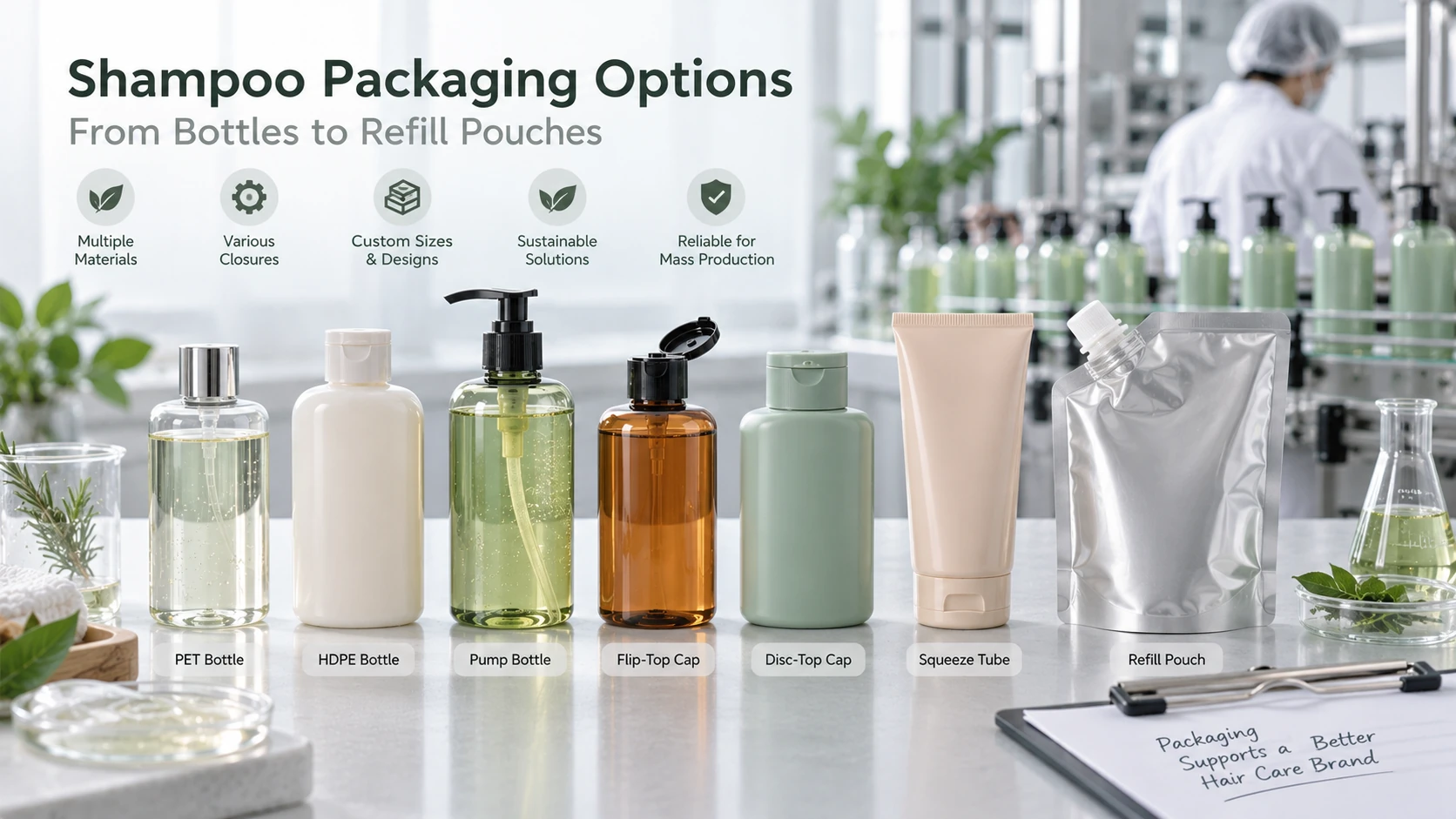
PET and PP jars are commonly used for mainstream and premium body butter ranges, while glass jars can create a heavier, more luxury-oriented presentation. Aluminum tins can suit natural or minimalist concepts, and softer emulsified formats may work with suitable tubes or dispensing systems.
The formula and packaging should therefore be developed together rather than treated as two completely separate projects.
A commercial development program may evaluate changes in appearance, odor, color, firmness and texture under different conditions. Packaging compatibility, filling performance, microbiological quality and preservation are also considered where relevant to the formula.
Water-containing or emulsified body butters generally require a different microbiological and preservation strategy from an anhydrous product.
There is no single test program that fits every body butter. The final approach should be based on the formula, packaging, destination market and intended claims.
Preparing a Body Butter for the US or EU Market
The destination market should ideally be confirmed early in development because it can affect ingredients, claims, documentation and labeling.
For products intended for the United States, brands need to consider the applicable requirements under the Modernization of Cosmetics Regulation Act of 2022, commonly known as MoCRA.
Depending on the parties involved and applicable exemptions, this can include facility registration, cosmetic product listing, safety substantiation, labeling responsibilities and the obligations of the responsible person.
Claims also matter. A body butter should not accidentally be marketed in a way that changes how the product is regulated.
For the European Union, Regulation (EC) No 1223/2009 establishes the main framework for cosmetic products.
A product placed on the EU market generally needs an EU Responsible Person, appropriate safety assessment and documentation, a Product Information File, compliant labeling and notification through the Cosmetic Product Notification Portal before market placement.
These regulatory steps are one reason artwork and claims should not be finalized too early.
Changing ingredients or marketing claims late in the project can create additional documentation work and delay the launch.
From Approved Sample to Commercial Production
Once the formula is approved, the project moves into packaging confirmation and production preparation.
At this stage, the brand should make sure the approved formula version, fragrance, color, texture, filling quantity, packaging components and artwork are all aligned.
A typical project moves from product brief and sampling into formula approval, packaging confirmation, bulk manufacturing, filling, quality control, packing and shipment.
Brands that want to understand the wider development workflow can review Poleview's OEM/ODM personal care manufacturing process, including formulation, sampling, packaging evaluation, quality control and bulk production.
The exact sequence may vary, but one principle remains the same: changes are much easier to make during sampling than after commercial production has started.
This is why good manufacturers spend time confirming details before the production batch is released.
How Long Does Private Label Body Butter Development Take?
Development time depends mainly on how much customization the brand needs.
If a customer selects an established formula direction and standard packaging, sampling can move relatively quickly. At Poleview, samples based on established body care directions can typically be prepared in around 3–7 days.
A modified formula usually takes longer because texture, fragrance, ingredients or sensory performance may need to be adjusted over several rounds.
Fully customized ODM projects require the most development work. New raw materials, formula architecture, packaging compatibility and additional testing can all extend the timeline.
For typical body care projects, bulk manufacturing may take around 25–35 days after the formula, packaging and order details have been confirmed. Custom packaging or more complex testing requirements may add additional time.
For brands working toward a fixed launch date, it is better to plan backward from the required delivery date rather than looking only at manufacturing time.
What Should You Tell Your Body Butter Manufacturer?
A manufacturer can usually give much more useful recommendations when the initial brief is clear.
Rather than sending only a message such as "I need private label body butter," it helps to explain where the product will be sold, who the target customer is and what kind of texture or positioning you are trying to achieve.
If you have a reference product, it can be used to communicate the desired sensory direction without asking the manufacturer to copy another brand's proprietary formula.
It is also useful to provide your preferred ingredients, fragrance direction, packaging ideas, expected order quantity, target price range and planned launch date.
These details allow the manufacturer to evaluate the project as a complete commercial product rather than developing the formula in isolation.
How Poleview Supports Private Label Body Butter Development
Poleview Group has been manufacturing personal care products since 1995 and supports international brands with private label body care manufacturing, from individual products such as body butter to coordinated body care collections.
For body butter projects, our work can begin with an existing formula direction or with a more customized development brief.
Depending on the project, our team can assist with formula selection, texture adjustment, fragrance development, ingredient sourcing, sampling, packaging coordination, production, filling and quality control.
Our manufacturing operations include a 40,000 m² facility, more than 20 automated production lines and production capacity of up to 1 million units per month across our personal care manufacturing operations.
Production is supported by ISO 22716 and GMPC quality management systems.
For us, private label manufacturing is not simply putting a brand logo on an existing jar.
A good body butter needs to make sense as a formula, a packaged product and a commercial item that can be reproduced consistently.
Brands that are still deciding between body butter, body lotion, body cream or other body care formats can also explore our Body Care Guide.
If your product direction is already clear, visit our Private Label Body Butter Manufacturer page to learn more about available formula, packaging and OEM/ODM options.
Frequently Asked Questions
Q: 1. What is the MOQ for private label body butter?
A: MOQ depends on the formula, packaging and level of customization. Projects using established formulas and standard packaging generally have more flexible production options than completely custom formulas or specially developed packaging.
Q: 2. Can I create a completely custom body butter formula?
A: Yes. A formula can be developed around a specific butter system, texture, fragrance, ingredient direction, skin feel, market positioning and packaging format. More customized projects usually require additional sampling and evaluation before production.
Q: 3. What is the difference between whipped and regular body butter?
A: Regular body butter is generally denser and more compact. Whipped body butter incorporates air during processing, producing a lighter and more voluminous texture. Because of that structure, whipped formulas require additional attention to cooling, aeration, density and transportation conditions.
Q: 4. Why does body butter sometimes become grainy?
A: Graininess is often related to the crystallization behavior of natural butters and can be influenced by formula composition, heating, cooling and temperature fluctuations during storage. Both the formula and manufacturing process may need to be adjusted to solve the problem.
Q: 5. Can body butter be made less greasy?
A: Yes. Skin feel can be adjusted by changing the balance between butters, oils, emollients and structuring ingredients. A body butter can still feel rich while leaving a smoother and less oily finish.
Q: 6. Can the fragrance and packaging be customized?
A: Yes. Fragrance, color, texture, packaging material, jar size, decoration and outer packaging can all be customized. The final fragrance and packaging should, however, be evaluated with the actual formula to make sure the complete product works well together.
Final Thoughts
Making body butter for a private label brand involves much more than blending shea butter, oils and fragrance.
The formula needs to feel right when the customer opens the jar, but it also needs to survive production, filling, storage and transportation without losing the characteristics that made the original sample attractive.
That means formulation, processing, cooling, packaging and market requirements all need to be considered as parts of the same development process.
For brands, the most efficient starting point is usually a clear product brief: where the product will be sold, what texture you want, which ingredients or fragrance direction matter to you, the packaging you have in mind and the commercial target for the project.
From there, the manufacturer can determine whether an existing formula, a modified formula or a fully customized development route makes the most sense.
Planning a private label body butter project? Talk to Poleview about your formula, packaging and target market, or request a sample to begin evaluating your product direction.