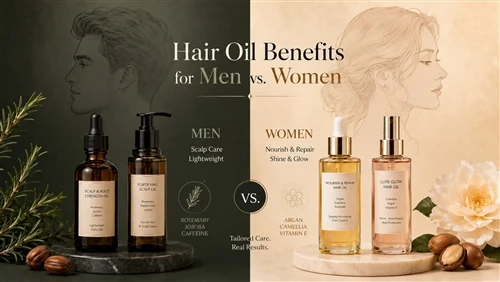
Choosing the right hair oil manufacturer in China is an important decision for private label brands, wholesalers, Amazon sellers, salon product lines, beauty importers, distributors, and brand owners planning to develop hair care products at scale.
A reliable supplier should do more than fill oil into bottles. The right manufacturer should help you develop a stable formula, choose suitable packaging, prepare product documents, control quality, manage sampling, and support repeat bulk orders with consistent results.
Hair oil is a broad product category. It can include private label hair oil, argan hair oil, rosemary scalp oil, castor oil blends, anti-frizz smoothing oil, lightweight hair serum oil, scalp massage oil, coconut nourishing oil, and clean beauty botanical hair oil. Each product direction requires different raw materials, textures, packaging formats, testing standards, price points, and market positioning.
This guide explains how to evaluate hair oil manufacturers in China, what types of suppliers to compare, which formula directions are popular for private label projects, and how to reduce sourcing risk before placing a wholesale order.

Why China Is a Strong Manufacturing Base for Hair Oil
China has become an important production hub for hair care and personal care products because of its mature cosmetic supply chain, flexible OEM/ODM services, packaging resources, and large-scale production capability.
For hair oil products, many Chinese manufacturers can support:
- Custom hair oil formulation
- Private label packaging
- Low-MOQ trial orders
- Bulk production
- Bottle, label, and box customization
- Export documentation
- Product sampling
- Quality inspection before shipment
- Retail-ready packaging
- Amazon-ready packaging
- Repeat production for growing brands
For beauty brands and bulk buyers, the advantage is not only cost. A qualified China hair oil manufacturer can help move a product from concept to market-ready launch with formula, packaging, production, and documentation support in one place.
However, not every supplier is suitable for serious private label projects. Some suppliers only offer ready-made formulas, while others provide complete OEM/ODM support with formulation, packaging development, quality control, and export experience. That is why buyers need a clear evaluation method before choosing a long-term manufacturing partner.
What Types of Hair Oil Can Chinese Manufacturers Produce?
Before contacting suppliers, brands should define what type of hair oil they want to develop. Different formulas serve different customer needs and sales channels.
Common private label hair oil product types include:
| Product Type | Common Positioning | Suitable For |
|---|---|---|
| Argan Hair Oil | Shine, smoothness, frizz control | Salon brands, premium hair care, ecommerce |
| Rosemary Scalp Oil | Scalp care, fuller-looking hair, botanical positioning | Natural brands, scalp care lines, trend-driven products |
| Castor Oil Hair Blend | Rich nourishment, dry hair, curly hair | Textured hair brands, dry hair care, ethnic hair care |
| Coconut Hair Oil | Nourishing, softening, tropical concept | Mass market, natural care, family hair care |
| Jojoba Hair Serum Oil | Lightweight care, non-greasy finish | Fine hair, daily use, modern hair care |
| Scalp Treatment Oil | Scalp massage, scalp comfort, pre-wash care | Scalp care brands, salon lines |
| Anti-Frizz Smoothing Oil | Smoothness, shine, humidity control | Salon retail, premium hair care, ecommerce |
| Leave-In Nourishing Hair Oil | Daily conditioning, soft hair feel | Retail brands, body and hair care sets |
| Clean Beauty Hair Oil | Vegan, plant-based, simplified ingredient story | Clean beauty, boutique brands, wellness retailers |
| Essential Oil Hair Blend | Aromatherapy-inspired sensory experience | Spa, wellness, gift sets |
A good supplier should be able to recommend the right formula structure based on your target hair type, market, price point, claim direction, packaging plan, and sales channel.
Hair Oil OEM/ODM Buyer Guide: What to Decide Before Contacting a Supplier
Before starting custom hair oil formulation, brand owners should prepare a clear product brief covering target market, formula direction, hero ingredients, packaging, and launch quantity.
A complete hair oil product brief should include:
1. Target Market
Clarify where the product will be sold, such as:
- United States
- European Union
- United Kingdom
- Middle East
- Southeast Asia
- Africa
- Amazon
- Salon retail
- Local distributors
- Online beauty stores
Different markets may require different labeling, documentation, packaging preferences, ingredient restrictions, and claim wording.
2. Target Customer
Define who will use the product:
- Dry hair users
- Curly or textured hair users
- Fine hair users
- Frizz-prone hair users
- Scalp care customers
- Natural beauty customers
- Salon customers
- Premium beauty shoppers
- Budget-friendly daily care users
The target customer will influence formula texture, fragrance, ingredient story, packaging size, and price positioning.
3. Formula Direction
Decide whether your product should be:
- Lightweight and fast-absorbing
- Rich and nourishing
- Silicone-free
- Vegan-friendly
- Fragrance-free
- Essential-oil-based
- Scalp-focused
- Anti-frizz focused
- Clean beauty positioned
- Salon-grade positioned
This is important because a lightweight hair serum oil and a rich castor oil blend require very different formulation approaches.
4. Hero Ingredients
Common hair oil hero ingredients include:
- Argan oil
- Rosemary oil
- Castor oil
- Jojoba oil
- Coconut oil
- Avocado oil
- Sweet almond oil
- Black seed oil
- Vitamin E
- Ginger extract
- Ginseng extract
- Tea tree oil
- Peppermint oil
- Lavender oil
A good manufacturer can help decide which ingredients are suitable for your formula, price point, and target market.
5. Packaging Style
Common hair oil packaging options include:
- Glass dropper bottles
- Amber bottles
- PET bottles
- Pump bottles
- Spray bottles
- Roller bottles
- Aluminum bottles
- Retail boxes
- Gift sets
- Travel-size packaging
- Amazon-ready cartons
Packaging should match the formula viscosity, customer use habit, shipping method, and retail positioning.
6. Order Quantity and Launch Plan
Before requesting a quote, decide whether your project is:
- A test order
- A seasonal launch
- A new private label product
- A product line expansion
- A repeat wholesale order
- A retail distribution project
- An Amazon launch
This helps the supplier recommend realistic MOQ, packaging options, and production timelines.
How to Choose a Reliable Hair Oil Manufacturer in China
Choosing a hair oil supplier should not be based only on price. Low unit cost may look attractive at first, but poor formula stability, leaking bottles, weak packaging, unclear documents, or slow communication can create bigger costs later.
When evaluating a hair oil OEM/ODM manufacturer, focus on these key factors.
1. Formula Development Capability
A professional manufacturer should understand how different oils, extracts, fragrances, and textures work together. They should be able to adjust the formula based on your target users and market positioning.
Ask whether the supplier can customize:
- Oil blend ratio
- Texture and viscosity
- Absorption speed
- Fragrance or fragrance-free options
- Essential oil blends
- Active-inspired cosmetic ingredients
- Silicone-free or vegan options
- Scalp care or anti-frizz positioning
- Formula for different hair types
A strong formulation team should help you avoid formulas that feel too greasy, separate during storage, oxidize too quickly, or conflict with packaging materials.
2. MOQ Flexibility
MOQ is important for both new brands and established buyers. Some brands need small trial orders for market testing, while distributors may need larger production runs with better unit pricing.
Ask the supplier:
- What is the MOQ for stock formulas?
- What is the MOQ for custom formulas?
- What is the MOQ for custom packaging?
- Can the supplier support a trial order before bulk production?
- Are there price breaks for larger quantities?
- Can the same formula be scaled after the first order?
- Are packaging materials subject to separate MOQ?
A flexible MOQ structure is especially useful for startups, Amazon sellers, and brands testing a new hair oil collection.
3. Certifications and Documents
Documentation is important for international buyers. A reliable supplier should be able to provide clear product and production-related documents.
Common documents may include:
- INCI ingredient list
- COA
- MSDS or SDS
- Product specification
- Batch record
- Stability testing information
- Packaging compatibility information
- Microbiological testing where applicable
- Export documents
- Labeling support for target markets
For U.S., EU, UK, Middle East, and other markets, brands should also confirm local cosmetic requirements with a qualified compliance advisor or responsible party. A manufacturer can support documentation, but final market compliance depends on the exact formula, claims, label, importer, and sales channel.
4. Packaging Support
Packaging is critical for hair oil because leakage, dropper quality, label adhesion, and carton strength can directly affect customer experience.
Common hair oil packaging options include:
- Amber glass dropper bottles
- Clear glass dropper bottles
- Plastic bottles
- Pump bottles
- Spray bottles
- Roller bottles
- Aluminum bottles
- Retail boxes
- Gift sets
- Amazon-ready packaging
- Salon professional packaging
Before mass production, buyers should confirm bottle sealing, cap compatibility, dropper performance, label material, carton structure, and shipping protection.
5. Quality Control Process
Hair oil products need stable appearance, consistent fragrance, accurate filling volume, and leak-proof packaging. A professional manufacturer should have clear quality control checkpoints.
Important quality checks include:
- Raw material inspection
- Formula mixing control
- Appearance, color, and odor inspection
- Filling volume check
- Bottle and cap sealing test
- Label and packaging inspection
- Batch number control
- Finished product inspection
- Pre-shipment photos or videos
For larger orders, buyers may also arrange third-party inspection before shipment.
6. Export Experience
If you are importing from China, export experience matters. A supplier familiar with international orders can help reduce communication problems and shipment delays.
Ask whether the supplier has experience with:
- U.S. buyers
- EU and UK buyers
- Middle East distributors
- African hair care markets
- Southeast Asian markets
- Amazon FBA preparation
- Retail-ready packaging
- Distributor carton requirements
A supplier with export experience can usually provide clearer timelines, better packing standards, and more practical shipping support.
Supplier Scorecard for Hair Oil Manufacturers
Instead of choosing a supplier only because it appears in a "Top 10" list, brands should compare manufacturers based on practical sourcing needs.
Use this evaluation scorecard:
| Evaluation Criteria | Weight | What to Check |
|---|---|---|
| Formula Capability | 25% | Oil blend development, texture adjustment, scalp care formulas, clean beauty options |
| Quality Control | 20% | Batch records, stability support, filling inspection, packaging inspection |
| Packaging Support | 15% | Bottles, droppers, pumps, labels, boxes, gift sets, Amazon-ready packaging |
| Documentation Support | 15% | INCI list, COA, MSDS/SDS, product specifications, export documents |
| MOQ and Pricing | 10% | Trial order flexibility, bulk pricing, packaging MOQ, payment terms |
| Export Experience | 10% | Experience with target markets and international logistics |
| Communication | 5% | Response speed, technical clarity, sample follow-up, problem-solving ability |
This system helps buyers compare suppliers objectively and avoid choosing only by price.
A simple scoring method is:
- 1–3 points: weak or unclear support
- 4–6 points: acceptable but needs confirmation
- 7–8 points: strong and suitable for most projects
- 9–10 points: excellent long-term supplier potential
The best supplier is not always the cheapest one. The right choice should match your product positioning, quantity plan, launch timeline, documentation needs, and long-term growth strategy.
Top 10 Hair Oil Manufacturer Types to Consider in China
China has many hair oil suppliers, but they do not all serve the same type of buyer. Instead of looking only for a simple ranking, buyers should identify which manufacturer type fits their product strategy.
1. Full-Service OEM/ODM Hair Oil Manufacturer
A full-service OEM/ODM manufacturer supports formula development, sampling, packaging design, bulk production, quality control, and export documents.
Best for:
- Private label brands
- Amazon sellers
- Beauty startups
- Wholesalers and distributors
- Brands launching a complete hair care line
Why it matters:
This supplier type reduces sourcing complexity because formula, bottle, label, box, filling, and shipment can be managed through one manufacturing partner.
2. Botanical Hair Oil Manufacturer
Botanical hair oil manufacturers focus on plant-based ingredients such as rosemary oil, argan oil, jojoba oil, coconut oil, castor oil, ginger extract, ginseng extract, and herbal blends.
Best for:
- Natural hair care brands
- Clean beauty brands
- Wellness retailers
- Plant-based product lines
Why it matters:
Botanical positioning is easy for consumers to understand, but the supplier should still provide stability support and clear ingredient documentation.
3. Castor and Textured Hair Oil Manufacturer
Some suppliers specialize in richer oil blends for curly, coily, textured, dry, or coarse hair types. These products often use castor oil, coconut oil, olive oil, black seed oil, shea oil, and other rich emollients.
Best for:
- African hair care brands
- Curly hair product lines
- Dry hair care brands
- Ethnic hair care distributors
Why it matters:
Textured hair products often require a different sensory profile. The oil should feel nourishing without being too sticky or difficult to wash out.
4. Lightweight Hair Serum Oil Manufacturer
Lightweight hair serum oil manufacturers develop formulas for shine, smoothness, anti-frizz care, and daily use. These products usually need a lighter finish and better spreadability.
Best for:
- Salon brands
- Fine hair products
- Anti-frizz hair care
- Modern ecommerce brands
Why it matters:
Many consumers want shine and smoothness without a heavy or greasy feel. Formula balance is important for this category.
5. Scalp Care Oil Manufacturer
Scalp care oil manufacturers focus on scalp massage, pre-wash care, scalp nourishment, and scalp comfort positioning. These formulas may use lightweight oils, botanical extracts, and sensory ingredients.
Best for:
- Scalp care lines
- Wellness hair care brands
- Salon scalp treatment products
- Brands targeting scalp care routines
Why it matters:
Scalp care is a growing part of hair care routines. Claims should be written carefully, focusing on cosmetic benefits such as scalp nourishment and healthy-looking hair.
6. Essential Oil Hair Blend Manufacturer
Essential oil hair blend suppliers specialize in fragrance-driven or aromatherapy-inspired formulas. They may offer rosemary, lavender, peppermint, tea tree, cedarwood, or citrus blends.
Best for:
- Spa brands
- Wellness retailers
- Aromatherapy product lines
- Gift set brands
Why it matters:
Essential oils create a strong sensory story, but suppliers should help control usage levels, fragrance allergens, formula stability, and market-specific labeling needs.
7. Low-MOQ Private Label Hair Oil Supplier
Low-MOQ suppliers usually offer ready-made formulas with basic label and packaging customization. They help small brands test the market faster.
Best for:
- New brands
- Small ecommerce sellers
- Trial orders
- Seasonal launches
- Market testing
Why it matters:
Low MOQ reduces inventory pressure, but ready-made formulas may offer less differentiation. Brands should still test samples carefully.
8. Large-Capacity Hair Oil Filling Factory
Large-capacity filling factories are suitable for high-volume buyers. They often offer automated filling, stronger batch consistency, and better pricing for large orders.
Best for:
- Large distributors
- Chain retailers
- High-volume ecommerce brands
- Repeat bulk orders
Why it matters:
As volume increases, production efficiency, filling accuracy, packaging speed, and quality consistency become more important.
9. Premium Salon-Grade Hair Oil Manufacturer
Salon-grade manufacturers focus on premium textures, fragrance experience, elegant packaging, and professional channel positioning.
Best for:
- Salon product brands
- Hair stylists
- Premium beauty retailers
- High-end hair care lines
Why it matters:
Salon buyers often care about sensory experience, perceived value, and repeat-use performance. Packaging and fragrance quality are especially important in this segment.
10. Export-Focused Hair Oil Manufacturer
Export-focused manufacturers understand international buyer expectations, carton labeling, documentation, packing standards, and shipping communication.
Best for:
- U.S. and EU buyers
- Middle East distributors
- Amazon sellers
- Cross-border ecommerce brands
- Global private label buyers
Why it matters:
Export experience helps reduce delays and misunderstandings during documentation, production, inspection, and logistics.
Hair Oil Manufacturer Comparison Table
| Manufacturer Type | MOQ Level | Strengths | Best For |
|---|---|---|---|
| Full-Service OEM/ODM Manufacturer | Flexible to medium | Formula, packaging, production, documents, export support | Private label brands and full product launches |
| Botanical Hair Oil Manufacturer | Medium | Plant oils, natural positioning, clean beauty story | Natural and wellness brands |
| Castor and Textured Hair Oil Manufacturer | Medium | Rich oil blends for dry and textured hair | Curly hair and ethnic hair care markets |
| Lightweight Hair Serum Oil Manufacturer | Medium | Smooth finish, anti-frizz, shine, daily use | Salon and ecommerce brands |
| Scalp Care Oil Manufacturer | Medium | Scalp massage, pre-wash care, scalp comfort positioning | Scalp care product lines |
| Essential Oil Blend Manufacturer | Medium | Aromatherapy scent, sensory experience | Spa and gift set brands |
| Low-MOQ Private Label Supplier | Low | Fast launch, ready-made formulas, trial orders | Startups and small sellers |
| Large-Capacity Filling Factory | High | Bulk production, cost efficiency, repeat orders | Distributors and chain retailers |
| Premium Salon-Grade Manufacturer | Medium to high | Premium formula feel and packaging | Salon and luxury hair care |
| Export-Focused Manufacturer | Medium to high | Documentation, packing, shipping support | International buyers |
Popular Hair Oil Formula Directions for Private Label Brands
When developing a custom hair oil, the formula should match the target market, customer hair type, price point, and packaging.
Argan Hair Oil
Argan hair oil is often positioned around shine, smoothness, and frizz control. It is suitable for salon brands, premium ecommerce products, and hair repair lines.
Rosemary Scalp Oil
Rosemary scalp oil is popular for botanical scalp care positioning. For cosmetic use, safer wording includes scalp nourishment, healthy-looking scalp, and fuller-looking hair appearance.
Castor Oil Blend
Castor oil blends are suitable for dry, curly, or textured hair care. They can be developed as rich nourishing oils, pre-wash oils, or scalp massage oils.
Coconut Nourishing Hair Oil
Coconut oil formulas are familiar to consumers and work well for nourishing and softening positioning. They are suitable for mass market and natural product lines.
Jojoba Hair Serum Oil
Jojoba-based formulas can create a lighter hair oil experience. They are suitable for daily use, fine hair, and non-greasy positioning.
Anti-Frizz Smoothing Oil
Anti-frizz oil is suitable for humid markets, salon retail, and ecommerce hair care. Packaging and fragrance quality can strongly affect perceived value.
Clean Beauty Hair Oil
Clean beauty hair oil can focus on simplified ingredients, vegan positioning, silicone-free options, and recyclable packaging.
Packaging Decision Guide for Hair Oil Products
Packaging should not be selected only by appearance. Professional hair oil packaging options affect product stability, leakage risk, user experience, shipping cost, and retail value.
| Packaging Type | Advantages | Best For |
|---|---|---|
| Amber Glass Dropper Bottle | Premium look, light protection, controlled dosage | Rosemary oil, scalp oil, premium formulas |
| Clear Glass Dropper Bottle | Elegant appearance, visible formula color | Premium beauty, clean formulas |
| PET Bottle | Lightweight, lower shipping risk, cost-effective | Mass market, large-volume orders |
| Pump Bottle | Convenient use, less direct contact | Salon products, daily-use hair oil |
| Spray Bottle | Easy application, light misting | Lightweight oils, finishing sprays |
| Roller Bottle | Portable, targeted application | Scalp care, travel-size products |
| Aluminum Bottle | Modern look, durable, recyclable positioning | Eco-conscious brands |
| Gift Box Packaging | Higher perceived value | Retail gift sets, holiday products |
| Amazon-Ready Packaging | Better shipping protection | Online sellers and marketplace launches |
Before confirming packaging, brands should ask the supplier to test:
- Bottle leakage
- Cap and dropper compatibility
- Label adhesion
- Formula and packaging compatibility
- Carton strength
- Shipping protection
- Barcode and outer carton labeling
- Dropper dosage consistency
A beautiful bottle is not enough. The packaging must survive storage, transport, and customer use.
Sample Testing Checklist Before Bulk Production
Samples should be tested carefully before placing a wholesale order. A sample that looks good in photos may still fail in real use or shipping.
Check the following:
Formula Testing
- Does the oil feel too greasy?
- Does it absorb as expected?
- Does it leave hair soft, shiny, or smooth?
- Does the fragrance match the product positioning?
- Does the scent remain stable after storage?
- Does the formula separate, cloud, or change color?
- Is the texture suitable for the target hair type?
Packaging Testing
- Does the bottle leak when placed upside down?
- Does the dropper work smoothly?
- Does the pump dispense evenly?
- Does the label stay attached?
- Does the cap close tightly?
- Does the bottle feel premium enough for the target price?
- Can the packaging survive shipping?
Market Fit Testing
- Does the product match the target customer?
- Does the formula support the intended claim direction?
- Is the packaging suitable for the sales channel?
- Is the price realistic after packaging and shipping costs?
- Can the supplier scale the formula for repeat orders?
A trial order is strongly recommended before committing to a large production run.
Quality Acceptance Criteria for Bulk Hair Oil Orders
Before production starts, buyers should confirm quality expectations in writing. This reduces misunderstanding and protects both sides.
Important acceptance points include:
- Approved formula sample
- Approved fragrance standard
- Approved bottle and cap sample
- Approved label and box artwork
- Filling volume tolerance
- Batch number format
- Carton packing method
- Leakage standard
- Defect replacement policy
- Pre-shipment inspection method
- Required photos or videos before shipment
For hair oil orders, leakage and packaging defects are often more damaging than formula problems because they can affect the entire shipment. Clear quality standards should be confirmed before mass production.
Cost Factors to Compare Beyond Unit Price
The lowest quoted price is not always the best deal. A professional buyer should compare total project cost.
Key cost factors include:
- Formula cost
- Bottle cost
- Cap, pump, or dropper cost
- Label printing cost
- Box printing cost
- Inner packaging cost
- Carton cost
- Sample fee
- Mold fee if custom packaging is used
- Testing cost
- Inspection cost
- Shipping cost
- Customs and import cost
- Storage cost
- Defect or leakage risk
A slightly higher unit price may be better if the supplier provides stronger packaging, better documentation, lower leakage risk, and more stable repeat production.
Red Flags When Choosing a Hair Oil Supplier
Avoid suppliers that show these warning signs:
| Red Flag | Why It Matters |
|---|---|
| No sample policy | You cannot verify formula and packaging before production |
| Very vague ingredient information | Creates quality and labeling risk |
| No INCI list or product documents | Difficult to prepare for international sales |
| Prices far below market level | May indicate low-grade raw materials or weak packaging |
| No packaging compatibility testing | Higher risk of leakage, label damage, or formula reaction |
| Unclear MOQ and lead time | Makes launch planning difficult |
| Poor communication | Can lead to mistakes in formula, label, and packaging |
| No written confirmation | Increases risk of disputes |
| No pre-shipment inspection support | Higher chance of receiving defective goods |
| Cannot explain formula differences | Weak technical support for custom projects |
A reliable supplier should answer technical, packaging, and production questions clearly.
Cosmetic Claim Guidance for Hair Oil Products
Hair oil is often marketed with strong benefit language, but claim wording should be handled carefully. The same product may be treated differently depending on the market, formula, label, and exact claim.
Safer cosmetic-style wording includes:
- Helps nourish the scalp
- Helps hair feel softer and smoother
- Supports stronger-looking hair
- Helps reduce the appearance of breakage
- Leaves hair looking shinier
- Helps improve the look of dry or frizzy hair
- Supports a healthy-looking scalp
- Helps hair appear fuller and healthier
- Use caution with wording such as:
- Regrows hair
- Treats hair loss
- Stops baldness
- Cures alopecia
- Restores hair growth
- Stimulates new hair growth
A manufacturer can support product documents, but final claims should be reviewed based on your target market and local cosmetic regulations.
Step-by-Step Guide to Placing Your First Hair Oil Order
A structured sourcing process can help reduce risk before bulk production.
Step 1: Define Your Product Brief
Clarify your target market, sales channel, hair type, formula concept, key ingredients, price point, bottle style, packaging requirements, and claim direction.
Step 2: Shortlist 3–5 Suppliers
Compare suppliers based on formula capability, MOQ, packaging support, documents, export experience, and communication quality.
Step 3: Request Samples
Test texture, fragrance, absorption, hair feel, scalp feel, bottle quality, leakage, label appearance, and packaging protection.
Step 4: Review Documents
Ask for INCI list, COA, MSDS/SDS, product specification, stability information, and other documents needed for your target market.
Step 5: Confirm Packaging
Choose bottle type, cap, dropper or pump, label material, box design, carton structure, and shipping protection.
Step 6: Approve Pre-Production Samples
Before bulk production, approve formula, fragrance, color, packaging, label, carton, and final sample appearance.
Step 7: Start Production
Maintain communication during production and ask for key production updates, filling photos, packaging photos, or inspection records.
Step 8: Conduct Final Inspection
Before shipment, check finished product appearance, filling volume, label placement, carton condition, leakage risk, and batch information.
Step 9: Arrange Shipment
Choose air freight, sea freight, express, or freight forwarder support based on order size, budget, and delivery timeline.
Why Poleview Is a Strong Choice for Hair Oil Buyers
China-based personal care manufacturer Poleview supports private label and OEM/ODM hair oil projects for global brands, wholesalers, ecommerce sellers, salons, and distributors.
Poleview Hair Oil Manufacturing Advantages
Custom Formulation
We support argan hair oil, rosemary scalp oil, castor oil blends, scalp treatment oil, anti-frizz smoothing oil, lightweight hair serum oil, and clean beauty botanical hair oil formulas.
Private Label Service
We provide OEM/ODM support from formula adjustment to bottle selection, label design, packaging, filling, and bulk production.
Flexible Packaging Options
We can support dropper bottles, pump bottles, glass bottles, plastic bottles, boxes, labels, gift sets, and retail-ready packaging.
Quality and Document Support
We can provide product specifications, ingredient lists, COA, MSDS/SDS, and related quality documents based on project needs.
Export-Oriented Production
We support global beauty brands, distributors, Amazon sellers, and private label buyers with export-ready production planning and communication.
One-Stop Project Support
From concept to shipment, our team helps buyers shorten development time, reduce sourcing complexity, and build a more stable private label hair oil supply chain.
Questions to Ask Before Choosing a Hair Oil Manufacturer
Before choosing an OEM/ODM personal care manufacturing partner or placing a bulk order, ask these questions:
- Are you a real manufacturer or a trading company?
- Do you have experience with hair oil and scalp care formulas?
- Can you customize the formula, texture, fragrance, and packaging?
- What is the MOQ for stock formulas and custom formulas?
- What packaging options do you recommend for my market?
- Can you provide INCI list, COA, MSDS/SDS, and product specifications?
- Do you conduct stability and packaging compatibility checks?
- What is your sampling timeline?
- What is your mass production lead time?
- Can I approve pre-production samples before bulk production?
- Do you have export experience for my target market?
- What is your policy for leakage, defects, or quality issues?
- Can you support repeat orders with consistent formula quality?
Clear answers to these questions will help identify whether a supplier is suitable for long-term cooperation.
FAQ About Hair Oil Manufacturers in China
Q: What is the MOQ for private label hair oil?
A: MOQ depends on the formula, bottle type, packaging style, and customization level. Stock formulas with standard packaging may allow lower MOQ, while custom formulas and custom packaging usually require higher quantities.
Q: Can I customize the hair oil formula?
A: Yes. A professional hair oil OEM/ODM manufacturer can customize oil blends, fragrance, texture, color, ingredient direction, and packaging based on your target market.
Q: What types of hair oil can be developed?
A: Common options include argan hair oil, rosemary scalp oil, castor hair oil, coconut hair oil, anti-frizz hair oil, scalp treatment oil, lightweight hair serum oil, clean beauty hair oil, and vegan hair oil.
Q: How long does it take to develop a custom hair oil?
A: Simple formula adjustments may take around 1–2 weeks for sampling. A fully customized formula with packaging development, testing, and sample revisions may take longer depending on project complexity.
Q: How do I choose the right hair oil manufacturer in China?
A: Compare suppliers based on formula capability, MOQ flexibility, documentation support, packaging options, quality control, export experience, lead time, and communication efficiency.
Q: Is it better to choose a manufacturer or a trading company?
A: For private label hair oil projects, working directly with a manufacturer usually provides better control over formula, packaging, quality, and pricing. A trading company may be useful for small mixed orders, but customization control may be more limited.
Q: Can a Chinese manufacturer support Amazon hair oil sellers?
A: Yes. Many manufacturers can support Amazon sellers with private label packaging, barcode requirements, carton labeling, leak-resistant packaging, and bulk order preparation. Buyers should confirm the exact Amazon requirements before production.
Q: What should I test before approving a hair oil sample?
A: Before approving a sample, check texture, fragrance, absorption, hair feel, packaging quality, leakage, label appearance, formula stability, and whether the product matches your target customer and sales channel.
Q: What documents should I ask for before ordering hair oil in bulk?
A: Common documents include INCI list, COA, MSDS/SDS, product specification, batch record, stability information, and packaging compatibility information. Requirements may vary depending on your target market
Final Recommendations
Choosing the right hair oil manufacturer in China depends on your brand scale, budget, target market, formula concept, packaging requirements, and launch plan. The best supplier is not always the cheapest one. A strong manufacturing partner should provide formula expertise, quality control, packaging support, documentation, export experience, and clear communication.
For brands seeking custom formulas, flexible MOQ, private label packaging, and complete OEM/ODM support, Poleview can help develop hair oil products from concept to finished goods.
If you are planning to launch a private label hair oil, rosemary scalp oil, castor oil blend, anti-frizz smoothing oil, or custom scalp care oil, contact Poleview to discuss your formula, packaging, MOQ, sample timeline, and target market.